
“With each actor, the process was different,” recalls David Weil. “With Helen, for example, we did a number of read-throughs before [shooting] so that by the time we were on set, it felt like we had all really done that dramaturgical work.”
That Helen would be Mirren, with whom Weil is now on a first-name basis, having gotten her to star in an episode of his new Amazon Prime anthology “Solos.” Weil created, co-wrote, co-directed, and served as showrunner on the seven episodes, all of which revolve around a single actor delivering what is essentially a half-hour monologue.
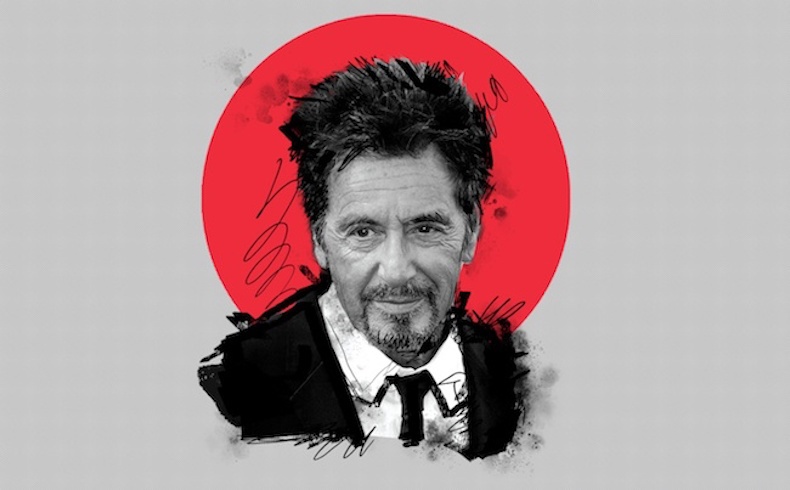 Al Pacino Remembers Getting His Start With Backstage
 Mirren’s is just one of the A-list names that are part of the adventurous project, along with Morgan Freeman, Anne Hathaway, Anthony Mackie, Constance Wu, and Uzo Aduba, among others.
“I think each of the actors who came on to the project felt it was such a challenge, right? It was almost a return to form for many of them who grew up in the theater,” says Weil. “This was an opportunity for them to put on a play, and a one-person play at that. There’s nothing an actor can hide behind in this piece. Each of these brilliant [performers] we have onscreen was energized by that challenge of, ‘How am I going to express this singular story over the course of 30 minutes?’ ”
“I think the key for me as a director, as a writer, as a showrunner, is to listen; it’s to uncover and investigate with each of these incredible performers.”
The show is a product of the COVID-19 era in more ways than one. In the direct sense, only having one actor on a set at a time—and, therefore, only one maskless person—allowed for safer shooting as production was just revving back up. “But I think, too,” Weil adds, “that we felt and experienced feelings of solitude and loneliness during such a difficult time.”
Parallels will be drawn to “Black Mirror,” but while that show is a half-hypothesis on our ongoing relationship with technology, “Solos” is a meditation on being alone and the often drastic lengths human beings will go for just the slightest bit of connection.
The single-actor-in-single-location format was also Weil’s love letter to how he became enamored with storytelling growing up—namely, sitting at his grandmother’s kitchen table as she relayed her experiences from World War II. “They were superpowers, the ability to tell stories,” he remembers. However, it hardly countered the fact that a monologue made for television is among the most difficult writing a person can do, and Weil wrote seven of them. He calls it, without hesitation, “the greatest writing challenge I’ve ever had.”
Still, his approach did not change from that of his previous work, which includes creating and showrunning his first Amazon series, the Al Pacino–starring “Hunters.”
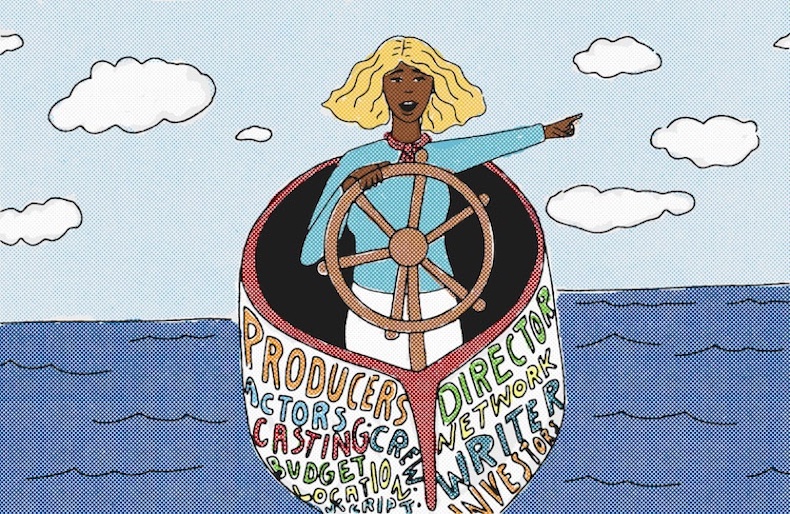 How to Become a Showrunner
 “Whether it’s a monologue or an entire series or a feature film, they always have to have acts. They always have to have turns and reveals,” he says of ensuring his writing never feels stagnant. “I think so much film and TV right now is didactic and incredibly expositional. With this, I needed to create mystery at the beginning of the piece so that an audience would lean in, and then slowly drop little breadcrumbs throughout to allow the audience to say, ‘Oh, my God. What I thought was going on—it’s actually 180 degrees the opposite.’ ”
While Weil’s practical approach to “Solos” mirrored his previous outings, that it was his second time at the top of the creative call sheet did change something for him internally. “Oh, my God, yes,” he says with a laugh when asked whether he had more confidence this time around. “I dove headfirst into the ‘Solos’ process with so much more knowledge. I don't know that I was less precious, but I knew what to be precious about; I knew what would make the impact on the screen; I knew what I needed to fight to preserve.”
He says his time on “Hunters” taught him the most valuable lesson of all when it comes to filmmaking in any form: how to collaborate with actors. And, crucially, how to adapt to actors’ individual needs to ensure they have space and support to give you their best.
“Al Pacino has taught me so much about the actor’s process, the actor’s relationship with the writer and the filmmaker and what matters, and how to create an environment where the actor can play and discover and succeed,” he says. “I think the key for me as a director, as a writer, as a showrunner, is to listen; it’s to uncover and investigate with each of these incredible performers, what they need, what tools they desire to do their best work.”
Looking for remote work? Backstage has got you covered! Click here for auditions you can do from home!