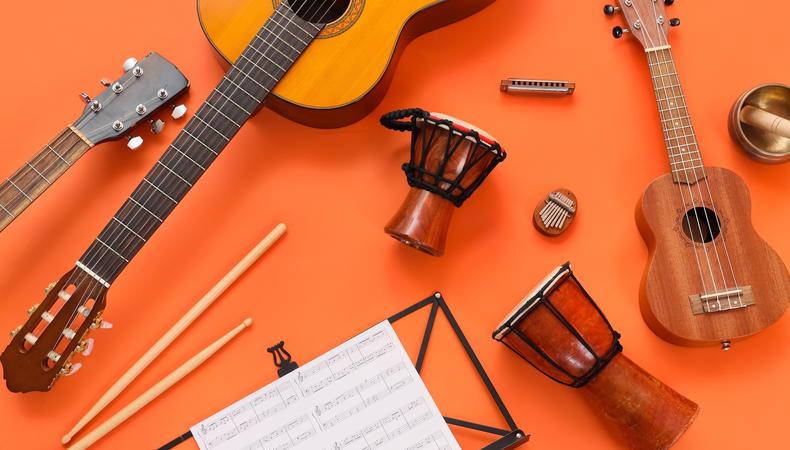
It’s happened to all of us. You see an audition you’re perfect for, and you’re so excited…. But just before you submit yourself for your dream role, you scroll down and see the fine print: Must Play the Bassoon. Thwarted again. It seems like actor-musician productions aren’t going anywhere anytime soon, but in an industry that already practically requires us to be triple threats, is it any wonder some people are hesitant about putting in the effort toward a fourth discipline? Luckily, playing an instrument doesn’t have to mean years and years of daily practice. Here are a few of the easier instruments to pick up.
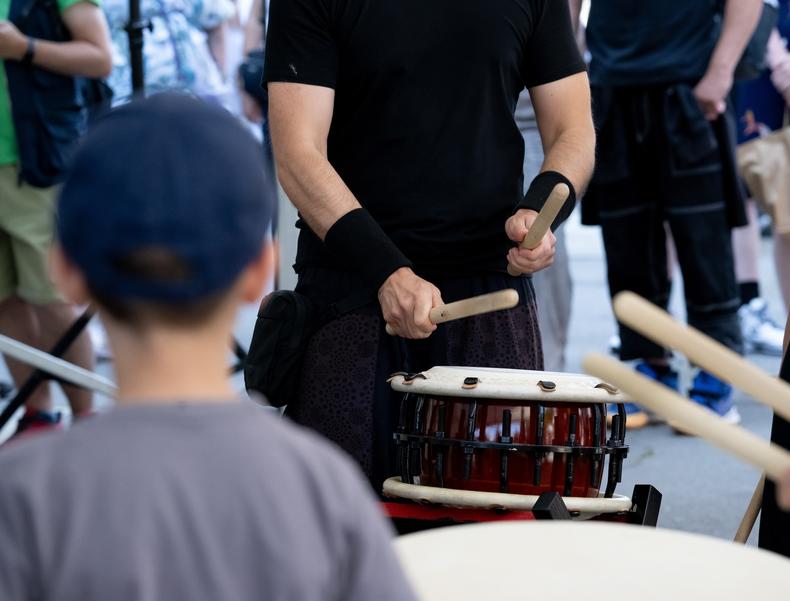
1. Basic percussion
While we don’t expect a beginner to sit down and absolutely kill it on a drumkit, there are still several percussion instruments that are beginner friendly. Percussion is a great place to start because, with the exception of some mallet instruments like xylophones, you only have to worry about rhythm—no notes required. Beginners may need a little help with technique, but if you understand how to keep time, you’ll quickly find success on a variety of basic percussion instruments like the triangle, the tambourine, maracas, or the cymbals. Once you get good at those, you can always graduate to slightly more advanced percussion instruments, like bongos or the cajón.
JairoMZ/Shutterstock
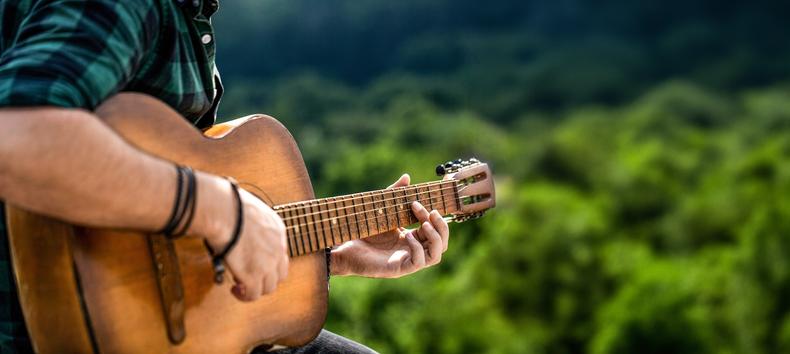
2. Acoustic guitar
There’s a lot to like about the guitar: It’s popular and nice to listen to, and we all have a friend or two who owns one for us to borrow. Best of all, it’s relatively easy to learn. While teachers are always encouraged, it is entirely possible to teach yourself to play the guitar (and there are dozens of internet resources dedicated to helping you do just that). The guitar is also great because you can be a relative beginner and still play something seemingly impressive. It only takes a handle on a few common chords to make your way through accompanying yourself on entire songs. Not only does that mean you’ll have a marketable skill more quickly, but the easily tangible progress may help motivate you to keep learning.
Body Stock/Shutterstock
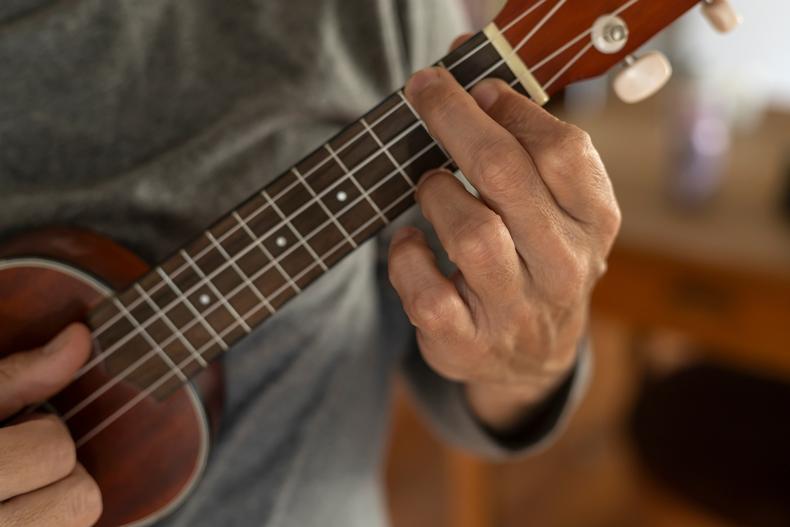
3. Ukulele
Though slightly less versatile, the ukulele has all of the benefits of the guitar, plus a few extra incentives. Beloved by hipsters the world ’round, this instrument may be of interest to people who would like to play the guitar but find their hands are too petite to play comfortably. Its more-compact size also means that it’s easier to store in studio apartments and haul around to gigs. And if you don’t have a convenient guitar-owning friend, you can generally score a ukulele for less than it would cost to buy a guitar.
amilciar/Shutterstock
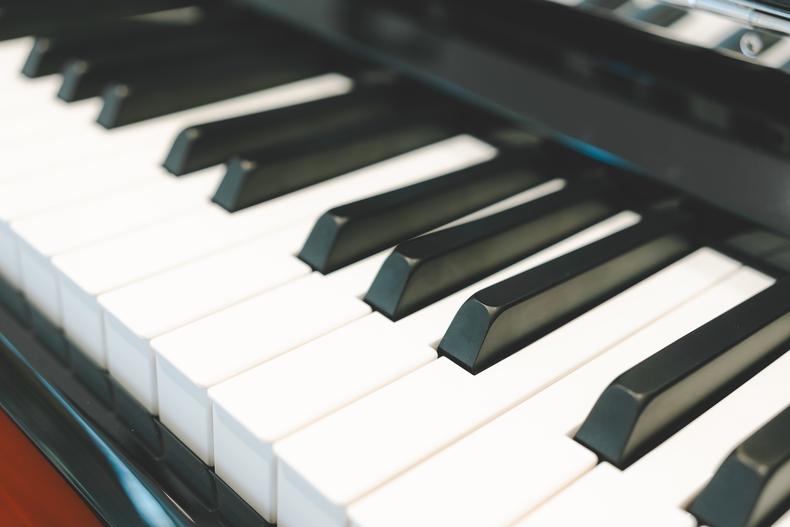
4. Piano
The piano might be difficult to master, but it’s fairly easy to learn to play. Much like the guitar and ukulele, it only takes a basic understanding of chords to begin to accompany yourself, with a relatively small learning curve. Unlike woodwinds, which require a lot of practice to make a clean, pleasant sound, a piano will always sound great (as long as it’s been tuned recently!). Despite its massive size, the piano is also one of the more accessible instruments. Keyboards are fairly affordable, and nearly every practice room in the city has a piano for its renters to play. Because the instrument is so widely played, it also means that teachers are very easy to find—you probably even have a friend who might help you learn in exchange for coffee. Though not the easiest instrument on this list, the piano is certainly the most useful, both as a special skill and as a way to aid your own singing practice.
Wongsakorn 2468/Shutterstock
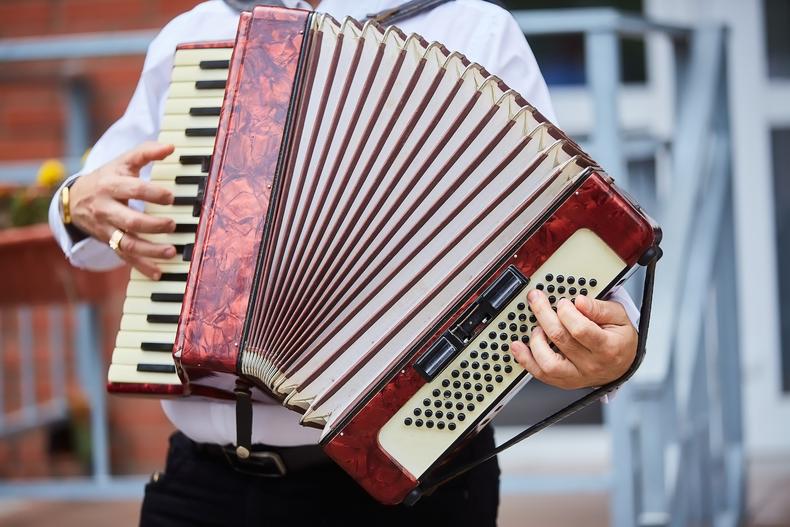
5. Accordion
While the accordion might make you think of your grandma’s polka records, it can be a worthwhile instrument for beginners to try. The accordion is especially easy to learn if you have any background in piano: The right hand just plays a keyboard, while the left hand presses a series of buttons that play chords. Though the accordion’s bulk may not be for everyone (it can weigh more than 20 pounds), its rustic sound is shockingly versatile, and it’s a great option for those looking for an instrument they can play while they sing. Though the accordion might seem to be the most obscure on this list, don’t count it out just yet! It’s having a bit of a resurgence, especially in the theater: “Once,” “Hadestown,” and “Natasha, Pierre & The Great Comet of 1812” all feature characters who play the accordion onstage. And if jumping straight to the accordion seems a little too ambitious, there’s always its more petite cousin, the concertina.
Natalia Kirsanova/Shutterstock
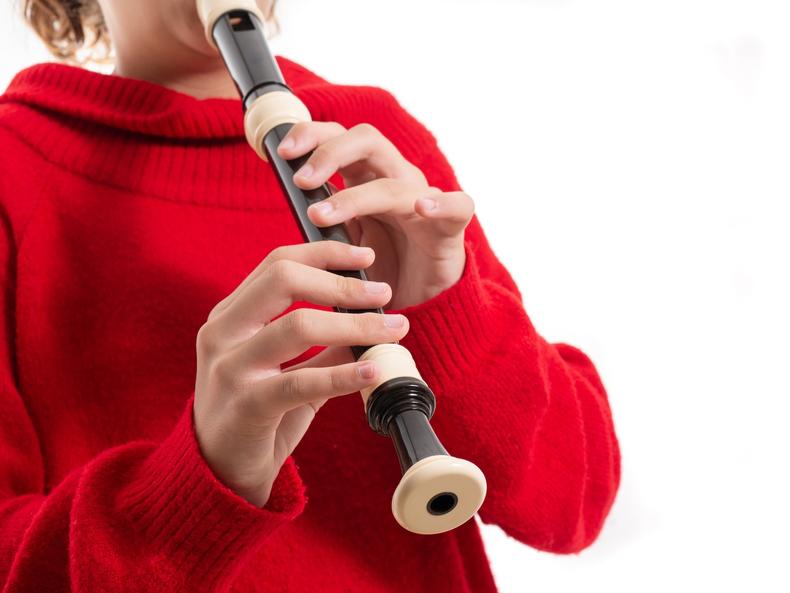
6. Recorder
If you went to public school in the United States, you might still have one of these plastic instruments kicking around in your closet somewhere. We know what you’re thinking: Who really wants to hire someone who plays the recorder? While the recorder itself may not have many practical applications (aside from a killer solo in the original production of “Godspell”), it really is the ultimate entry-level woodwind. If you learn the basic fingerings of the recorder, then you’re halfway to learning the flute, the clarinet, and the saxophone, which all share very similar fingering positions. The recorder will also help you to learn breath control and intonation without having to deal with the fussier features many other instruments have, like reeds or more complicated embouchures (mouth positions).
NOVODIASTOCK/Shutterstock
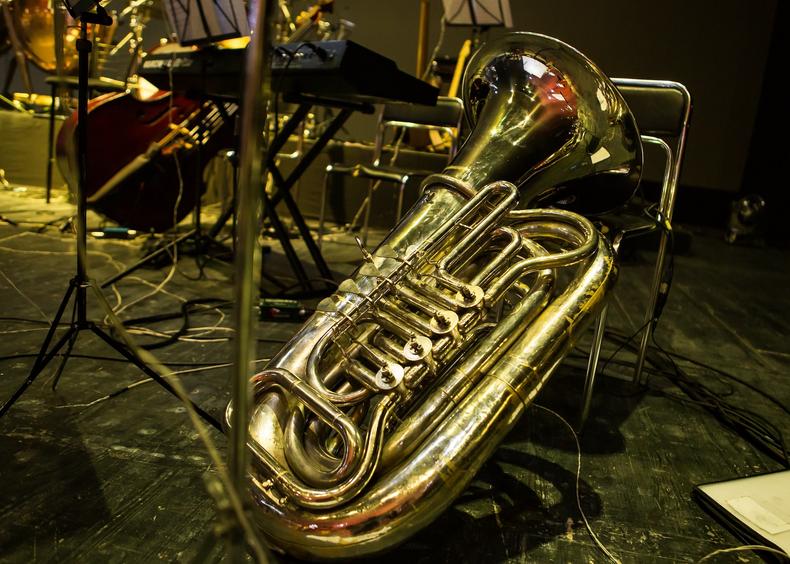
7. Tuba (honorable mention)
OK, the tuba isn’t the easiest instrument to learn. All brass instruments require a very specific embouchure that can take a while to master. However, the demand on lower-voiced instruments tends to be less, as they take on more repetitive and rhythmic lines, while the woodwinds play more complexly over top. So, if you are able to learn to play the tuba (or the baritone, the euphonium, or any similar instrument) well enough, you may find that you can keep up with the demands of the instrument more quickly than someone who is learning something that typically comes with higher musical expectations, like the flute. Also, if Patti LuPone can do it, so can you (probably).
Oleksandr Naumenko/Shutterstock
Remember, the best instrument to learn is the one you actually want to play (and therefore want to practice), so if you don’t see your dream instrument listed above, that shouldn’t stop you from giving it a shot. Feeling ready to take your newfound instrumental skills on the road? Check out our musician callboard here.