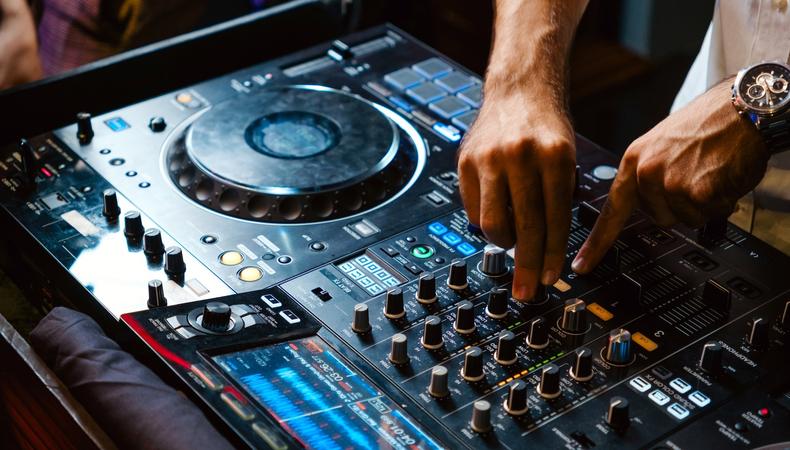
Contrary to what many a cranky dad might allege, DJing is much more than simply pressing play on a track. Becoming a great DJ—like David Guetta, Peggy Gou, or the Blessed Madonna—is hard, and requires musical, technical, and social prowess. So before you start record-scratching and deck-hopping, let’s walk through what it takes to become a DJ.
1. Define your DJ identity and goals.
Start by asking what kind of DJ you want to be. Are you drawn to club culture and long-form mixes, or do you see yourself as an events DJ keeping weddings and corporate functions lively? Do you want to specialize in a niche genre like techno, drum and bass, or disco edits, or will you be a versatile multi-genre DJ for private events? Your goals will shape your technical needs, repertoire, and marketing.
2. Learn musical basics and beat structure.
Before buying gear, learn to feel beat grids and song structure. Understand how tracks are built: where phrases change, how verses and choruses align, and how percussion and bass interplay.
Most dance music is in 4/4 time with phrasing organized in 16- or 32-bar blocks. Knowing this helps you mix at phrase boundaries so transitions land musically. Practice counting beats while listening and identify downbeats, breaks, and build-ups.
If you find yourself needing extra help, check out DJ educational content on YouTube or take a class at WeAreCrossfader, MasterClass, or Sound Academy.
3. Get the right equipment.
You can’t become a DJ without tools. But don’t get overwhelmed by options—start with the essentials and upgrade as your skills grow.
NYC-based DJ Peter Chiang says that it’s best to do what everyone else is doing to start. “The club standard for decades has been Pioneer, now AlphaTheta, which uses Rekordbox to analyze and organize tracks,” he explains. “That’s what you’ll find in most clubs around the world, so if you can, I’d start there.”
Beyond that, here’s the basic gear checklist:
- The DJ controller combines decks and a mixer in one, making it great for beginners. Some popular models are Pioneer DDJ-400, Numark Mixtrack Platinum, and Hercules DJControl Inpulse.
- DJ software connects your controller to your music library. Options include Serato, Rekordbox, Traktor, and Virtual DJ.
- Your laptop should have enough RAM and storage to handle performance software.
- Headphones that are durable and clear, like Sennheiser HD 25 and Audio-Technica M50x, allow you to keep up with your real sound, in real time.
- Speakers/monitors such as the Rokit 5-G5 and Pioneer VM are ideal for practice.
- External storage or cloud subscriptions are needed to keep backups of your music library.
You don’t need to spend thousands right away. Start simple—the goal is to learn the fundamentals of mixing. As Chiang says, “As with anything in life, it’s not about the gear; it’s about how you use it.”
4. Build a diverse and high-quality music collection.
Now comes the fun part. Your record bag is your palette. Purchase high-quality tracks from reputable sources, preferably lossless or high-bitrate files for best playback and clarity through club systems.
Chiang emphasizes that a DJ is as good as their music: “Comb through crates, SoundCloud, Bandcamp, and especially YouTube comments. Taste trumps everything, so if you want to become a DJ, you gotta start to do some digging.”
Collect stems, acapellas, and instrumentals when possible for creative mashups or edits, and save edits and bootlegs you or other producers make. But it’s a good idea to respect copyrights and permissions.
5. Practice beatmatching, EQing, and phrasing.
Technical skills are the foundation.
- Beatmatching, or aligning two tracks’ tempos and phases, remains invaluable even with sync functions, because it sharpens your timing and gives you manual control.
- EQing is the art of carving frequency space so tracks blend without clashing; for instance, you might reduce the incoming track’s bass slightly when bringing in its kick to avoid muddiness.
- Phrasing means aligning song sections (verses to verses or drops to drops) so melody flows naturally.
Practice these basics again and again and again, slowly increasing tempo ranges and genre types to become adaptable.
 Beats, Bars + Bands: How to Start Making Music
6. Develop programming and set structure.
Playing good music is only part of DJing. Programming—meaning the sequence and energy flow of a set—determines how a crowd experiences you.
Learn pacing: when to play bangers, when to play something unexpected, and when to give the crowd a breather. For event DJs, craft sets that match the client’s expectations and milestone moments, such as entrances, speeches, or slow dances. Practicing different lengths (30 minutes, 60 minutes, 2 hours) helps you hone pacing and set placement.
7. Simulate live conditions and record your sets.
DJing in your bedroom and performing in front of people are two different things. Once you’re comfortable mixing at home, start simulating live environments.
Practice by:
- Timing your sets: Play one-hour sessions as if it were a gig.
- Managing energy: Learn how to build intensity, then bring it down.
- Dealing with mistakes: Practice recovery. Train yourself not to panic if you miss a beat or hit the wrong cue.
Invite a few friends over to practice crowd interaction. Notice what works and what doesn’t—you’ll quickly learn how to manage momentum and attention.
8. Build your brand and online presence.
A professional DJ identity helps with bookings. Choose a memorable DJ name, design a simple logo, and keep consistent imagery across platforms. Create profiles on SoundCloud, Mixcloud, YouTube, Instagram, and any streaming platforms relevant to your market.
Upload mixes with tracklists and timestamps, and post short clips that showcase your style. Interact with followers and tag venues or collaborators. An EPK (electronic press kit)—a one-pager with a short bio, high-quality photo, sample mix, and contact information—makes it easy for promoters to evaluate and book you.
9. Network and play small gigs.
Here comes the hard part: booking gigs. It’s typically best practice to start small and local. House parties, open-deck nights, coffee shop afternoons, and small bars are places to gain experience. You can also look for gig postings on job boards.
“Get out of your bedroom and become involved in the community,” Chiang says. “Find open decks, sign up, dance, make friends with other DJs…. Also, throw your own parties.”
Approach venues and promoters with a concise pitch: who you are, what you play, links to recent mixes, and availability. Be professional in communications by being punctual, polite, and prepared to discuss technical needs. We all want to make money, but offer to play free or low-fee support slots early on to build relationships and a local following. Bring business cards or a simple digital contact method to collect leads and follow up after shows.
10. Promote shows and grow an audience.
Promoting your events is essential. Use social media, event listings, and cross-promotion with other artists to build a buzz. Invite friends and encourage them to bring others; incentivize shares with early access links or small giveaways.
Post consistent content before and after shows via promotional flyers, behind-the-scenes clips, and thank-yous to venues. Collect emails or followers so you can notify fans about future events. Over time, a growing audience and consistent, high-quality performances will allow you to negotiate higher fees and better time slots.
11. Maintain your ears and your health.
DJing is hard work, and can be physically and mentally demanding. Protect your hearing with earplugs when not performing and consider custom in-ear monitors for consistent monitoring levels.
Long nights and loud venues can be taxing, so remember to stay hydrated, sleep well, and eat nutritious meals. Sustainable habits preserve your longevity as a performer and keep you sounding your best across long tours or regular club residencies. You may be surprised how this simple practice will make you stand out among other less-dependable DJs.
12. Handle rejection and persevere.
Like with any creative venture, you will face rejection and slow periods. Use them to refine your craft. Seek feedback from trusted peers, analyze recordings honestly, and adapt. Persistence and patience are more important than overnight success. Every set, even a difficult one, teaches something valuable if you choose to study it rather than resent it. Stay adaptable, keep your head on straight, and enjoy every dance floor moment.