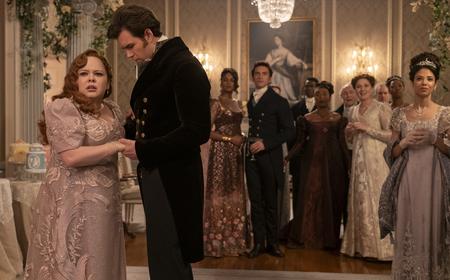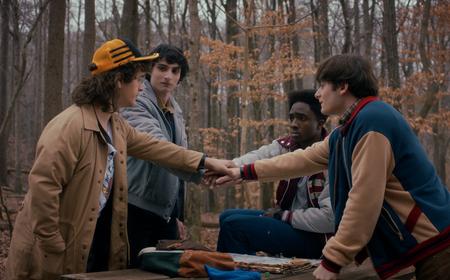
There was a time when the TV season ran like clockwork. Every year, popular shows like “Friends,” “ER,” “Desperate Housewives,” and “The Office” premiered in the fall, aired up to 24 episodes and then closed their seasons just before Memorial Day. Today, many beloved series—from HBO’s “Euphoria” to Netflix’s “Bridgerton” and “Wednesday” to Apple TV’s “Severance”—can take years to return.
For viewers, the prolonged wait can be maddening. For actors? It’s a different challenge altogether.
“Those long stretches of downtime definitely affect people,” says longtime acting coach Warner Loughlin, whose clients include Glen Powell (“Hit Man”), Rachel Weisz (“The Favourite”), and Matt Bomer (“Fellow Travelers”) via her Warner Loughlin Studios. “They get extremely restless. The good news is that you’ve got a job coming. But there’s still that feeling of ‘I don’t know what to do with myself.’ ”
Longer production timelines, compounded in recent years by the pandemic and the dual 2023 writers’ and SAG-AFTRA strikes, have made the extended breaks more common. “[Executives] found a financial workaround. The number of episodes per season got reduced and actors who would normally be a series regular are now recurring.”
Here’s Loughlin’s advice on how to stay performance-ready until the cameras start rolling again.
Don’t let a character go dormant
One positive to an extended hiatus: A chance to expand on a role even without the benefit of a fresh script. “There’s an acting technique that I call ‘emotion with detail,’ ” Loughlin says. “It involves creating new memories and new experiences from the past even though you’re living in the moment. It can be super helpful because it keeps the character alive.” For example, she says, actors can go grocery shopping as the character and behave accordingly. “Use your imagination in how you hear, touch, taste, see, and feel,” she says. As a result of the bonus creativity, “you won’t develop boredom and can come back to the set much fuller and alive with the character.”
Keep the acting muscles loose
“Some of my students say to me, ‘Oh my God, I forgot how to act! I have no idea what I’m doing!’ ” Loughlin says. “I say, ‘Yes, you do. Let’s go back to square one.’ ” To start, she recommends gathering fellow actors to study a great performance (“see a play”) and read a great script (“do a table read of a classic”). Retraining the brain is another option. “Some clients will say to me, ‘Hey, can we have a session? I read a screenplay and I’d love to work on the character,’ ” she says. “And this could be for a character they have no intention of ever auditioning for.” Loughlin adds that her master classes are “filled to the brim” with working TV actors on hiatus honing their craft. “It’s a good workout when you don’t have another outlet because you can develop and perform a character. It’s an emotional need, too.”
Try something (and someone) different
After Carrie Coon wrapped the second season of the period drama “The Gilded Age,” she filmed “The White Lotus”; after Britt Lower wrapped her second season of the sci-fi mind-bending “Severance,” she filmed “I Will Find You.” Indeed, a break between seasons can provide a window to experiment outside your comfort zone. “It can be fun and extremely helpful if you’re in a drama series to explore comedy and for an actor in a comedy series to explore drama,” Loughlin says. “It’s especially nice when you know that you have another job on the other side.” She points out that her client Jack Quaid took on the big-screen thriller “Companion” and the action-comedy “Novocaine” between seasons of his dark satirical series “The Boys.” (“He was really adept at this.”) Another client, Merle Dandridge, does theater work when she’s not appearing on series such as “The Last of Us” and “The Rainmaker.”
Create your own opportunities
There are other ways besides acting to keep the juices flowing. Loughlin points to her client Amy Adams, who founded Bond Group Entertainment to help develop films and TV series and took on an executive producer role with the new small-screen adaptation of “Cape Fear” (on which she costarred). Alternatively, an actor can let their fingers do the talking and try a screenplay. “Writing is an excellent thing to do because it keeps the idea of character development fresh in your mind,” Loughlin says. “And when you can grab hold of a character, you’re strengthening your acting skills for your own series. One tool helps the other.”
Know when to rest and reset
When a TV series goes on a creative break, it’s perfectly all right—even encouraged—for an actor to do the same. “Actors need to take away the worry that comes with being idle,” Loughlin says. “They don’t realize that it can be necessary.” So be kind to yourself. Go on a vacation. Forget about the industry. Heck, forget about the chaotic world for a while. She adds, “If you always go down that highway at 100 miles per hour creatively, you will burn out.” Just maybe don’t check out for the entire hiatus: “The balance is key.”