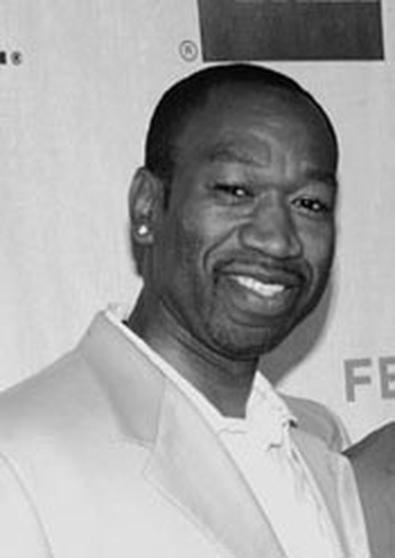
Jerry LaMothe remembers the New York power blackout on Aug. 14, 2003, as "a tale of two cities." The actor-writer-director was at home in East Flatbush, Brooklyn, when the electricity failed that afternoon. He later found himself perplexed by the discrepancy between what he saw with his own eyes that hot August night and the subsequent coverage of the event in the media. He believes that, in the wake of 9/11, municipal officials and broadcasters went out of their way to cement the idea of a citywide spirit of lawfulness, unity, and cooperation. They tended, he says, to ignore, or at any rate underplay, incidents of looting, burglary, and shooting in the Flatbush area. "We were a world away -- kind of like a forgotten city," he says.
And so, three summers later, LaMothe filmed Blackout, a feature film with an ensemble cast and interweaving stories, that provides his own take on Flatbush's mixed response to the power failure.
Where Were You?
The story lines LaMothe wrote for Blackout strike a balance between the upbeat and the somber. For instance, there are two contrasting male-female relationships presented in the film. One partnership grows stronger as a result of the emergency, while the other falls apart due to the man's (somewhat comically presented) philandering. Another scenario follows an African-American building superintendent and a white landlord who are forced to spend the night together -- and discover they share common ground. But the optimism of that episode is undercut by the film's sorrowful centerpiece: the tale of a bright young African American who falls victim to inner-city violence. LaMothe says he based this story on two real-life incidents: the death of a young man during the blackout and another episode from about the same time, in which a youngster "was brutally stabbed and murdered over an iPod." LaMothe notes that his work on Blackout was inspired by the films of Robert Altman and Spike Lee. And certainly there are echoes of Short Cuts and Do the Right Thing in LaMothe's movie.
Programmers for the 2007 Tribeca Film Festival liked what they saw in Blackout. When the film screened there in April, all screenings sold out. Then SAGIndie took notice of the feature and arranged for another screening, at the American Academy of Dramatic Arts.
Finding a Following
Starting out as a "Back Stage-buying" New York actor, LaMothe made his first foray into filmmaking in 1999 with Amour Infinity, a feature on which he was writer, director, and star. He had been inspired by workshops he attended at the Acapulco Black Film Festival, led by Bill Duke and Robert Townsend. Those veteran filmmakers emphasized the notion that, as digital-video technology proliferates, actors should team up with colleagues to produce their personal projects. "They were encouraging aspiring actors, especially actors of color, not to sit by the phone and wait for somebody to give you an opportunity," LaMothe remembers.
The director took much of the responsibility for funding Amour Infinity himself, from "just basically putting my checks away." But he was also able to involve local entrepreneurs: the Arifee family, who owned a chain of chicken stores. The Arifees were receptive to his approach and have been LaMothe's business partners ever since.
Amour Infinity, co-starring Jamie Burton-Oare, was shot in Brooklyn and Harlem. The film was shown at a number of festivals, including the American Black Film Festival, the Hollywood Black Film Festival, and the Jamerican Film and Music Festival. Then LaMothe undertook the chore of self-distributing the movie. He "four-walled," or paid to show, the film in theatres in New York, Los Angeles, and Chicago, which allowed him to "get some pretty decent write-ups and try to build some credibility and get my name out there." Self-distribution proved a "great learning experience, he notes -- although, he adds, the chief lesson learned was that he would not want to take on those duties ever again.
Meanwhile, he had gained enough respect within the industry to assemble a star-studded cast for his sophomore project as writer-director, From the Outside Looking In. Those set for the project included Terrence Howard, Mos Def, Isaiah Washington, and Billy Crudup. But the film never got made. Explains LaMothe, "While we were rehearsing, at the eleventh hour, the funding collapsed and people skipped town." With the success of Blackout, he hopes to revive the project sometime in the future.
LaMothe was depressed by the career setback, but he soon rebounded, taking directorial assignments for films he had not scripted. He co-directed (with Drew Frasier) a rap-artist video narrative called The Hustle (2003). The following year he shot -- in a mere 12 days -- Nora's Hair Salon, a direct-to-DVD comedy featuring Bobby Brown, with a cameo by Whitney Houston. But he longed to direct his own scripts once again. On the strength of Amour Infinity, he had established "a nice little fan base," he explains. "There were people who kind of appreciated the distinct style and the stories I wanted to tell. I found that people could tell the scripts that I wrote versus the ones I didn't write." So LaMothe began concentrating on his power-outage screenplay.
Goodbye to the Acting Itch
Once he had completed the Blackout script, LaMothe submitted it to Judith Aidoo of the Uptown Movie Network. She loved it and chose it as her first film as executive producer. Once again, LaMothe managed to attract an impressive ensemble: The Blackout cast includes Jeffrey Wright, Zoe Saldana, and Saul Rubinek. Perhaps the biggest casting coup, though, was getting actor-writer-director Melvin Van Peebles to portray George, the building super. "I always said I wanted an icon," LaMothe explains. "I wanted a veteran African-American actor, along the lines of Harry Belafonte or James Earl Jones. I met Mr. Van Peebles a few years ago at a reception that was being held for Ebony magazine. I felt that him being a part of the film would not only validate it, in a sense, but it would also be a way of me paying homage to someone who had done what I'm doing -- way before me -- and who had three or four times as many obstacles as I have."
Because he was filming in his own neighborhood and knew local businesspeople, LaMothe had no problem securing locations: "It wasn't like we had trailers and we were put off to the side. We were right there with the community. That was the only way we could shoot that film."
LaMothe appears in Blackout, in a minor role (he similarly took a small part in Nora's Hair Salon). Since Amour Infinity, his hankering to work as an actor has dwindled. He no longer feels the desire to be the star of his own projects or even to take on a major role. "I want to be taken seriously," he says. "And I want to make sure I put the time and the focus and the attention that's needed into the actual directing -- which is challenging enough as is."