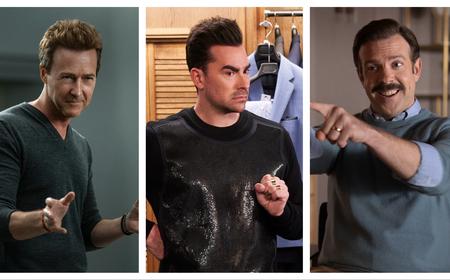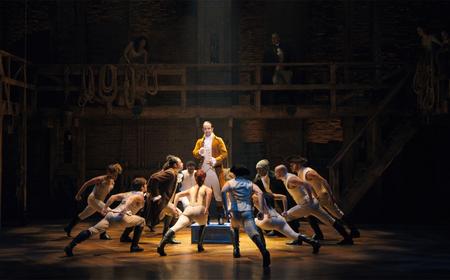
Whether portraying a rockstar vampire in “The Lost Boys” or a doomed laborer in “Hadestown,” it’s many a theatrical actor’s dream to make it to the Great White Way. But how much can they expect to get paid for the achievement? Beyond the compensation of a standing ovation, Broadway actors earn varying amounts of money depending on their role and experience.
JUMP TO

Credit: Featureflash Photo Agency/lev radin/Shutterstock
Stage actors in the U.S. have minimum earnings established by the Actors’ Equity Association. Beyond these minimums, Broadway actors’ earnings depend on the size and scope of the role, any additional duties, exclusivity, the actor’s reputation, the show’s budget, and negotiations for a cut of the box office.
Size and scope of role: Principals—the leads and featured players—generally earn more than the ensemble, since those roles carry more lines and more of the storyline.
Additional duties: Actors may earn more if their duties in the show go beyond just acting. Chorus roles, understudies, swings (understudies for multiple roles), dance captains, assistant dance captains, and fight captains receive additional pay. Even moving a set piece during the show can result in a few extra bucks at the end of each week.
Exclusivity: Signing a rider, or an exclusivity contract, can provide additional compensation in exchange for a longer commitment to the production.
Celebrity status: Recognizable actors such as Matthew Broderick, Idina Menzel, Julia Roberts, Nathan Lane, Daniel Radcliffe, Patti LuPone, and Hugh Jackman usually earn much more than anyone else on the stage, since celebrities tend to bring in crowds.
Broadway fame: Although not necessarily mainstream celebrities, Broadway veterans may earn more than their colleagues.
Budget: Higher-budget productions can usually afford to pay their talent better than lower-budget ones.
Cut: Although rare, Broadway actors may earn a portion of the box office—a percentage of ticket sales on top of their weekly salary—if they're involved in the development process or are celebrities.
Every Broadway contract starts at the Equity minimum. Under the Production Contract that took effect Sept. 29, 2025, and runs through Sept. 24, 2028, the weekly minimum is $2,717, rising to $2,799 on Sept. 28, 2026, with 3% increases in each remaining year of the agreement. A performer working at scale for all 52 weeks of a year would gross about $141,000, but few contracts run that long—shows close, casts turn over, and most actors work in stretches rather than continuously.

Credit: Kozlik/Shutterstock
Base salary is only the starting point. Equity publishes its full increment schedule only in the member rulebook, but the most recent public figures—reported by Playbill and confirmed at the time by the union—show what the add-ons are worth each week:
- Assistant dance captain: $232.30
- Chorus role or specialty: $25
- Dance captain: $464.60
- Fight captain: $100
- Rider (year-long exclusivity contract): $175
- Swing (understudy for multiple roles): an additional 6% of base salary under the current contract, or roughly $163 at the $2,717 minimum; $20 for a partial swing
- Understudy (chorus): $17.50
- Understudy (principal): $62
Celebrity Broadway salaries can run vastly higher. Lane and Broderick reportedly commanded more than $100,000 a week apiece for “The Producers” (2001), a figure they matched during their three-month return to the show in 2004. Jackman reportedly took home $100,00 a week for “The Music Man” (2022), plus a cut of the box office receipts. Bette Midler is said to have earned $150,000 a week for the revival of “Hello Dolly!” in 2017.
Broadway actors receive their payments from the production company putting on the show. The company might use a payroll service, but ultimately the money originates from the producers and then makes its way to the actors.