Impressions have long been a part of the performer repertoire. An actor’s range can be showcased brilliantly with a few reliable, recognizable impersonations that demonstrate texture, depth, and quite often, humor. Still, not all impressions are great, and a bad one could go wrong enough to be insulting or offensive. To develop a strong repertoire of impressions, follow these easy steps.
JUMP TO
 “The Tonight Show Starring Jimmy Fallon” Courtesy NBC
An impression or impersonation is an imitation of another person with the intention of entertaining an audience. Impressions can be subtle or broad, momentary or drawn-out, reverent or hilarious. Notably, celebrities consistently delight audiences with impressions of their fellow actors. With the right collection of impressions in your back pocket, you too can harness the power of becoming a great impressionist.
 Maridav/Shutterstock
- Someone you admire: Choose an impersonation subject you have positive feelings about. This is especially important for beginners, who should strive to honor their subject rather than mock them. The first step toward developing an impersonation involves observing your subject without judgment. As renowned impressionist Jim Meskimen says in his YouTube tutorials, “if you wouldn’t want to spend the afternoon, or even a meal, with someone, it’s very hard to understand them and feel a lot of affection for them.” Hate-watching aside, this may also make it less palatable to spend the time needed to observe and understand a person.
- Someone you resemble: Has anyone told you that you look strikingly similar to Britney Spears or Barack Obama? Or that your voice is reminiscent of Julie Andrews or James Earl Jones? Perhaps you have a fantastic Russian accent or do a killer Mickey Mouse. Leaning into your natural talents and appearance can help an impersonation land strong.
- Someone with notable mannerisms: Successful impressions rely on quick recognition, so identifiable gestures, posture, and movement quirks are just as important to replicate as speech patterns and voice. Even the worst Frank Sinatra impression is bound to be more recognizable than the best Marcel Proust one. That’s not because Proust is less remarkable than the Sultan of Swoon; rather, the difference hinges on how recognizable each one’s unique mannerisms are to the general public. Find impersonation inspiration in someone most of your audience is familiar with.
 Tinseltown/Shutterstock
Listen
Voice impressions require a lot of listening to help you become acquainted with your character. Everyone has their own individual vocal quirks, including cadence, tone, and pronunciation. Listen to a recording of the person you intend to impersonate and make note of the following:
- Accent and dialect: Do they have an accent? Where is it from? Research basics about the accent and how to imitate it, taking notes from a dialect coach.
- Pronunciation: Are there any particular words they pronounce in a specific way? Pay attention to vowel sounds, such as a long “A” vs. a short “A,” and consider where they stress syllables. Their words might be precise and staccato like Julie Andrews, or run together with a bit of a gruff lisp, like Liza Minelli. Capturing these nuances will go a long way.
- Tone: Tone indicates how a person speaks. Are they loud or quiet? Does their voice jump up and down with varying intonation or manner (like a classic valley girl accent) or do they hold a steady monotonous tone (as with the cartoon character Daria)?
- Speed: Do they speak quickly, in a rush of words? Or are they slow and methodical? Do they take long breaks between sentences, or do they rush through as if periods don’t exist? Take note of any long pauses and specificities in cadence. Christopher Walken is a classic celebrity to impersonate because he has a noticeable speech pattern that can be easy to mimic.
- Style: It’s also useful to jot down at least a few adjectives to describe a person’s voice. Are they authoritative, meek, or goofy? This will give you an idea of what you’re aspiring to achieve.
Practice
As with any skill, practice is essential. Here are some ways to practice smarter, not harder, when learning to mimic voices:
- Use a script: Make yourself a written script. You’ve already made notes on speed, tone, and pronunciation, so now it’s time to mark up your script with this information. Circle emphasized words, break up sentences with slashes, use multi-colored highlighters—whatever you need to cue the qualities you aspire to.
- Record yourself: Listening to yourself might feel weird at first. Stick with it! The best way to determine your progress is to hear it for yourself. Recording and listening back to yourself can reveal where you’re hitting the mark—and where you need more work.
 How to Gain Confidence as an Actor
  “Saturday Night Live” Credit: Will Heath/NBC
“Impersonation is a study of human behavior,” explains professional impersonation artist Kim Handysides. In addition to considering the vocal qualities of your subject, remember that we also communicate with our bodies. Every person’s gestures, facial expressions, and physical movements are different, so mimicking body language can take a good impression to the next level.
Observe
Just like mimicking voices, when learning someone’s body language, observation is the first step. Find recordings and watch your subject enough to note of the following:
- Facial expressions/habits: Do they look directly at the camera or interviewer, or do they look down a lot? Do they frown often? What are their eyes doing? Some people have very recognizable facial expressions and habits. For example, Kristen Stewart is known for making a specific downturned shape with her mouth.
- Gestures: What are their hands doing? Do they point a lot to emphasize something? Maybe they clasp their hands, touch their face, or run their hands through their hair. Perhaps they flex their muscles, like Dwayne “The Rock” Johnson.
- The whole body: How do they carry themselves? Are they hunched over or sitting up tall? Shoulders back or forward? Chin thrust out or leading with the chest? Every detail you observe can be utilized to enhance your impersonation.
Test it out
As before, record yourself mimicking your subject’s body language. If it helps, you can add more notes to your script. Where do they raise their hands, turn their head, or look down? Marking these moments can help you pin down your physical movements. Now rewatch that recording and note where you hit the physical movements and where you don’t, and try, try again.
 “A Black Lady Sketch Show” Courtesy HBO
Whether you plan to do serious impressions or comedic ones, it’s important to spend time refining any impersonations to fit the right tone.
- Serious impressions: Keep it realistic. A serious impression means that you’re attempting to match the personality, mannerisms, and tone of the person as closely as possible and in a way that doesn’t poke fun or undermine the person. This technique is useful if, for example, you are playing a real-life person in a play or film. Make sure not to over-exaggerate (unless, of course, over-exaggeration is a trait of the person you’re mimicking!).
- Comedic impressions: From SNL to stand-up, exaggerated and comedic impersonations can be hilarious. For these, you’ll want to pay even more attention to the unique mannerisms, tics, and vocal qualities of the person you’re studying. If it’s something you notice, it’s likely other people will too. Use those unique habits and embellish them a little.
Always be mindful with your impersonations, since exaggerating a person’s mannerisms can veer into a bad joke very fast. Take the time to consider how your impersonation might be perceived if you did it while the subject was watching. When viewing your practice recordings, think about whether your subject would feel flattered or upset. Avoid characterizations based on class, race, religion, ability, gender, and sexuality.
 Ron Adar/Eugene Powers/Kathy Hutchins/Shutterstock
Some notable impersonators include:
- Christina Bianco: Bianco’s impressive theatrical career set the stage for her impressionist one. If just one impression doesn’t impress you, check out this video of Bianco performing impressions of 19 different singers.
- Jay Pharoah: This clip of actor-comedian-impressionist Pharoah showing how many celebrity impressions he can fit under one minute highlights the incredible talent that goes into compelling impressions.
- Chloe Fineman: Fineman has proven not her comedic chops through her impressive array of impressions. She even provides some comedic tips on how to channel an actor’s character by using the surrounding environment in this SNL skit.
- Melissa Villaseñor: Villaseñor has a range of celebrities under her belt, using facial expressions to really take her impersonations to another level. In this clip, Melissa provides some tips on how she perfects an impression.
- Jim Meskimen: Meskimen has incredible range and ability to switch between impersonations within a breath. His use of body language really highlights the importance of observing and understanding the unspoken language. Here’s a clip of him cycling through a variety of famous New Yorkers.
- Kate McKinnon: McKinnon was an SNL superstar, delighting audiences with her unique brand of comedy that included some of the best impersonations of celebrities and politicians. Here’s a look at some of her highlights.
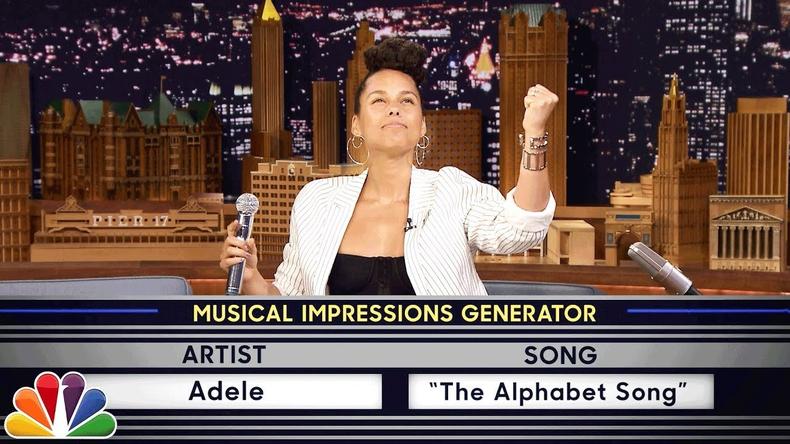
- Jimmy Fallon: Though he’s most well known for hosting “The Tonight Show with Jimmy Fallon,” Fallon made his big break performing impressions. Watch this clip of him seamlessly hitting a multitude of impressions, including musical ones!
Just like with any craft you want to perfect, learn from the best! Watching recordings of talented impersonators, and comparing their acts to the actions of their subjects, is a great way to gain insight into the creation of a successful impression.