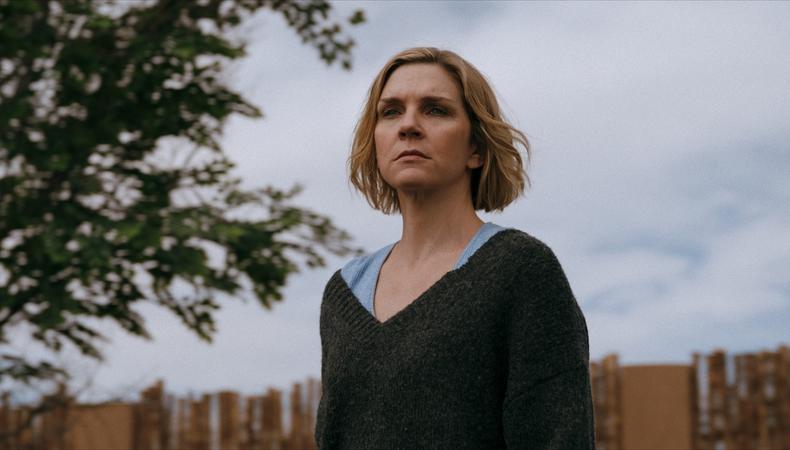
Vince Gilligan’s sci-fi drama “Pluribus” premiered Nov. 7, 2025, and quickly became Apple TV’s biggest series to date. The nine-episode season is now gearing up for Emmy season, having earned 18 nominations, including outstanding drama series and acting nods for Rhea Seehorn, Karolina Wydra, and Carlos-Manuel Vesga.
Want to land a role on “Pluribus”? With Season 2 in the works, casting opportunities may be coming up soon. Here’s everything we know, including how its stars landed their roles and advice from its cast and casting directors about making an impression.
JUMP TO
- What is “Pluribus” about?
- Who is in the cast of “Pluribus”?
- Who is developing “Pluribus”?
- Who are the casting directors for “Pluribus”?
- How does the casting process work for “Pluribus”?
- When does filming start for “Pluribus” Season 2?
- Where can you find “Pluribus” casting calls?
- What are the best audition tips for landing a role on “Pluribus”?
“Pluribus” is set in an altered version of present-day Albuquerque, New Mexico, where author Carol Sturka (Seehorn) is one of the few people immune to the Joining, a mysterious extraterrestrial event that leaves nearly all of humanity in a perpetual state of optimism and positivity. It’s up to Carol to save the world.
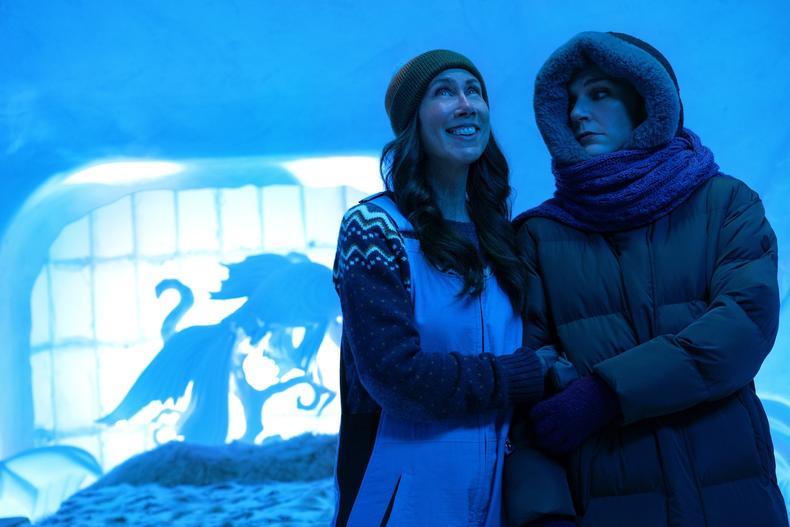
The newly formed collective, known as the Others, shares memories and knowledge and organizes the world around cooperation rather than conflict. On the surface, it sounds harmonious. But that harmony comes at the cost of free will. After Carol’s wife (spoiler alert!), Helen (Miriam Shor), dies during the Joining, Carol becomes determined to resist the hive mind—and may be the only person capable of stopping it.
Karolina Wydra plays Zosia, the primary human face through which the collective chooses to communicate with Carol. In an interview with Wydra, she broke down the unique character. “She’s a full-fledged human being that’s altered,” Wydra said. “She doesn’t live in the full spectrum of emotions. Her emotions are altered, and she only has a certain amount of emotions that she gets to express.”
Seehorn said the show’s blend of mystery, philosophy, psychological threat, and dark comedy immediately appealed to her. After reading the pilot, she recalled thinking, “This is bananas. What is happening?” She added that she would have been “a massive fan of the show” even if she had not been cast.
The Season 1 cast includes:
- Rhea Seehorn as Carol Sturka
- Karolina Wydra as Zosia
- Carlos-Manuel Vesga as Manousos Oviedo
- Samba Schutte as Mr. Diabaté
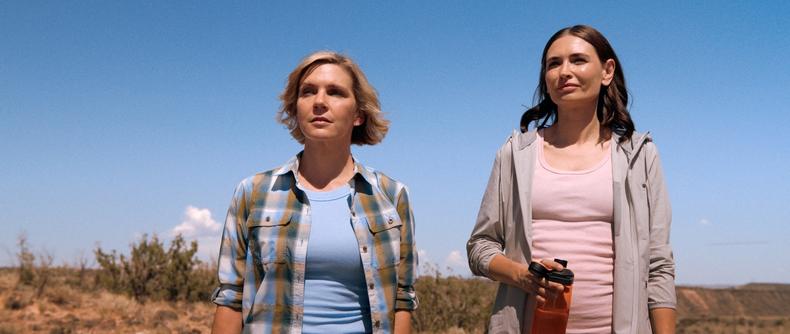
Gilligan created the series and serves as writer, director, showrunner, and executive producer. His credits include creating “Breaking Bad” and co-creating “Better Call Saul,” both of which were also filmed in Albuquerque.
The executive-producing team also includes Jeff Frost of Bristol Circle Entertainment, as well as Gordon Smith, Alison Tatlock, Allyce Ozarski, and Diane Mercer. Jenn Carroll and Trina Siopy are co–executive producers. The series is produced by Gilligan’s High Bridge Productions and Sony Pictures Television.
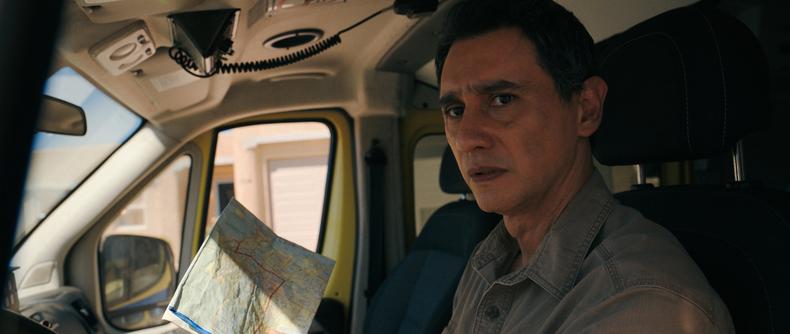
Sharon Bialy, Sherry Thomas, and Russell Scott are the casting directors. Their credits include “Breaking Bad,” “Better Call Saul,” “The Handmaid’s Tale,” “The Walking Dead,” and “Barry.”
Their talent search goes well beyond reviewing submissions. Bialy and Thomas told us that they scout theaters in Los Angeles, New York, Chicago, and London and attend showcases from schools including NYU, Yale, Juilliard, and SUNY Purchase. “As an actor, you don’t have to be the star of a show for us to notice who you are,” Thomas said.
When actors ask how to get into the office, Bialy’s answer is straightforward: “We’ll find you. Just work, and if you do your stuff in the theater and we haven’t seen it but you get a good review, somebody here is going to read it.”
Thomas echoed that advice, saying the team is always searching for talent, but actors still must keep doing the work. Scott put it plainly: “You act. You do short films. You do theater—that’s how you’re going to get found.”
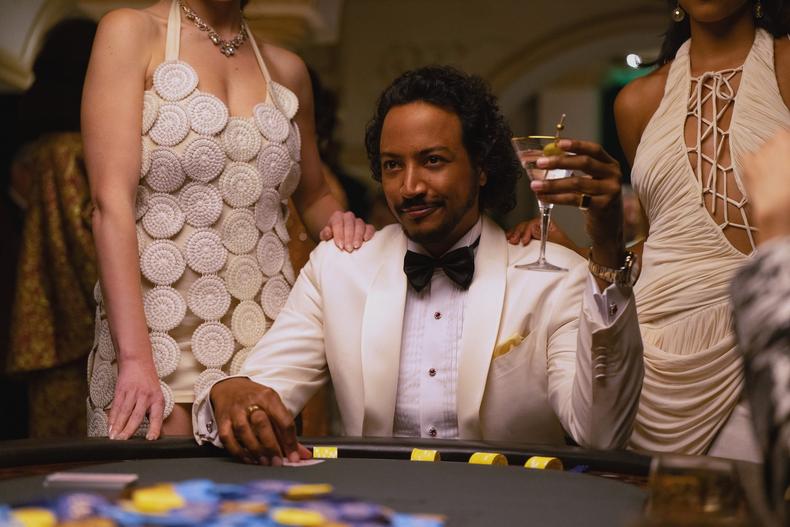
Both Seehorn and Wydra took two very different paths to “Pluribus.”
After “Better Call Saul” wrapped, Gilligan called Seehorn and said he had written something for her. He wasn’t ready to send the script or describe the premise, but she didn’t need convincing. “Whatever you’re doing, sign me up,” she told us. “All I knew was he said it had nothing to do with [“Better Call Saul” character] Kim Wexler.”
For Seehorn, the offer marked the culmination of decades spent auditioning and working in theater, sitcoms, guest roles, and pilots. “It is not lost on me,” she told us of becoming the face of a major series for the first time. “It is a pinch-yourself moment.”
Wydra’s path began not with a direct offer, but with an old photograph. In an interview with Variety, she said Scott found her photo in an old folder and suggested bringing her back. At the time, Wydra had stepped away from acting to raise her children. She no longer had an agent or manager and didn’t know how she would return to the industry. The audition request eventually reached her through a commercial agency that still had her on its roster.
“I just saw it was Vince Gilligan, Apple TV, and literally my body went into utter shock,” Wydra told Variety. “I wasn’t going to do it. And then there’s that other voice in me that said, ‘Give it a try. You have nothing to lose.’ ”
She went into the audition knowing little about the series or the full nature of Zosia. “And when I discovered what this character is, it was pretty mind-blowing,” Wydra said. “Then the fear set in of: Oh my God, how am I going to tackle the whole world in my brain?”
She was later brought in for a chemistry test with Seehorn and walked away convinced she had performed badly. “When you test, you don’t know,” Wydra told us. “I thought I walked out of that test and I was terrible. So I did not feel like I was going to get the role.”
What stayed with her was Seehorn’s generosity during the test. “On that day, she could tell I was nervous, and I could feel she had my back and wanted me to do my best. She would ask me, ‘What do you need from me? What can I do? How can I help?’ ”
Gilligan also redirected Wydra during the audition. Her material included an emotional scene from a later episode, but he asked her to remove the emotion.
“There was one moment when her feelings about what was happening really affected her—watching Carol struggle so much,” Wydra told us. “But when I tested for it and did that scene, Vince actually asked me to remove [the emotion].”
She later learned that other actors had cried during the scene but understood why Gilligan wanted a different approach.
“It was a very emotional moment,” she said. “But I understand how that wouldn’t work for the world. It just didn’t serve the story.”
Thomas said that flexibility matters in the audition room. The casting team often gives actors direction to see what lies beneath their prepared choices. She remembers performers who resist by saying, “Well, that’s not how I prepared it.”
“There’s a resistance to being open to working in the room,” Thomas said. “That’s what the process is about.”
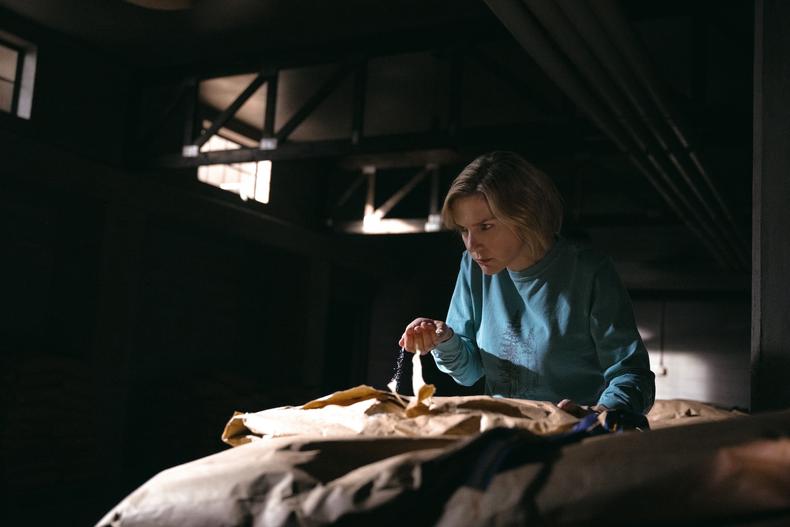
Season 2 is currently in development. In a recent interview with Deadline, Gilligan confirmed the writing team was “a little past the halfway point” in shaping the episodes. “Every season on every show starts out hard. And then you just stay with it long enough. I’m starting to get to the point where I’m thinking, I’m looking forward to shooting this, and people see it, because I’m kind of digging it.”

With Season 2 greenlit and in development, keep a close eye on our streamer casting calls for updates as soon as we have them. Until then, check out these pages for even more projects in search of talent:
1. Prepare thoroughly, stay flexible, and keep going. Wydra used script analysis, meditation, dreamwork, movement training, music, and sensory details to build Zosia.
“Prep work, definitely,” she told us. “As actors, prep is the greatest thing we can do so nothing goes missing, everything has its detail, and everything has its purpose.”
Seehorn brought the same rigor to carrying nearly every scene. “I don’t want to get an opportunity like this and barely pull it off,” she said. “You want to be your best.” She arrived with ideas, knew her lines “backward and forward,” and made time to rehearse with scene partners.
But preparation should not make an actor rigid. Thomas watches for whether performers are listening “not just in the scene but to the direction, to the notes.” She cautioned that actors can become so attached to their preparation that they struggle to absorb redirection.
Even a strong audition may not lead to a role. “You can come in and do an amazing audition, and for a variety of reasons, you won’t get the job,” Bialy said. “It’s not how you are when you’re successful; it’s how you are when you take rejection.”
Wydra bears that out. She left her chemistry test convinced she had failed, then booked the role and earned an Emmy nomination for her performance.
2. Serve the story, not your ego. Bialy said the most memorable actors enter the room focused on bringing the material to life. “What makes me remember an actor is an actor who went in to tell the story, not the actor who is in there because of the ego. It’s not their time; it’s the time for the story. It’s their time to bring the story to life.”
For Thomas, the best performances don’t feel like demonstrations of technique. “The beauty is when you don’t see that happening at all—when it truly is the soul of the actor meets the soul of the character,” she said. “That’s what you look for. That’s the dream.”
3. Keep your self-tape simple. Thomas said the basics matter: Frame the shot from roughly the chest up, use good lighting and a plain background, and make sure the reader doesn’t overpower the actor.
“If you can have a good reader, that’s great, and they don’t need to act—they can just facilitate what you’re doing,” she said.
Bialy also recommends having the other character’s lines read live rather than prerecorded. “The timing is off because they’re just waiting for that [line] to come,” she said. If an in-person reader isn’t available, she suggests having someone read remotely while the actor records.
Thomas added that actors shouldn’t feel pressured to invest in expensive equipment. “I don’t think it takes a lot of money,” she said. “Just make it still be about the work so that we can see what the work is.”
Because no one is in the room to redirect the performance, Thomas recommends recording one straightforward take and then a looser, faster version. She also advises actors to watch the tape back without ego and ask whether casting will want to watch the whole thing.
Scott cautioned against submitting too many options. “You shouldn’t send in three or four takes of a scene,” he said. “When you get one that you like, send that one.” At most, he suggested including a second, simpler take in which the actor feels like they are doing less.