Cooking videos are all the rage these days. On TikTok and Instagram, a snappy, to-the-point cooking demo can rack up millions of views. Most of these videos have one thing in common: They make the food look good. So, how can you make a video that makes your audience want to come back for seconds?
1. Plan it out.
The foundation of a successful cooking video is planning. When becoming a content creator, you have to start by defining your goal. Are you educating, entertaining, or demonstrating a specific technique? Your objective will shape your tone, pacing, and style.
- Research videos from cooking accounts that made it big, such as Dada’s FoodCrave Kitchen, Ian Fujimoto, Sweet Adjeley, and ThatDudeCanCook. Be sure to check out cooks who fit your specific foodie niche, as well.
- Select your recipes—visually striking dishes with colorful ingredients and interesting textures perform best. While intricate recipes can be impressive, concise dishes that can be explained in five to 10 minutes often work better online, where attention spans are (as we all know) very short.
- Storyboard or outline your video to streamline the filming and editing process. Map out each part of the recipe, noting which shots and angles will best communicate the process. Decide early whether you’ll speak on camera, record a voiceover later, or rely on text overlays to guide viewers.
- Refine for your audience—beginners will need simple instructions, while experienced chefs may appreciate expert tips and alternative methods of cooking. Match your pacing, visuals, and tone to your intended viewers in order to increase engagement.
2. Write your script.
Even if your overall video isn’t presented as a step-by-step guide, the internal structure should guide viewers clearly through the recipe. For instance:
- Introduce the recipe with a short visual hook, like a close-up of the finished dish.
- Present ingredients quickly, ideally with text overlays or graphics.
- Demonstrate each step in sequence, capturing overhead shots for prep and eye-level shots for interactions or commentary.
- Highlight tips or common mistakes to fill up any dead air.
- Conclude with plating, garnishing, tasting, or another visually satisfying moment, plus a brief call to action encouraging viewers to save, comment, or share.
3. Assemble essential equipment.
You don’t need an expensive setup to make a compelling cooking video, but you’ll want at least the basics:
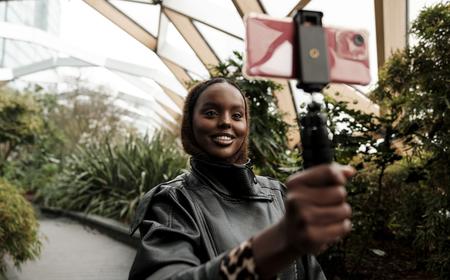
- Camera: DSLR or mirrorless cameras offer the best image quality, but modern smartphones with stabilization can be sufficient. Shoot at least in 1080p, preferably 4K so you can add zooms and punch-ins in post.
- Audio: Clear audio is essential. Use a lavalier mic for on-camera narration or a shotgun mic to minimize background noise. Consider recording a voiceover later for smoother pacing.
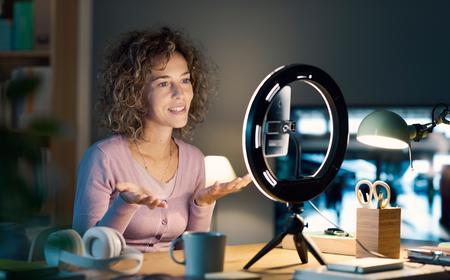
- Lighting: Try softbox or LED panels for consistent, soft light.
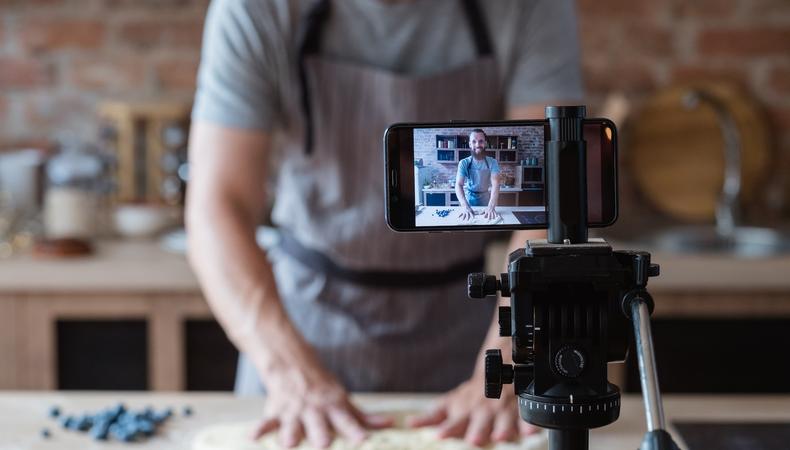
- Stabilization: Use tripods for static shots and gimbals for dynamic movements.
- Props and utensils: Ensure they enhance the visual storytelling without cluttering the frame.
- Editing software: Options range from iMovie for beginners to Premiere Pro or DaVinci Resolve for more advanced editing.
4. Finagle location, lighting, and setup.
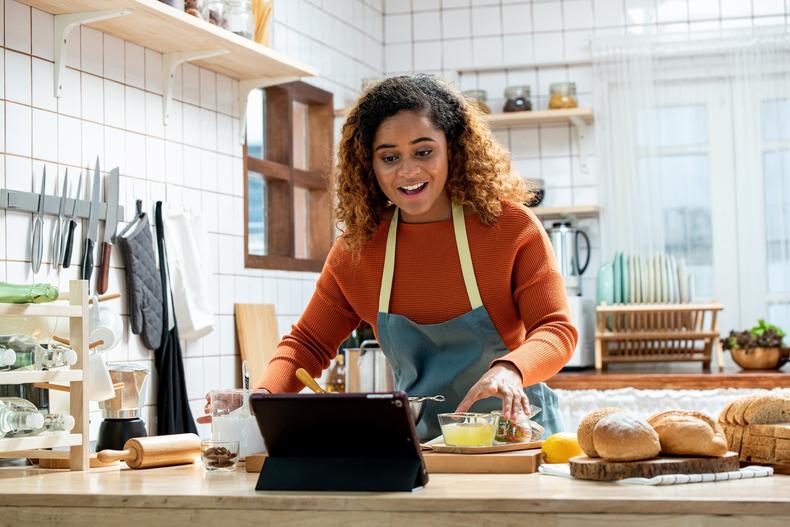
For all content creator jobs, where and how you film can make a significant difference in production quality. This is especially true for food influencers. A clean, organized kitchen minimizes distractions and enhances the professionalism of your video.
- Lighting is critical. Natural light from a large window provides soft, even illumination and is often the most flattering. If natural light is limited, softbox or LED panels are effective alternatives. Position your lights to reduce harsh shadows and highlight the food.
- Backgrounds should be simple and uncluttered, but include props like cutting boards, utensils, and ingredients to make the room feel lived in rather than sterile. Be mindful of color contrast—your dish should stand out from the counter or backdrop.
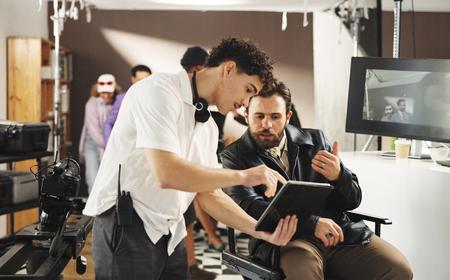
- Camera setup is another key consideration. A stable tripod is essential, particularly for overhead shots. Overhead angles work well for chopping, stirring, or assembling dishes, while eye-level shots suit plating and demonstration. Close-ups are important for showing textures and small details. Multi-camera setups can add professional polish and reduce production time by capturing multiple angles simultaneously.
Atstock Productions/Shutterstock
5. Film using cooking videography best practices.
Preparation is key. Pre-measure ingredients and organize tools to maintain a smooth flow during recording. Capture extra b-roll (close-ups of pouring, chopping, sizzling, or garnishing) to make the editing process more flexible and visually engaging.
Camera movements should be slow and deliberate; it’s best to avoid shaky or rapid zooms that distract the viewer. On-camera presence is also important. Speak clearly, maintain a natural tone, and engage with the camera. Even if you plan to use voiceover, recording some live commentary helps ensure instructions are concise and approachable. Don’t be a robot!
6. Edit and refine.
Good editing is vital to successful content, transforming raw footage into a watchable, shareable video. You’ll want your video to follow this structure or similar:
- Hook: Grab attention within the first few seconds, often by teasing the finished dish or a visually satisfying step.
- Step-by-step instructions: Break down the recipe into clear, digestible segments.
- Outro: End with plating or tasting and a call to action encouraging viewers to comment, save, or subscribe.
For short-form social media videos, aim for one to three minutes. For YouTube, five to 10 minutes is acceptable. Remove dead space, redundant actions, and anything that slows the pacing. Remember, close-ups are vital for emphasizing texture, color, and technique and adding some visual diversity.
Background music can set mood and maintain energy, but it should be subtle to avoid overpowering narration. Voiceovers provide clarity, and text overlays reinforce key instructions or ingredient lists.
Simple cuts and fades work best for transitions, while occasional slow-motion or speed ramps can highlight particularly satisfying moments. Captions are important, since many viewers watch without sound.
This structure ensures clarity, even for longer videos, and keeps viewers engaged from start to finish.
7. Get your cooking video seen.
Even the most delectable cooking video won’t automatically reach an audience without strategic promotion. To ensure your tasty content reaches its audience, you must optimize, engage, and use analytics.
- Format for each platform. Different platforms influence both production and editing choices. As we’ve noted, on YouTube, slightly longer tutorials are acceptable and SEO (titles, descriptions, and tags) significantly affects discoverability. TikTok, Instagram Reels, and YouTube Shorts prioritize visually engaging content with immediate hooks, often within the first few seconds. Facebook favors native uploads and concise, engaging content. Pinterest benefits from vertical, step-by-step video formats.
- Optimize titles, descriptions, and hashtags with keywords that viewers might search for, such as #cooking, #foodie, or #recipe. Calls to action should reflect typical user behavior, like “Save this recipe,” “Comment with your variation,” or “Share with friends.” You’ll also want to create a compelling thumbnail—usually a bright, high-contrast image of the finished dish—to significantly improve click-through rates.
- Engage by asking viewers to comment on variations or share their experiences, and be sure to respond to comments to build community. Cross-promote content on multiple platforms, collaborate with other creators, and leverage trending hashtags to increase visibility. Posting consistently and maintaining a recognizable style or theme also helps attract repeat viewers.
- Monitor watch time, retention, and engagement using each platform’s analytics to identify which steps or formats resonate. Over time, refining hooks, thumbnails, pacing, and editing based on this data will improve your overall performance.
In the end, if you’re passionate, that will be contagious. Let it show, and viewers will follow. Bon appétit!