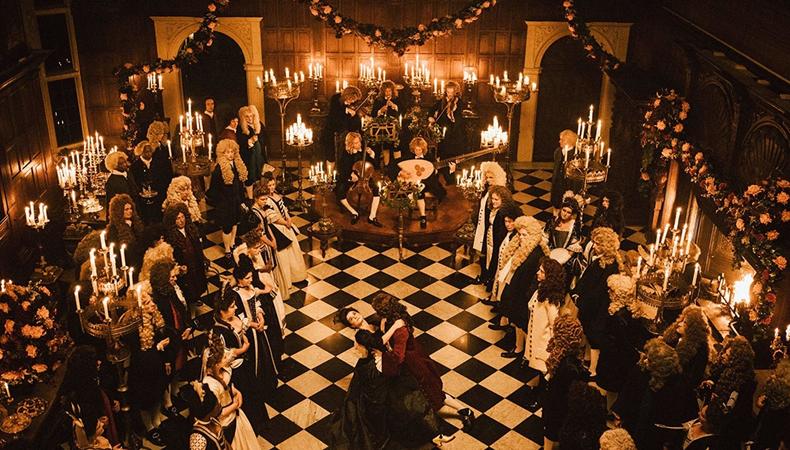
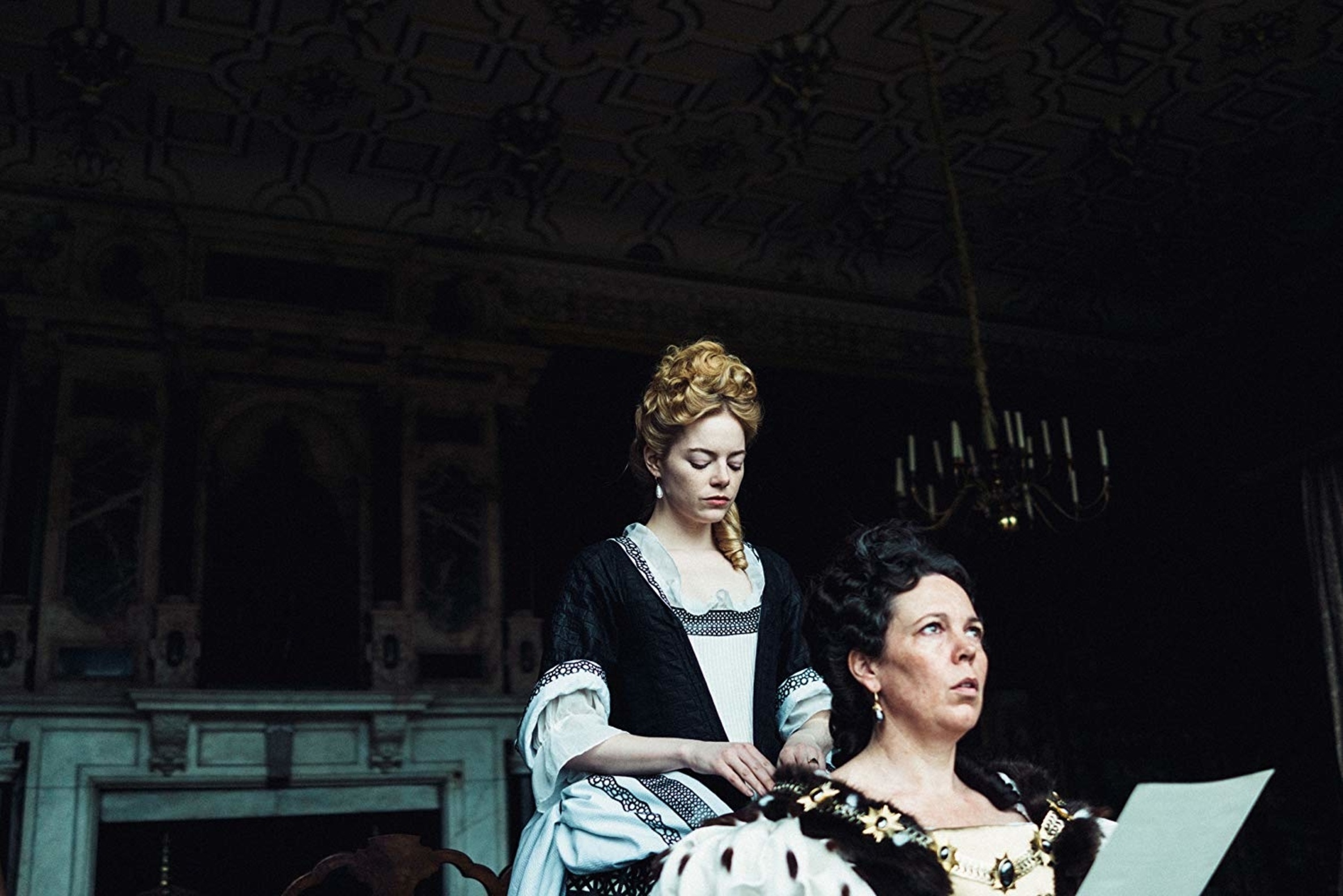
Fox Searchlight’s “The Favourite,” (in theaters now) a dizzying tragicomedy of courtly manners is a period piece like no other. Directed by groundbreaking Greek filmmaker Yorgos Lanthimos (“The Lobster,” “Killing of a Sacred Deer”), the film sees 18th century schemers Sarah (Rachel Weisz) and Abigail (Emma Stone) ruthlessly vie for the affections of an unpredictable, emotional Queen Anne (Olivia Colman), using their relationships with her mercurial majesty to cement or advance their own positions of power. Also, there are high-stakes duck races, and for distraction, lords occasionally pelt a frolicking nude man with ripe pomegranates.
“The Favourite” is carried aloft not only on the dazzling performances from its three stars and a well-appointed supporting cast (assembled by CD Dixie Chassay), but also by its sumptuous, off-kilter visuals. The film offers an endless array of breathtaking costumes from Oscar-winner Sandy Powell and richly detailed sets by production designer Fiona Crombie captured through director of photography Robbie Ryan’s unfailingly imaginative camerawork, all embellished with unnerving sound design by Johnnie Burn. To bring together so many disparate elements, Lanthimos turned to his longtime collaborator, award-winning editor Yorgos Mavropsaridis. Their relationship dates to the earliest days of the director’s career, and they enjoy a unique rapport, one that allows them to work together with little in the way of conversation.
At this point in their professional partnership, the editor simply knows what Lanthimos hopes to achieve and does his best to facilitate his distinctive vision. Mavropsaridis recently spoke to Backstage about his approach to Lanthimos’ latest genre-bending gem, which arrived in theaters to ravishing reviews and seems destined to find favor in this year’s award-season races.
READ: 2018’s Scene-Stealing Supporting Film Actors for Your Consideration
Talk about your start in editing and working with Yorgos Lanthimos. How did that relationship lead to and benefit you on “The Favourite”?
I’ve known Yorgos since before we started working in feature films. We worked together in the commercial industry and that gave us an opportunity to make our own films—no-budget films like “Kinetta” (2005), “Dogtooth” (2009), and “Alps” (2011). Yorgos had a precise and specific way of trying to find his own narrative. He wanted to have absolute control and he wanted to experiment with filmmaking. We started working on a different cinematic approach with “Kinetta,” which was shot on a 16-page script that was mostly improvised. The first cut was four hours long and we had to work our way through it. Although we had worked for many years in commercials, we communicated in cinematic terms about what [visual] language we liked, what kind of acting we liked, and what kind of formal structure we liked. I was getting to know him more and more. Luckily after “Dogtooth,” we had the support of producers on our first collaboration in the U.K., “The Lobster” (2015). We followed the method we used on our previous film collaborations. By the time we made “The Favourite,” we followed our usual procedure.
Describe your editing process on “The Favourite.”
We work a lot on the mood of the acting inside the scenes or trying to find the particulars of each scene. What we do is kind of a deconstructing process. We try to create different balances between sequences. It’s a matter of wanting to give new insight, a new motivation, or a new pause in the film. We construct a lot of sequences using editing. Editing is part of the language in Yorgos’ films. It’s his way of communicating his own philosophy, his own experience of the world, and his own fears on a deeper level. He tries to communicate that to the audience and make them experience these things. A lot of that has to do with the editing and the way we like to present things. The way we edit is to follow, shall we say, an aesthetic morality.
Is he a director who does a lot of takes with actors? Do you have a great deal of choice in the edit bay?
He has a very interesting way of following the inner tensions of a scene. A scene might be constructed from two to as many as four different approaches. There might be many takes on some things. He’s interested in breaking this façade and making the actor reveal something true. Most importantly, he wants his actors to be there. When they are there, I can feel it in the editing. Being there projects a presence that’s important.
There’s a fast-paced rhythm to the dialogue. How did you help shape that tempo?
The tempo is established in the shooting. It’s very rhythmic, like a metronome. The editing had to follow this rhythm.
The visuals of the film are stunning. How do you find the right balance between showcasing the camerawork and the production design and highlighting the performances?
It is the main concern of the editing—apart from the tone—to orchestrate all these elements: cinematography, movement of the camera, and the status of the camera. The main [goal] at all times is to show things that are not there, to imply them, and make them more intimate to the audience. All these elements must be balanced correctly according to an aesthetic that Yorgos follows and I’ve grown to know and understand. We don’t need to talk a lot. Then it’s a matter of minding the particulars. We try to engage the audience, to make them be with us at times and not at others. We like to present this to the audience who can then make their own decisions on what they see.
READ: 8 Oscar Nominated Filmmakers on Storytelling Process
How did you utilize sound to again enhance the performances and convey the full scope of Yorgos’s vision?
Yorgos tries to keep people [if] he likes their work and the way they work together. We worked with Johnnie, our sound designer, on “The Lobster.” He understands Yorgos’ needs and also the necessity to engage between editing and sound design. Sometimes lots of editing decisions impact the sound. For example, in the scene when Abigail is dancing with the queen, the scene that follows is pistol shooting. So, we constructed the whole dance like it was a cage opening, a pistol, a shot, and a pigeon to engage the idea of this fight for the queen between Sarah and Abigail.
What did you find to be the most challenging aspect of this project?
Staying true to our way of working and not trying to do things that aren’t our way. I think we succeeded in following his way of doing things even on a film that is more widely distributed. I feel aesthetic pleasure when the scenes fall together and when the whole film develops on its own terms.
Check out Backstage’s film audition listings!