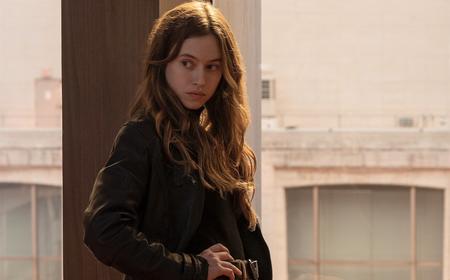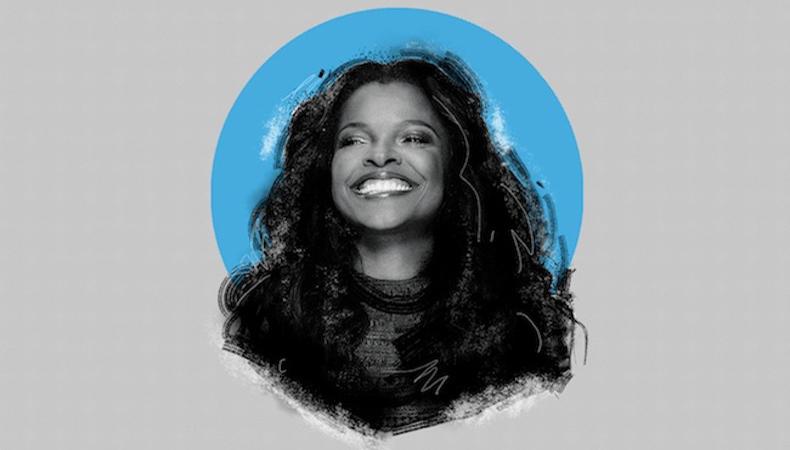
Keesha Sharp knows a thing or two about playing strong women on screens big and small. From Dale Cochran alongside Courtney B. Vance’s Johnnie on “The People v.O.J. Simpson: American Crime Story,” to Buster Marshall alongside Chadwick Boseman’s Thurgood in “Marshall,” and to District Attorney Trish Murtaugh alongside Damon Wayans’ Roger on “Lethal Weapon,” she also knows how to play her male co-star’s better half.
You just wrapped filming season two of “Lethal Weapon.” What was the most memorable on-set moment?
If you know anything about Damon, he’s just so funny. There was this one scene that Clayne [Crawford] and I and Damon were doing and we could not get through it. It was one of those times where you get a laugh attack and you just go with it. Those are the best times, because Damon will start riffing, so it’s a bit of a standup [routine] in the middle of shooting.
What has playing Trish on “Lethal Weapon” added to your acting skills? Trish is pretty close to who I am. If I hadn’t chosen acting, I would’ve been a lawyer. It’s hard to say that I’ve learned something from this particular role in that sense because she’s me, and I never get to say that about the roles I play. Playing Dale Cochran or Gigi [from “Are We There Yet?”] or Monica [from “Girlfriends”], they were so different.
How did being so similar to Trish affect your approach?
When you’re playing something that’s close to you, you don’t know whether or not it started off that way. You’re reading [and thinking,] Wow, this woman is very similar to me, and as the writers get to know you, they start to write you into the role. That’s what’s great about this show. You don’t always get cast because your essence or something about you is the role, but sometimes they like to do that—this guy or this girl is this role. I’m also an actor who loves to step out and do things that aren’t like me at all. I love the challenge of playing something the polar opposite from what I am. I’m a Method actor, so I won’t do everything—I don’t need to take drugs to know what it feels like—but there’s this one role that I played, and she has a son and she doesn’t have a bed and she sleeps on the floor. So I wanted to sleep on the floor…. For me, playing something the opposite [of me] is a dream.
READ: Are You a Method or Classical Actor?
Has there been anything that’s stumped you physically or emotionally?
Nothing that’s stumped me yet, and I look forward to when that happens. I love that, the idea that you’re scared to do something but excited. With that kind of feeling, you’re jumping off the edge and the adrenaline that happens, I love that feeling. Whenever I’m scared of that feeling, I need to fight for that role.
Have you used Backstage in the past?
I’m a woman of a certain age, and I came from theater; Backstage is everything. Now I can look at it online, but back then we would go and pick up our Backstage and look at the auditions, what’s going on on Broadway, what shows I could be right for.
What advice would you give your younger self?
When we’re looking at Backstage and looking at the auditions, you get this excitement that “possibly I could get this role.” There’s this hope that happens when you’re reading Backstage. Even when I moved to Los Angeles and there wasn’t a lot of theater, reading through it gave you hope that perhaps you’re going to find that perfect role. I would [say to] young actors to keep the hope alive. Also, create your own content. Write your own play, write your own musical. Now, there’s so much you can do—YouTube, Vimeo—and you can actually put it up and get it sold.
What was your most memorable survival job?
I did not have to do that! The only reason I did not have to do that is because I was married so young. I’ve been with my husband [musician Brad Sharp] since I was 20. When I wasn’t working, he was working. Because I had him with me and we were such a supportive couple, I didn’t have to take those jobs. But that being said, we had really rough times where we were like, “Where is that money going to come from?” I would do corporate singing. I would go sing at an event. I wasn’t doing theater or television or film, but I was still getting to sing. We lived paycheck to paycheck for so many years, but that’s the business.
How do you keep yourself from burning out?
I have things on the side that I love. I love dancing, I love Krav Maga. But I love what I do. Even in the show, we shot for almost 11 months, and I could still keep going. I’m also a writer and director, so when I’m not acting, I’m writing for someone or wanting to direct great actors. Even when I didn’t have a job, I was in class. I had to be around other actors. I had to be writing.
Do you think younger actors are being proactive enough when it comes to taking classes and building on their skills?
I do think that’s missing. Even where I am in my career, we have to be proactive anyway. You have an agent, you have a manager—this is great advice someone gave me—and you pay your manager and you pay your agent 10 percent, and they’re going to do 10 percent of the work. You have to do 90 percent of the work. You have to be as proactive as you can. Sometimes that will mean writing, getting with other actors. Maybe we can’t afford a class, but we can get together. “I just got this breakdown from this television show, let’s do it together and tape it and watch it.” There are so many ways to be proactive as artists that will serve you well in the business. Even when you’re going in to audition but you’ve been in front of your peers, auditioning is going to feel like nothing. It’s your time to perform for five minutes. There’s an action and a cut, and I’m going to do that for five minutes when I’m in that room. Take that as a performance.
Check out Backstage’s TV audition listings!