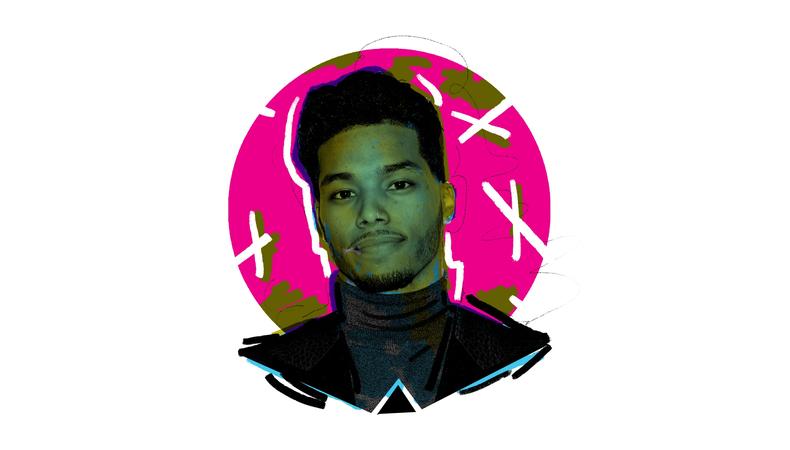
Acting on a soap opera is about as fast-paced as television production gets—and it proved the perfect training ground for Rome Flynn prior to “How to Get Away With Murder.” Cutting his teeth on “The Bold and the Beautiful” (a gig that earned him a Daytime Emmy Award), Flynn took that on-set know-how and brought it today to the ABC hit’s final season. Though acting wasn’t his initial career path, he tells Backstage how he transitioned from a college athlete in Illinois to sharing scenes with Viola Davis—plus what he’s learned from the legendary actor along the way.
READ: You can learn from Viola Davis, too!
How did you decide you wanted to be an actor?
Growing up, I never had dreams of becoming an actor. I didn’t even know what actors were. I thought for a long time [that] films and movies were a fairy tale thing. I was at a point where I had to choose whether I was going to go to college, where I had a scholarship to play basketball, or I was going to try to move out [to Los Angeles] and pursue acting and pursue something that was bigger than me. I moved out here and I worked two jobs for a long time. I used to work at P.F. Changs and Macy’s in Burbank. I worked them at the same time until I got that first job.
What was that job? Tell me about your first day on a professional set.
My first big production that I did was for “Drumline: A New Beat,” which was a made-for-TV movie. It was a sequel to “Drumline” [the movie] with Nick Cannon, and he was executive producing on this one. It was a big deal, especially because it was a cultural classic. “Drumline” was a very big film growing up for me. When I saw that film the first time, it made me want to join band, which I did. I remember telling this story to Nick Cannon when I met him finally and he’s like, “That’s crazy because now you’re working on the sequel with me.”
READ: Nick Cannon says an acting career doesn’t have to be linear
I don’t remember my very first day, but I got lucky because I was surrounded with a bunch of actors who were also fairly early on in their careers. It was an ensemble cast, and those kind of projects can be fun if everyone is open to being friends and enjoying the moment…. Bille Woodruff was the director for that film, and I auditioned three or four times for different roles because he was trying to figure out where he could put me. I never understood why, because I was so green, I didn’t have any credits. I’ll always cherish that first project. Just having that opportunity to be on a major network and not have any credits. I got lucky.
How did you get your SAG-AFTRA card?
I went under the radar with SAG for a long time. I didn’t have any credits when I did “Drumline.” When I did that job, the next job I did, I had to join SAG. After that job I got, “The Bold and the Beautiful.” Basically, I was able to do [that] for a very long time before getting my SAG card. I’m not exactly sure why. I think I just fell through the cracks. It wasn’t something intentional, I just didn’t know and think about it. And then they reached out and said, “You need to join SAG and pay your dues,” so I ended up doing it. My journey in getting a SAG card is much different. I know some actors do a lot of background work or commercials and then they get their SAG card. Again, I got lucky. It was great getting that card with my name on it, being a part of the union and feeling like a real actor now. To be in the union, it’s a privilege.
What’s the wildest thing you ever did to get a role?
The craziest thing that’s happened to me as far as getting a role when I was doing “Madea’s Family Funeral” with Tyler Perry. I had never met him before, I didn’t meet him during the casting process. So the first day, I met him was on set. After a couple of days, he pulled me aside, asked me where I was from and asked me questions about myself. He said he thought I’d be great for another show of his. I was just coming off “The Bold and the Beautiful” and I wanted to make sure I had a job. He told me he was going to write me into a show which was “The Haves and the Have Nots” on the OWN Network. I took him for a man of his word, but I didn’t think much of it until about a month later when he called me and I was in the barber chair and he’s like, “Hey, it’s Tyler. I’m writing right now, and I want to talk to you about this character.” I walked outside and I’m standing in the middle of the sidewalk with a barber cape on, talking on the phone to Tyler Perry for 40 minutes about this character he’s writing, basically asking me what I wanted to incorporate into the character. I was blown away by that, that he wanted to have my input at all. We talked and a couple of weeks later I did “The Haves and the Have Nots.” The craziest thing is I got a role based on having a conversation with him. I ended up doing two seasons of that show…. Any advice I always give actors is [about those] relationships. When you reach a certain point, everybody’s good. Most times the top seven or six guys are great, and they work. Those relationships, you’ve got to work up. To make sure I have a relationship with the people I work with, it’s helped my career tremendously. It’s always word-of-mouth. It’s always, “Hey, I talked to this person about you.” That’s how it gets around.
READ: Tyler Perry reveals how you should never approach a producer…
What advice would you give your younger self?
I wouldn’t give him any advice at all, honestly. I only say that because everything I’ve been through as a person and an actor has groomed me to where I am right now. The one thing I would probably say is [that] failing is a part of succeeding. There’s no way around it. I would say to expect to fail and it’s OK to fail. I’m always OK with something not going right. Say I don’t get a job, the pretense on that is based around the fact that it was on my merit. I always say that if I fail, I want it to be because it was anything other than the fact that I didn’t try hard enough.
What is your worst audition horror story?
This was the first audition I had after I won the Emmy for “The Bold and the Beautiful.” There were a lot of expectations that I put on myself. I wasn’t used to getting recognized for acting or getting any awards, so when I got that award I didn’t know how to digest what it really meant for me. When I went into this audition, it was my first audition back and it was straight to producers. So I felt the shift already: I was able to bypass those readings that a lot of us have to do. I went into the room and I don’t know what happened but for one reason or another, I went blank. What it did was make me laugh. I completely went blank and I thought to myself, This is my first audition back after winning this award and I couldn’t remember a single thing. It humbled me a little bit and made me work harder after that.
What performance should every actor see and why?
“What’s Eating Gilbert Grape.” That movie is so amazing. Obviously, Leo [DiCaprio]. Anything with Meryl Streep in it. I’m blown away with everything that she does. The same with Viola Davis. These once-in-a-lifetime actors. And the big ones: Denzel Washington, Will Smith.
What has working alongside Viola Davis on “How To Get Away With Murder” added to your acting sills?
It’s an actor’s dream to be able to work across someone who’s as established as she is. And the fact that her personality matches her talent, it paints the picture for me that I can someday have that kind of longevity that she has. It’s seeing how she digests things and being a fly on the wall, even when I’m in a scene with her. It’s hard to step back and say, “Wow, look at who I’m across from,” because you want to make sure you bring it, especially working with Viola. She just has stage presence, screen presence. She’s very generous, also. I learned a lot: How she digests the script and her process on tackling these scenes has helped me tremendously. I’ve done other films since being on the show, and…once you work with somebody that good and you can hold your own, you feel like you can make it anywhere.
Want more stories and advice from the best in the biz? Read more from the Backstage 5 here!