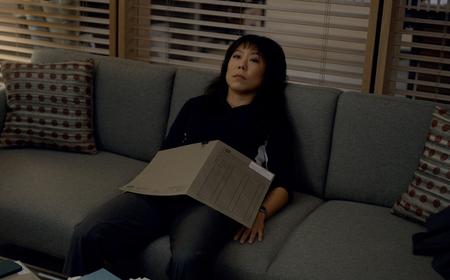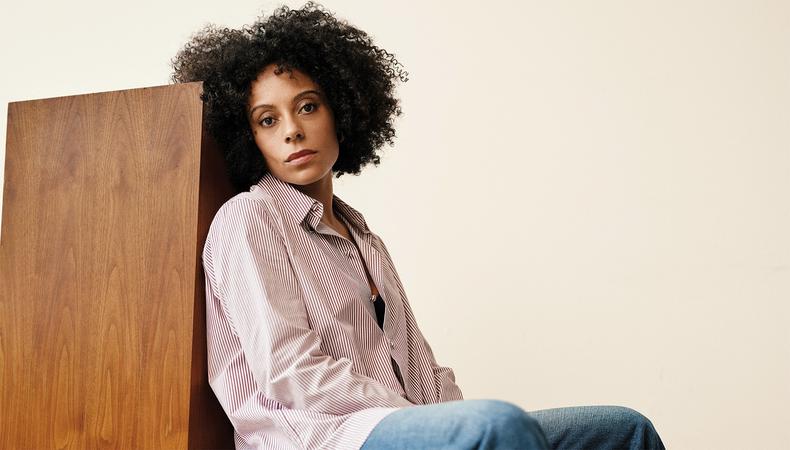
Every actor gives some part of themselves to a character. In Rosalind Eleazar’s case, that meant tapping into her own professional highs and lows to play a once-successful actor struggling to revive her career in Chris Rock’s Hollywood drama “Misty Green.”
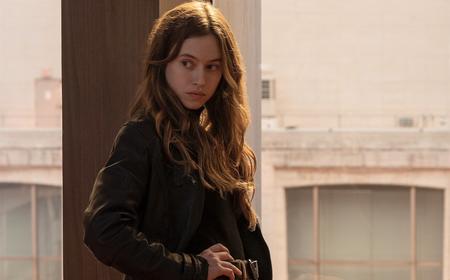
“I could definitely relate to the ups and downs of our industry,” she says. “You can have massive hiatuses of no work and then get the job of your life. Then you may not do anything for seven months. I know that journey.” But thanks to her ferocious performance, the London native is now in the spotlight. In this film festival favorite, Eleazar’s Misty desperately tries to pull her life together before getting evicted from her beachside L.A. pad. “She’s fiery but also vulnerable and childlike,” says Eleazar, who is best known for her work on the Apple TV series “Slow Horses.” “I went where my mind and body allowed me to go.”
Here, Eleazar talks about the challenge of working with a director who’s playing your director and her own audition pratfalls.
Misty’s make-or-break auditions are an onscreen highlight. What was your own experience like landing this role?
I had a Zoom audition and went all out—I hired a studio, had my hair and makeup done. Then about 10 minutes before it started, the studio next door started playing live heavy metal music. Then I realized that I’d booked a studio that was right next to a train track. It was just so loud. And the Wi-Fi just completely lagged! It was just so terrible that it was actually funny. But it obviously worked out in my favor, thank God.
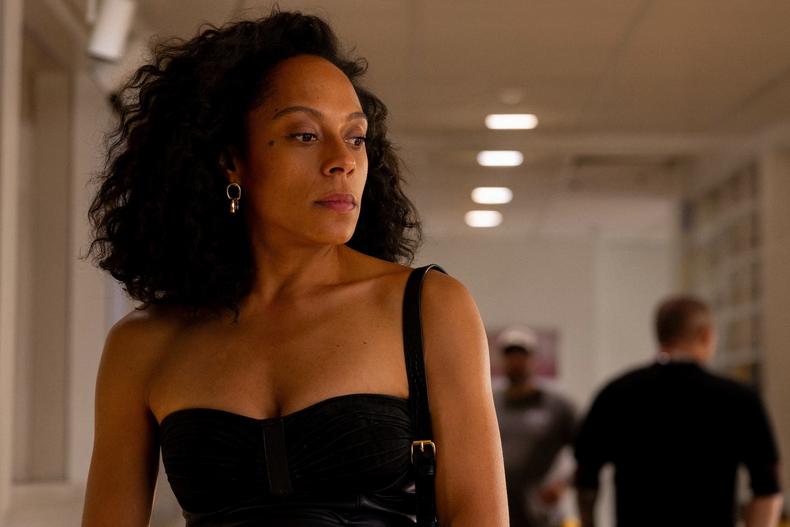
“Misty Green” Credit Merrick Morton
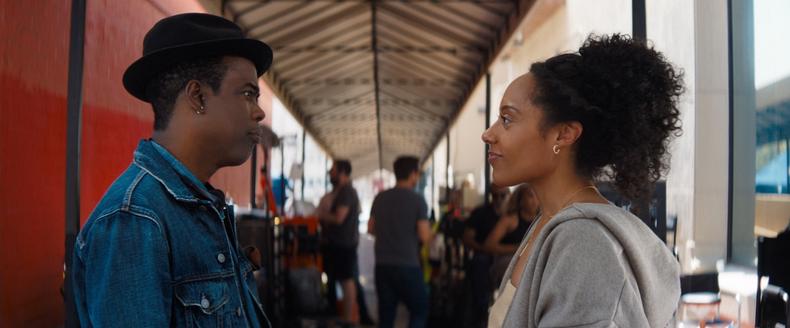
Chris Rock directed the film and also plays a director in the film. Was it a challenge to work with someone wearing so many hats on the set?
We oscillated between all his roles. Before the film started, we discussed the character and the nuances of the script. When we actually started, and he was playing the director, he was talking to Misty through me.
Not that I’m a Method actor, but I did maintain a certain energy about her. But Chris was great—he was a facilitator on the set. He trusts people on the set to do their best work, so
I had the freedom to explore her.
As a graduate of the London Academy of Music and Dramatic Art, how did your education shape your acting process?
Drama school was the foundation of everything. It’s almost like 3-D therapy for your mind. Our particular school has a lot of focus on the ensemble rather than the star. You have to make sure you’re there for your other actors, so it’s not a selfish endeavor. I’d like to think I’ve taken that with me in the jobs I’ve done. I also learned a lot on the stage. It gave me the groundwork to feel very confident.
How did you learn that flawless American accent?
Thank you! I had a great dialect coach in Cara Reid. And the more you practice, the better you are. I was in L.A. for about six weeks before we started shooting, and I basically stayed in my American accent the entire time. I also interacted with as many people as I could. I wanted to sense by their faces whether they believed I was from there or not. I think I got to the stage where I was believable.
There’s actually a line in the movie when Misty complains that she can’t get cast because she’s “not a Brit.” Was that written for you?
No, it was always there! Gosh, it took me a few takes to get through that.
“Misty Green” Courtesy A24
Who are your acting inspirations and why?
Liv Ullmann, Sandra Hüller, Marianne Jean-Baptiste, Philip Seymour Hoffman, Don Cheadle, and Michelle Williams are my top six. They’re so honest in every character that they play, no matter what.
What’s your favorite movie about Hollywood?
You know what? I love “Pretty Woman.” It informed me even as a child. I loved the chemistry between Julia Roberts and Richard Gere. And it was brilliant in how it showed the dichotomy that exists in Hollywood. The city is not always about the industry—it’s about the place.
Do you have any acting advice you would give your younger self?
I would be scared that any advice would change the course of things. I really believe that every sort of hardship that you go through—all the lows and highs—make you a better person and a better actor. You need all the ugly stuff, too. So I would just tell myself that you’ll be fine.
How are you feeling about going from a relative unknown to a possible Oscar contender?
I just take it one day at a time. Right now, I’m just so happy that people will get to see this film. I’m so proud of the film and proud of everyone who worked on it. So I’m in the mindset of just enjoying that space. It’s a gift that a film even gets made!
This interview has been edited for clarity and length.
This story originally appeared in the Oct. 19 issue of Backstage Magazine.