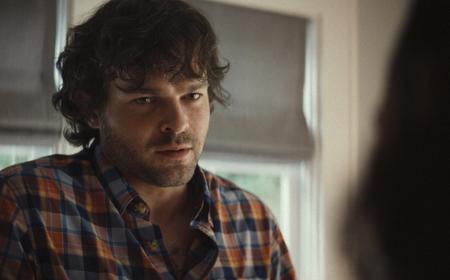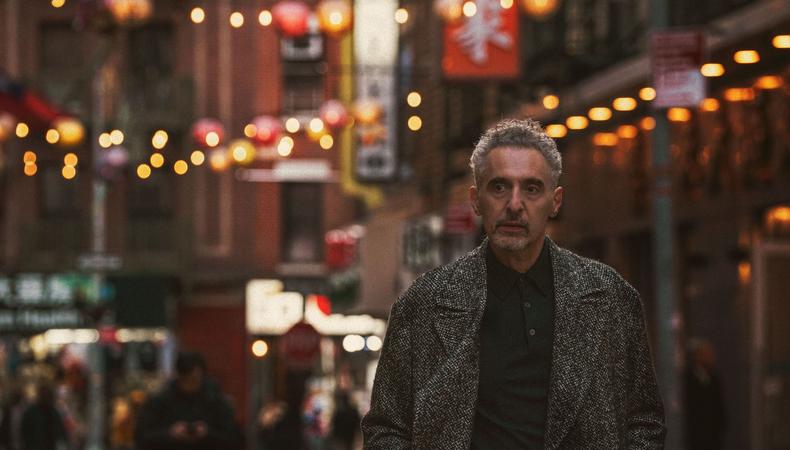
John Turturro is one of those actors who has been so good for so long, it’d be easy to assume he has a couple Oscars to his name—despite the fact that he’s never even been nominated in his near five-decade career. That will hopefully change thanks to Noah Segan’s low-key indie thriller “The Only Living Pickpocket in New York.” Carrying a lifetime of regrets behind his eyes, Turturro is remarkably moving as Harry Lehman, an aging thief struggling to exist in a digital world that’s passed him by.
In the video below, the actor dives deep into his performance, the real difference between small-budget sets and blockbusters like “The Batman,” and how to become a performer that filmmakers like Spike Lee and the Coen brothers want to work with again and again.
This is a film about someone who’s good at taking things from people. Is there anything in your acting that you’ve “stolen” from another actor?
Certainly, yeah. I’ve certainly taken a lot from people when I’ve interviewed them or watched them, observed them. You’re influenced by actors even when you’re a little kid and you’re watching movies on television. I used to watch the Million Dollar Movie, watching Edward G. Robinson or Barbara Stanwyck or James Cagney. Bette Davis, Burt Lancaster, all these people are part of my subconscious. Their expressions, their movements. Especially actors in the past who were shot more widescreen. They came from the stage or vaudeville, they were dancers, and you really got to see them move.
And then I remember seeing Marlon Brando and that threw me into a loop. But I never thought I could be an actor until I started going to the theater and I saw Bob Fosse’s “Pippin” and I saw Ben Vereen perform on stage. I was really so taken by him. And then I remember watching the clip on the Academy Awards of Dustin Hoffman in “Midnight Cowboy,” and the light bulb really went off in my head. Thinking, wow, this guy looks like someone in my family.
We recently talked to Tatiana Maslany, whom you just worked with in “The Only Living Pickpocket in New York” as well as on stage in “Rhinoceros.”
Oh my God, I adore her.
She was genuinely emotional talking about working with you on stage. And I’ve also seen you describe going back to the theater as “doing your humble rituals.” What is the importance of theater for an actor?
You’re doing the whole thing. You don’t have an editor. I’ve directed movies, and when you direct you’re editing the performance. I’m letting you discover things on camera and not just jumping to the result. But as an actor on stage, once the director leaves you are one of the editors. You’re bringing people’s attention to something, you know where the focus is. You’re using your body, your voice. It’s hard to get everything right or feel like, wow, I nailed it. Sometimes you feel like that scene was great and then the next scene [went poorly].
Working with someone like Tatiana, she’s a chameleon. She can really morph. When we worked on stage [in “Rhinoceros”], the director Diane Paulus and I kept saying we have to give her more to do. She’s incredible. If you do something, you throw her a curveball, she just throws you a fastball back. She’s so alive. That’s the joy of working with someone [in theater]. You have to stay in it. It’s like being out there on a tightrope. I’ve tried to do plays that are difficult. I don’t really want to do a play that’s not going to be that challenging for me. I’d rather do a text where you think, I’m not sure I could do this. That is a good place to be.
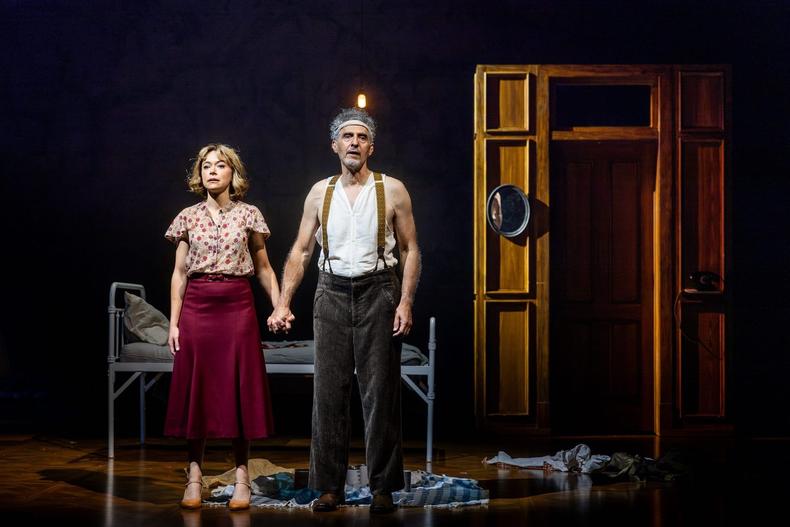
Tatiana Maslany and John Turturro in “Rhinoceros” Credit: Hawver and Hall
You’re an actor who has done both the massive budget projects like “The Batman” and the “Transformers” movies, and then of course indie films like “The Only Living Pickpocket in New York” where you only have 26 days to film it. What is the actual, tangible difference between those two kinds of sets, and how does it affect you as an actor?
I made my early career doing independent movies, plays, more off-Broadway than Broadway. I was doing medium-sized films at that stage. I mean, “Quiz Show” was a medium-sized film. It wasn’t huge. “Do the Right Thing” had close to 50 days. My first film had 43 days, “Mac.” I never did a big budget film, like really big, until I did “Transformers.” My kids were like, “Just do it, Dad.” I did it in the spirit of playing with them. But that’s not where I live. The difference is in “Transformers,” we don’t do that many takes. In “The Batman,” we did a lot of takes.
A movie like “Only Living Pickpocket,” it’s not that different. It’s just that you have to do so much prep. But I didn’t feel rushed on this movie. I told the producers, don’t come on set sweating. I don’t want to see your anxiety. I’m gonna try and do my thing. Overall, they did. They kept away, and Noah Segan was very happy and joyful. Sam Levy, the DP and camera operator, he had big input into the atmosphere of the film. It’s just where I live. It’s what I want to do. If we had another five days, that would have been great. But we also jumped on a train one day and did all these pickup shots, and I loved it.
That reminds me of when I began. I would do these off-off-Broadway plays for no money, and I wouldn’t do other things [I was offered]. I was in “Troilus and Cressida” at Yale, and I got offered a huge film, which I maybe would have done, but I would have had to quit the play. Maybe I was stupid. [Laughs] I mean, I maybe could have bought a house earlier. But I don’t really regret it, because I feel like these things helped me improve. When I did “Godot” with Tony Shalhoub, I was offered this big movie, “Mystery Men.” My daughter read it, and she’s an editor at DC Comics now, and she said, “It’s not good, it’s garbage.” And she read “Godot” with me—brilliantly, by the way—and she said, “You should do this.” It was $300 a week. So I’m not patting myself on the back for doing that, I just live for that stuff. That’s what I live for.
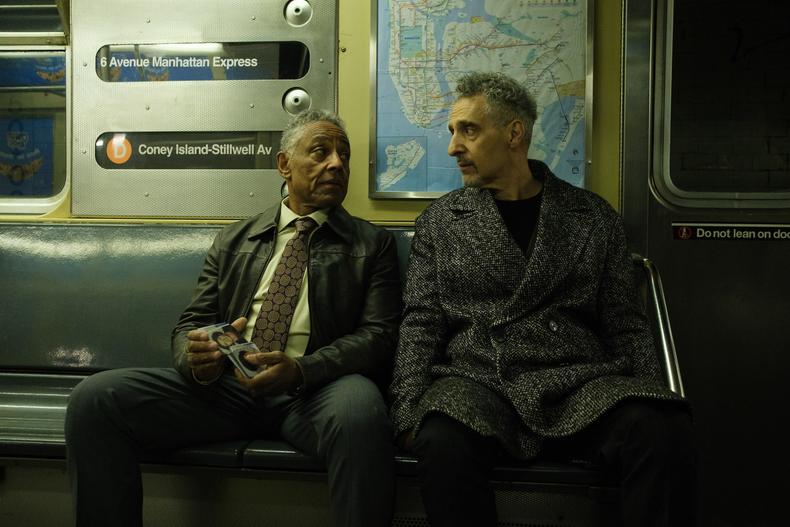
Giancarlo Esposito and John Turturro in “The Only Living Pickpocket in New York”
You’re also an actor who has longtime collaborators. You’ve worked with Spike Lee nine times, the Coen brothers four times. You just mentioned you’ve more recently done a few projects with Tatiana Maslany. What’s your advice for being an actor people want to work with multiple times?
I try to serve the story. I’m not trying to make myself look good. When I was in “Do the Right Thing,” I chose to play the racist guy. That’s what it was about, and if I could flesh it out… Once I got comfortable, I added things that Spike wasn’t even aware of. I said, these guys say this and that. I was not there to soften it, but at the same time I wanted to humanize it. Once someone sees that and they feel like you’re serving the story, and you’re having fun doing it once you’re relaxed enough…which took a while, because of everything I was saying. But him and [DP] Ernest Dickerson helped create that environment. People were laughing and encouraging you.
It’s also when someone’s given you the opportunity to surprise them. I can go and make [the role] way more human, way more contradictory. Maybe they would have been happy with less dimension, but I want to give that to them so they have that to choose from. That’s a big gift when someone believes in you. Trust is not given, it is earned. And they have to earn your trust, too. Because sometimes people can be very, you know, “I want what’s in my head.” To me, that takes all the joy out of it. I don’t have to change your lines, but how I do it is where I get my joy.
Sometimes people get nervous, and I’m experienced enough to try to calm them down. If something’s a little too much, I can take it down. But I’m not gonna change everything that I’ve worked really hard to build. And if that’s the case, you have the wrong person. Once I learned a few things early on, I said my goal was to save my money so I can choose what I want to choose. And if someone mistreats me—which happened when I first started making movies—I can say to them, no, no, no, don’t treat me this way. And if they don’t like that, I can go home. I’ve seen actors be abused. I mean, really abused.
That’s our time for the interview, but I feel like I could keep talking to you about acting for a couple more hours.
This is interesting for me, too. So I encourage actors out there, especially beginners, don’t forget who you are. You’re coming from somewhere, and you have somewhere to go. Don’t throw that out the window. Each person is special. They have their own specificity in their humanity. Keep mining that.
This interview has been edited for clarity and length.