Whether it’s Supreme Chancellor Palpatine manipulating Anakin Skywalker, Luke Skywalker giving new meaning to daddy issues, or Mon Mothma delivering a powerful warning about tyranny, the “Star Wars” universe is filled with powerful speeches perfect for auditions.
For actors looking to showcase their sci-fi chops, emotional depth (hopefully more complex than Han Solo’s “I know” response to Princess Leia’s “I love you”), or ability to deliver Bantha-sized gravitas, here are nine of the most epic monologues from a galaxy far, far away.
1. “Star Wars: Episode III—Revenge of the Sith” (2005): Palpatine on the tragedy of Darth Plagueis the Wise
Sitting in the dim glow of the opera house, Palpatine lures Anakin closer to the dark side with a calm, calculated tale of power and betrayal. Though his tone remains steady, every word drips with manipulation and intrigue as he tells the story of how Darth Plagueis could save others from death—just not himself. This monologue is ideal for actors who can balance control with subtle menace as they shift from avuncular storyteller to disturbingly power-hungry manipulator.
Did you ever hear the tragedy of Darth Plagueis the Wise? I thought not. It’s not a story the Jedi would tell you. It’s a Sith legend. Darth Plagueis was a dark lord of the Sith so powerful and so wise he could use the Force to influence the midi-chlorians to create life. He had such a knowledge of the dark side he could even keep the ones he cared about from dying. The dark side of the Force is a pathway to many abilities some consider to be unnatural. He became so powerful, the only thing he was afraid of was losing his power, which eventually, of course, he did. Unfortunately he taught his apprentice everything he knew, then his apprentice killed him in his sleep. Ironic. He could save others from death, but not himself.
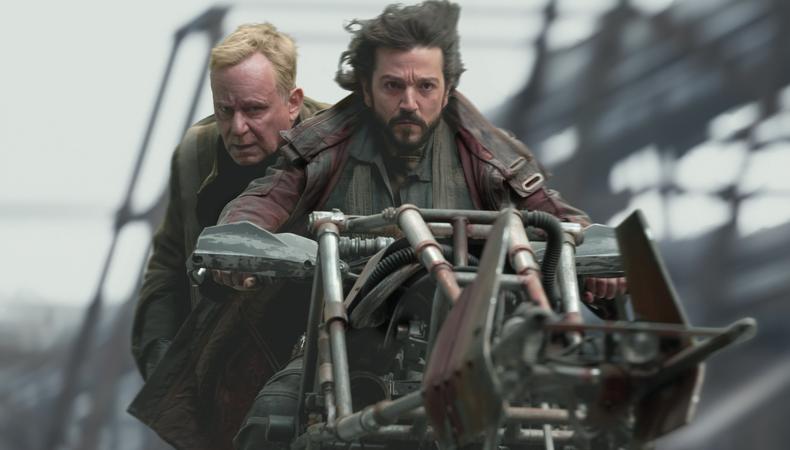
2. “Andor” (2022–): Luthen Rael on the meaning of sacrifice
On this prequel series to “Rogue One: A Star Wars Story,” revolutionary leader Luthen Rael exposes the true cost of rebellion and the sacrifices he has made (peace, morality, his very soul) so that others may one day see freedom. In a hauntingly poetic yet brutal confession, he reveals the utter desolation of fighting an impossible war. Actors can lean into the monologue’s measured intensity by allowing pain to come to the surface without shattering their composure, particularly with the final growled line.
Calm. Kindness. Kinship. Love. I’ve given up all chance at inner peace. I’ve made my mind a sunless place. I share my dreams with ghosts. I wake up every day to an equation I wrote 15 years ago from which there’s only one conclusion: I’m damned for what I do. My anger, my ego, my unwillingness to yield, my eagerness to fight, they’ve set me on a path from which there is no escape. I yearn to be a savior against injustice without contemplating the cost, and by the time I looked down there was no longer any ground beneath my feet. What is my sacrifice? I’m condemned to use the tools of my enemy to defeat them. I burn my decency for someone else’s future. I burn my life to make a sunrise that I know I’ll never see. And the ego that started this fight will never have a mirror or an audience or the light of gratitude. So what do I sacrifice? Everything!
3. “Star Wars: Episode IV—A New Hope” (1977): Obi-Wan Kenobi on the Jedi Order and the Force
This is the moment that the first “Star Wars” film transforms from everyday space opera to epic mythopoeia. Obi-Wan delves into the mythology behind the Force and the Jedi Order, connecting Luke to his past. His voice is filled with both wisdom and regret as he reflects on the Jedi’s peacekeeper status before the Empire came to power. It’s a perfect monologue for actors who want to showcase warmth, nostalgia, and underlying sorrow. The key challenge is maintaining a steady, wise delivery while subtly hinting at internal guilt and trauma.
An elegant weapon for a more civilized age. For over a thousand generations the Jedi Knights were the guardians of peace and justice in the Old Republic. Before the dark times. Before the Empire. A young Jedi named Darth Vader, who was a pupil of mine until he turned to evil, helped the Empire hunt down and destroy the Jedi Knights. He betrayed and murdered your father. And now the Jedi are all but extinct. Vader was seduced by the dark side of the Force. The Force is what gives a Jedi his power. It’s an energy field created by all living things. It surrounds us, penetrates us; it binds the galaxy together.
4. “Star Wars: Episode V—The Empire Strikes Back” (1980): Yoda on action vs. intention
Deep in the swamps of Dagobah, Yoda offers Luke a simple but profound lesson in belief and commitment. “Do or do not, there is no try,” he says, his words layered with centuries of wisdom. The sentiment also rolls perfectly into Yoda’s description of the Force, making an intangible concept more tangible. Though short, this monologue requires strong presence and conviction. The challenge for actors is delivering it without slipping into impersonation—the key is making it feel deeply personal, rather than just an iconic quote.
Try not. Do, or do not. There is no try…. Size matters not. Look at me. Judge me by my size, do you? And well you should not, for my ally is the Force, and a powerful ally it is. Life creates it, makes it grow. Its energy surrounds us and binds us. Luminous beings are we, not this crude matter. You must feel the Force around you, here, between you, me, the tree, the rock. Everywhere. Yes, even between the land and the ship.
5. “Star Wars: Episode III—Revenge of the Sith” (2005): Obi-Wan on the chosen one
On the burning shores of Mustafar, Obi-Wan delivers a heart-wrenching farewell to Anakin, his fallen apprentice. His voice trembles with grief and betrayal as he struggles to accept that the man he once called “brother” is now lost to the dark side. Quick and to the point, this is perfect for when you need to make an immediate impression, like a 30-second tape. (You can stretch it out by really playing the pauses; let the audience feel like you’re watching someone you love fade away.) To sell this monologue, use body language to manifest its raw emotion (sorrow, anger, disbelief) physically, making Obi-Wan’s pain deeply personal rather than purely dramatic.
You were the chosen one! It was said that you would destroy the Sith, not join them! Bring balance to the Force, not leave it in darkness! You were my brother, Anakin. I loved you.
6. “Star Wars: Episode VIII—The Last Jedi” (2017): Kylo Ren on letting the past die
Kylo Ren pleads with Rey to let go of everything—her past and family, the Jedi, the Sith—and join him. His voice wavers between confidence, desperation, and vulnerability, showing glimpses of the broken child beneath the mask. This makes a fantastic exercise in internal conflict, as you must balance arrogance with emotional uncertainty to make Kylo’s plea feel genuine rather than purely manipulative.
It’s time to let old things die. Snoke, Skywalker, the Sith, the Jedi, the rebels. Let it all die. Rey, I want you to join me. We can rule together and bring a new order to the galaxy…. No, no, you’re still holding on. Let go! Do you want to know the truth about your parents? Or have you always known, and you’d just hidden it away? You know the truth. Say it. Say it. They were filthy junk traders who sold you off for drinking money. They’re dead in a pauper’s grave in the Jakku desert. You have no place in this story. You come from nothing. You’re nothing. But not to me. Join me. Please.
7. “Rogue One: A Star Wars Story” (2016): Jyn Erso on rebellion
In this “Star Wars” prequel, Jyn Erso steps forward with a fiery plea for action when the Rebel Alliance hesitates to fight. Filled with determination and defiance, she reminds them that rebellions are built on hope and urges them to take a stand against the Empire, despite overwhelming odds. Use this monologue to showcase conviction and leadership by delivering urgency and passion without overplaying emotion.
What chance do we have? The question is: What choice? Run, hide, plead for mercy, scatter your forces. You give way to an enemy this evil with this much power and you condemn the galaxy to an eternity of submission. The time to fight is now! Every moment you waste is another step closer to the ashes of Jedha. Send your best troops to Scarif. Send the rebel fleet if you have to. You need to capture the Death Star plans if there’s any hope of destroying it…. Rebellions are built on hope.”
8. “Star Wars: Episode IX—The Rise of Skywalker” (2019): Emperor Palpatine on villainy
Now at his most monstrous, Emperor Palpatine declares himself all the Sith as he taunts Rey with the weight of generations of darkness. His voice is filled with pure arrogance and theatrical villainy, making this a great villain monologue for actors who want to go all-in on commanding, larger-than-life intensity and an opportunity for physical drama.
She will strike me down and pledge herself as a Sith. She will draw her weapon. She will come to me. She will take her revenge. And with a stroke of her saber, the Sith are reborn! The Jedi are dead! Do it! Make the sacrifice.
9. “Star Wars: Rebels” (2014–2018): Mon Mothma on the fight against tyranny
Mon Mothma denounces the Empire and calls for the galaxy to rise against tyranny. Her speech is firm and inspiring, showing the strength of a leader who fights with words instead of weapons. It makes a strong choice for roles that require diplomacy, leadership, and quiet resolve, showcasing your ability to convey power through presence.
This is Senator Mon Mothma. I’ve been called a traitor for speaking out against a corrupt galactic senate. A senate manipulated by the sinister tactics of the Emperor. For too long, I’ve watched the heavy hand of the Empire strangle our liberties, stifling our freedoms in the name of ensuring our safety. No longer. Despite Imperial threats, despite the Emperor himself, I have no fear as I take new action. For I am not alone. Beginning today, we stand together as allies. I hereby resign from the senate to fight for you. Not from the distant halls of politics, but from the front lines. We will not rest until we bring an end to the Empire. Until we restore our Republic. Are you with me?