After 25 years, “Survivor” is still leading the charge for reality TV, and showing no signs of slowing down. Each season, a group of castaways form tribes, compete in challenges, hunt for immunity idols, and try to sway other players’ tribal council votes so that they can ultimately be named the Sole Survivor. The CBS series first premiered in 2000 and, thanks to its shocking Season 1 finale, forever changed the landscape for competition shows.
Billed as the show’s original villain, Richard Hatch was the first to win “Survivor.” At that time, it was rare for a reality show contestant who ruffled feathers to end up taking home the grand prize. (Even longtime host Jeff Probst has said he was worried about the decision.) But Hatch’s strategically formed alliances (and fishing skills) set the stage for playing the game of “Survivor.” Now, players and viewers know that strategy and alliances are key to taking home the $1 million prize at the final tribal council.
With Season 49 premiering Sept. 24, the series’ highly anticipated 50th anniversary season set for next year, and casting for Seasons 51 and 52 already underway, we wanted to know how a show with such a legacy gets cast. Here, “Survivor” casting director Jesse Tannenbaum, who also casts the competition series “The Amazing Race” and “Big Brother,” shares how contestants can outwit, outplay, and outlast the casting process.
JUMP TO
- How the “Survivor” casting process works
- What Probst likes to see from contestants
- What not to do during your audition tape
- The “Survivor” contestant whose audition still lives in the CD’s head rent-free
- Season 50 + the decision behind Mike White’s return
- The CD’s best advice for getting cast on “Survivor”
Tannenbaum says, “It’s a game of ‘Survivor’ within the casting process.
“When we start out casting, on average, we have a pool of 25,000 people waiting for us,” he explains. “Our team starts working in August, and we cast all the way through the New Year, because we’re lucky enough to do two seasons back to back. A lot of other shows I work on, we’re just casting one season, [and] we get an average pool of around 6,000 applicants. But for ‘Survivor,’ we have [much more].”
To whittle down the 25,000 applicants, Tannenbaum and his team look through the submission tapes for people who have “a personality that draws us in,” he says.
Contestants who make it past are then contacted by none other than Probst, who’s also a producer on the show. “Jeff will have individual FaceTime [calls] with each of these people…. They get to geek out and connect with [him as part of the audition process],” Tannenbaum says.
The rest of the casting process occurs over Zoom, and it’s not until the final round of casting that contestants are flown to Los Angeles for 24 hours to meet with the “Survivor” team in person. “That’s where the fun begins,” Tannenbaum notes, “It’s just a constant shifting of the puzzle piece until the dust settles and we’re just over the moon about what [the cast] looks like for that season.”

“[Jeff] is a very deep thinker,” Tannenbaum says, which causes him to look for contestants who are “great talkers” and have “heart and passion for the game.”
“I think the overarching theme for what we’re all looking for are great storytellers, compelling storytellers; people who really want to not just come in here and play the game, but also to learn from the show, grow from the show, really soak in the experience,” the CD adds, “which will then motivate a viewer to maybe get off the couch and be like, ‘If they could do this—I see myself in them, I can do this, too.’ ”

For those looking for pointers on making your “Survivor” submission video, here’s what the CD doesn’t want to see you doing.
1. Making generic statements: “[We’re] really good at sniffing [out] somebody that’s just trying to put up a front, trying to say the perfect things—just using broad and general statements that don’t really let us in to who they are as a person. For example, [someone who says,] ‘I’d be great at “Survivor” because I’m super competitive…. My friends don’t even come over for game night anymore, I’m that competitive. I’ll do whatever it takes to win.’ [Or] ‘I've been through so much stuff in my life. I’ve had ups and downs…. I feel like when my back is against the wall, I’ll be able to fight through and get to the end.’ What did you just learn [from those statements]? Nothing. [We want to know,] what are those ups and downs? You don’t have to have a sob story to get on ‘Survivor,’ but you need to own who you are.”
2. Following a script or putting on a performance: “We want to learn about you and who you are. So, no costumes. Don’t do a skit. Don’t sing a song the entire time—unless, creatively, your song is constantly just giving information about yourself and we see that you also have an extroverted personality and a creative side…. Don’t memorize something. Just shoot the shit with us.”
3. Taping in loud places or wearing distracting clothing: “Make sure we can hear and see you clearly. So many people shoot it like, ‘Oh, I’m in Hawaii. It’s beautiful, and there’s a waterfall.’ I can’t hear you—there’s a waterfall! [Also,] no hats, no sunglasses, unless you’re known for wearing a baseball hat [like Boston Rob]. We want to see you.”
4. Focusing too much on making the video perfect: “The video should feel authentic to who you are. It doesn’t need to be set up perfectly. You could literally be in the kitchen, holding your newborn baby, just kind of bouncing the baby as it’s kind of crying, and be like, ‘I need a break…. I want to do something for me.’ Just that vulnerable moment of seeing it all happen [is what we are looking for].”

Maryanne Oketch, who ended up winning Season 42, is Tannenbaum’s most memorable audition.
“From the second I was going through the database and I saw Maryanne’s [submission video], I was like, ‘Wow, we’ve never had someone like this on the show.’ She felt so different and unique and special,” he explains. “When I got her on the first FaceTime, it was just everything—from seeing her bedroom and seeing the floor-to-ceiling board games, to her geeking out and screaming and running around when I first called her. [Her energy] was just carried out throughout the entire process.
“And I remember during casting finals, she was running late because she got a flat tire, and she FaceTimed me…freaking out in the most Maryanne way possible,” he continues. “She didn’t know that the entire team was listening. We were sold before, but fully sold after just seeing that really authentic moment of, how does someone handle getting a flat tire when they’re trying to get to the interview for a show they really want to be on?”

The series is about to celebrate a major milestone in TV. In spring 2026, “Survivor” Season 50 will debut, and it’s bringing back some notable game players, including “The White Lotus” creator and Season 37 runner-up Mike White.
“The fans love Mike White, so the fact that he wanted to come back, that seemed like a no-brainer to us,” Tannenbaum says. “He was like, ‘I’ll make this happen…. I want to play this game.’ And talk about being a great storyteller. Talk about being fun and mischievous [to watch].”
He adds, “We’re extremely happy and grateful that we not just had a great cast [to pull from], but they wanted to play again, and play for a reason of celebration, because Season 50 is a season of celebration.”
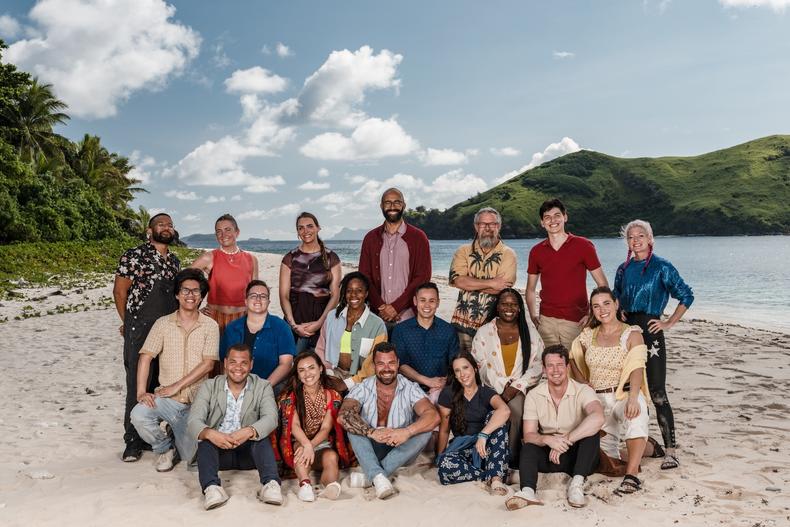
Tannenbaum knows that applying to “Survivor” or any other reality show can be a “daunting” task, especially when it comes to being vulnerable and letting your guard down on camera. However, he advises, “You don’t have to filter yourself at all, because that’s how we’re going to get to really know you.
“At the end of the video and our conversations, we should feel, ‘OK, I could totally see what it would be like having a beer with this person or a cup of coffee,’ ” he explains. “And if we don’t know, it’s hard to read you, and we might move on.”