Sure, Evan Hansen is a great role, but isn’t there some relief that comes with being too mature to play the immature? Musical theater’s seasoned roles for men are also some of its richest, and performers wait for years (and years and years) to be able to play them—of course, you don’t want to ruin your chances to do so with a bad audition. That’s why we’re here; thank us later!
“The Barber and His Wife” from “Sweeney Todd”
The barber with particular culinary skill is arguably the most sinister character in the American musical canon, and this is among his most sinister tunes—no wonder every performer is dying to play him. This is an ideal track to display character acting chops, just beware of too much camp or you risk the song losing its very formidable spook.
“Being Alive” from “Company”
I mean, does it get more existential conceptually than “being alive”? It’s quite literally the biggest conundrum there is in life, and the mission of this song—by all-time greats Stephen Sondheim and George Furth—acknowledges as much with lyrics like “Somebody need me too much; somebody know me too well.” With a 5B key, it can readily be adjusted to a number of varying pitches, but whatever you do, don’t skimp on that money note (you know the one).
“Finishing the Hat” from “Sunday in the Park With George”
Let’s get this out in the open: This is one of the hardest songs in the canon to sing, let alone sing well. But that’s also what makes it all the more impressive if you are able to pull off an emotionally invested rendition. This Stephen Sondheim diddy has an incessant pulse beneath its melody, which can also make for an extra kinetic use of your time in the room. There are also at least 10 easily-adjustable keys.
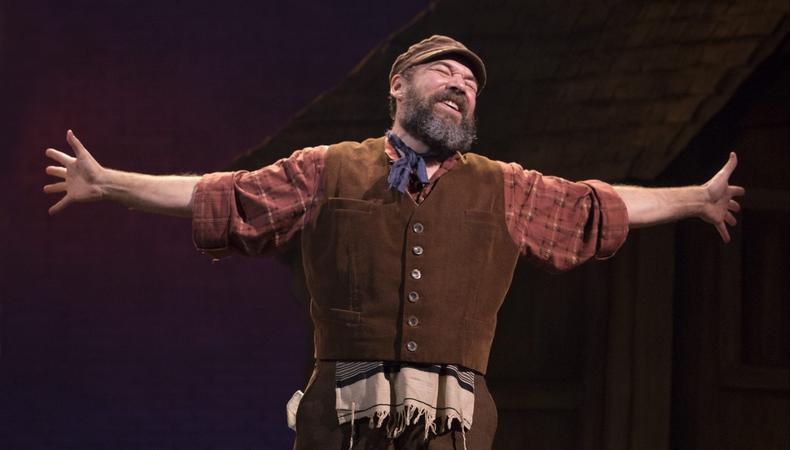
“If I Were a Rich Man” from “Fiddler on the Roof”
What makes this song a truly great one to audition with is its room for personal flair and interpretation. It’s comedic, but it’s still an “I want” song through and through and those two things can only really coexist in competent and experienced hands—hands like yours!
“I’ve Grown Accustomed to Her Face” from “My Fair Lady”
Put it in C major, park it, and bark it. That is to say, there aren’t many thrills nor bells n’ whistles to make this Golden Age tune sing. It’s really just a gorgeous melody—spanning C4–D5—and an ability to understand these lyrics about the sometimes mundanity of love; try nailing that at 22 years old.
“The Music of the Night” from “The Phantom of the Opera”
This seminal Andrew Lloyd Webber tune may be the foremost example of baritone emoting. Just be very, very aware of the breadth of notes that must be scaled, from low-lows to high-highs (C–*C, spanning two octaves and one semitone).
“Make Them Hear You” from “Ragtime”
“Justice was our battle and justice was denied” is not a lyric that is to be believed when sung by someone who doesn’t truly understand that life is, frankly, only unfair. The difficult lyrics are countered by the song’s fairly uncomplicated melody, set in D major. You can’t go wrong with this one.
“Sailing” from “A New Brain”
Simplicity is the key to success in this William Finn-James Lapine number, a wrenching distillation of what may or may not matter in the face of mortality. No big deal, right? This one is a great tryout song for roles that are particularly straight-laced or earnest, but it is ultimately just a great showcase for vocal tenacity and, well, pretty singing!
“Soliloquy” from “Carousel”
When it comes to the musical theater tunes for men of a certain age and experience level, this Rodgers and Hammerstein classic is, for lack of a better term, it. It’s also notoriously strenuous, traversing B3–G5. Still, the classics are the classics for a reason, and Mr. Billy Bigelow is as classic a role as they come.
Ready? Check out Backstage’s musicals audition listings!
Disclosure: This post is brought to you by the Backstage team and/or a Backstage Expert. If you purchase items through these links, we get a small share of the revenue from the sale from our commerce partner.