
From Matt Damon to Viola Davis, plenty of future stars started as background actors. This unsung but essential role is an enriching on-set experience that’s available to anyone—even if you’re not an aspiring A-lister. There are many factors that affect how much you get paid, but it’s not impossible to make a decent amount of money from gigs as an extra. If you’ve ever wondered what it takes—and how much it pays—to be in the background, keep reading!
JUMP TO
Typically, background work doesn’t come from your usual audition process. Instead, you’re more likely to find gigs from open calls—many of which you can find right here at Backstage!
This setup is “different from auditions for speaking roles in that the real key to getting booked is all about a specific look, age, or type for the project,” casting director Melanie Forchetti (“Voiceless,” “Soul Harvest”) told us. “We’ll generally put a call out for specific types of talent or someone with special abilities as referenced in the breakdown.”
That means if you’re interested in being a background actor, make sure you have professional, up-to-date headshots and a résumé with a detailed special skills section.
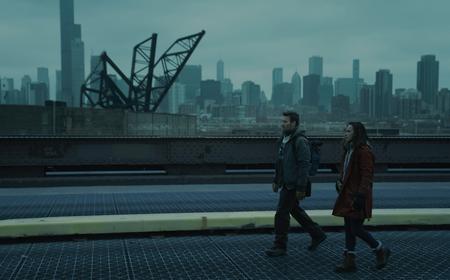 Season 2 of Apple TV+'s ‘Dark Matter’ Needs Talent + Other Background Casting Calls
That depends on many factors: most explicitly, whether you are doing a union shoot or not. SAG-AFTRA has standard rates across its various contracts. Background actors make $216 a day, or $27 an hour for a standard eight hours of work. If you’re booked for a “special ability”—do they want you to dance, play an instrument, or juggle?—the rate goes up to $226 a day, or $28.25 an hour.
Nonunion rates vary from project to project, mostly dictated by the minimum wage of the locale you’re shooting in. In major production hubs Los Angeles and New York City, that number is $17.28 an hour and $16.50 an hour, respectively.
Other factors that affect pay rate
On nonunion projects, the budget is also a major deciding factor on how much background actors make. If you’re working on a truly independent film with a shoestring budget, you’re likely looking at minimum wage. Interestingly, SAG-AFTRA has a consistent background rate across all its theatrical and television contracts, which spans projects with a budget of $300,000 to anything over $2 million.
A key detail to consider is time—more specifically, overtime. All actors on union shoots make time and a half for anything over eight hours, up to 10 hours. Any day that stretches past 10 hours is paid out at double time.
Actors in union productions will also get pay bumps for rare instances like these:
- Meal penalties—when a production does not feed the cast and crew after six hours of being on set.
- Your car being used in the background of a scene.
- If you’re expected to stand in or around atmospheric smoke.
- If you do your own hair and makeup.
- If you bring a prop to the set that’s used on-camera.
Only you can truly answer that question, depending on your personal circumstances. However, it would be a challenge, especially in high-cost markets like L.A. and New York. Here’s a hypothetical, and you can adjust to your own comfort levels: Let’s say you need to make $80,000 a year to live. If you only did eight-hour workdays at $226 a day without overtime or pay bumps, you’d need to work 354 jobs to reach your goal.
However, it can be one of several avenues to boost your total earnings while still gaining valuable on-set insights. And remember, working as a background actor on a union set for a total of three days makes you eligible to join SAG-AFTRA.
In the end, serving as a background actor can be fun and illuminating, even if it mostly involves sitting around and waiting (and eating snacks from craft services). And while it may not make financial sense to try to turn it into your full-time career, it can be an amazing entryway into the industry and an up-close-and-personal look at what it takes to make a movie.