Great acting is all about making the audience believe in the realism of your character and their world. This means that if you’re depicting a character who is high on drugs, it’s vital to understand the ways their drug use impacts their body and behavior. From there, you can build a toolbox of actions, expressions, and speech to portray a high character.
JUMP TO
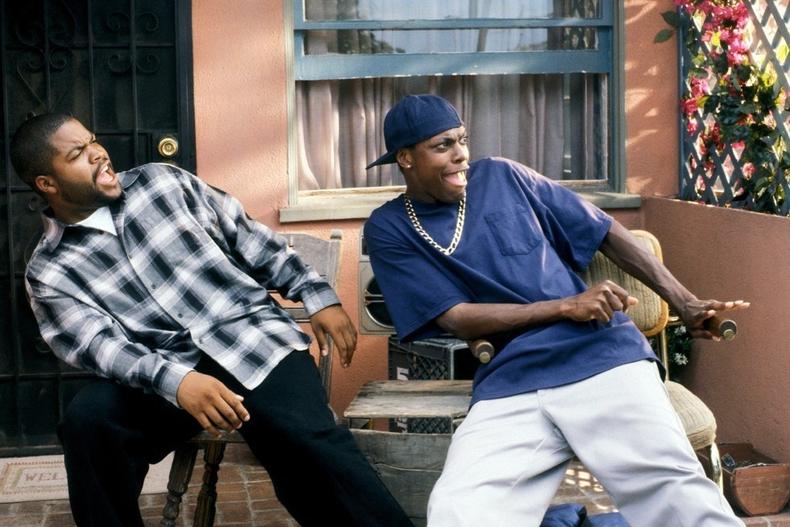 “Friday” Courtesy New Line Cinema
Plenty of stories include and even centralize drug use, so having an understanding of how to portray drug use authentically can only add to your overall acting toolbox. Without this knowledge, you might perform the wrong kind of high for your character’s drug of choice—or worse, fall victim to overacting. Figuring out how to make yourself look and act high also provides you with another set of choices to employ in scenes that may not have been explicitly written to include drug use.
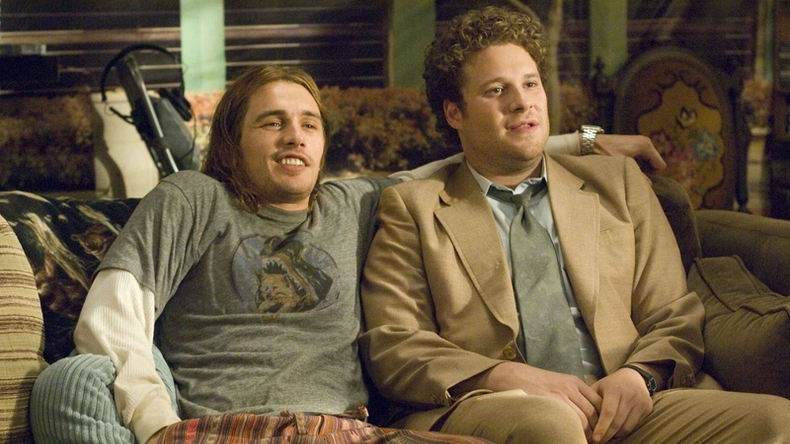 “Pineapple Express” Courtesy Sony Pictures Releasing
Knowledge of the different types of drugs and the ways people act while under the influence will help you act high—but this of course does not mean that you need to do drugs for an authentic performance. Instead, spend some time digging into the reality of drug use by researching how various drugs impact individual choices, behaviors, and actions.
To take on the role of a character on heroin, for example, Ewan McGregor went to the train tracks in Scotland to watch substance users in person. He also read first-person accounts of addiction and worked with a coach to ensure he had a complex understanding of his character’s drug use.
 “Succession” Credit: Macall B. Polay/HBO
Drugs are usually classified into seven categories based on their symptomatology: depressants, stimulants, hallucinogens, dissociatives, narcotics, inhalants, and cannabis. Each drug type causes a different type of high.
Depressants
Depressants such as alcohol and Xanax make people feel relaxed and loose. In smaller doses, they can reduce anxiety and inhibitions. In larger doses, they can cause unreasonable behavior and anger. People using these substances usually have poor concentration and reaction time.
To act like you’re on depressants for a role, slow and slur your speech, act forgetful, and use over-the-top gesticulations that lead to clumsy accidents. You might trip over your feet and then overcorrect, lose track of a conversation, and behave in ways that are otherwise unusual for your character. In this scene from “Shameless,” Frank Gallagher drunkenly discusses the differences between good drunks and bad ones.
Stimulants
Stimulants such as cocaine and amphetamines increase the brain’s production of dopamine while heightening the senses and sharpening reaction time—in other words, everything speeds up. This class of drugs constricts the blood vessels and can cause feelings of anxiety and paranoia in higher doses.
Pace, gesture wildly, and speak quickly and sharply to portray someone on stimulants. You might even sniffle or wipe at your nose if your character has snorted powder cocaine. Vacillate between expressing feelings of excitement and paranoia like Tony Montana in “Scarface.”
Hallucinogens
Hallucinogens such as LSD and magic mushrooms impact neural activity and particularly the brain’s serotonin receptors, which is what causes people to trip. People on hallucinogens might stare at a single place for a long time, say things that aren’t quite relevant to an ongoing conversation, and reference the visuals they’re witnessing.
Wide-eyed and full of wonder is the way to go if portraying someone on a lower dose of hallucinogens. The key to acting high on hallucinogens is convincing the audience that your character is really seeing their visuals. If you’re playing someone who is tripping too hard, act fearful and like the world has gotten out of control, as performed with wide-eyed terror in this scene from “Fear and Loathing in Las Vegas.”
Dissociatives
These drugs do just that—cause people to dissociate. People on dissociatives such as ketamine, PCP, and nitrous oxide can range from feeling slightly euphoric to fully detached from their body and physical environment.
Acting like you’re on dissociatives varies depending on how high your character is supposed to be and what the scene calls for. Just remember that your character is essentially no longer of their physical body and space, as represented in the “hit me” scene from “Thirteen.”
Narcotics
Opium, codeine, heroin, and other narcotics put users in a peaceful stupor. These drugs slow down the nervous system and can make people appear zombie-like, nod out, and even pass out entirely.
Slow and steady wins the race if you want to act like you’re high on a narcotic. Make your movements and reaction time as gradual as possible. Depending on the dose, you might act somewhat blissed out, like opioid user Rue Bennett in “Euphoria.” Zendaya’s performance is subtle and nuanced, combining the tragedy of addiction with the bliss of chasing that perfect “two seconds of nothing.”
Alternatively, depending on your character’s state of withdrawal, you might try to craft the haunting sense of desperation created by addiction. In this scene from “The Basketball Diaries,” Jim screams, spits, and cries as he tries to convince his mother to give him money for drugs.
Inhalants
Inhalants such as paint thinner and glue have psychoactive properties that cause a sense of euphoria, slurred speech, and poor coordination. The high created by huffing only lasts a few minutes, so users often repeat use over longer periods of time.
To portray someone high on inhalants, you might widen your eyes, slow your speech, and gaze off into the abyss created by your mind on drugs—as done to great comedic effect in this scene from “It’s Always Sunny in Philadelphia.”
Cannabis
The active ingredient in marijuana, THC, stimulates the pleasure centers in the brain, which releases dopamine and results in a feeling of relaxed euphoria. Weed can also cloud the senses and cause temporal distortion, which lowers inhibitions and impacts reaction time. Someone who is high might remain in a recumbent posture and sink into the sofa or chair they’re occupying.
To act high on marijuana, affect a zoned-out stare as if you’re lost in your own thoughts. Smoking pot makes the blood vessels dilate, so (gently) reddening your eyes will add authenticity to your performance. Slow or slightly slur your speech and take slightly longer to process answers to questions or general responsiveness. Act giggly, hungry, or astounded, depending on what the script calls for, and take this humorous scene from “Pineapple Express” as inspiration.