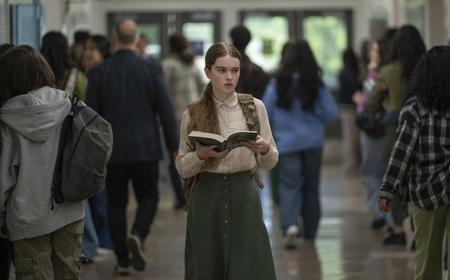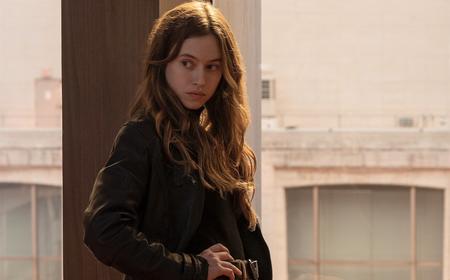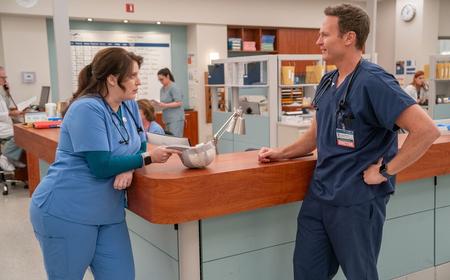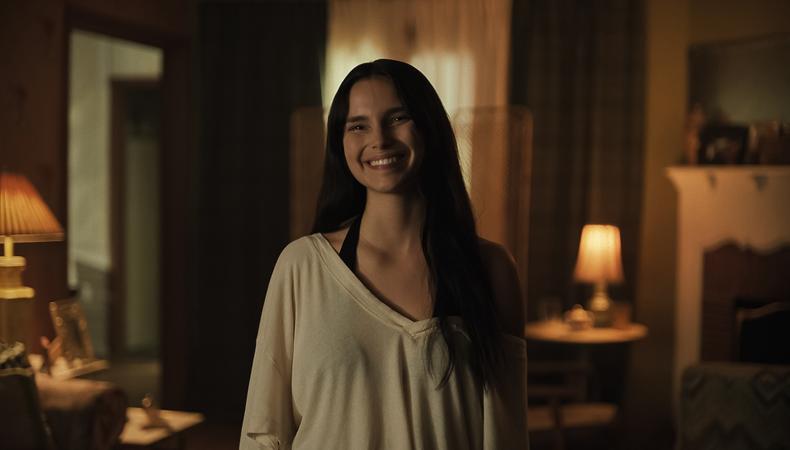
We wouldn't have this year's Cinderella casting story without casting director Skyler Zurn. Following the massive success of Curry Barker’s indie horror hit “Obsession,” the CD is being widely praised for turning the 25-year-old Inde Navarrette into one of the year’s breakout stars. Navarrette plays Nikki, an unfortunate soul trapped in a twisted curse that leaves her literally head over heels for her coworker, Bear (Michael Johnston). She plays the role so well that her performance is getting a major Oscar push.
Zurn’s fresh eye for authenticity is exactly what this generation of Hollywood needs. After a decade working as an associate on projects like “The Fall Guy” (2024) and “Euphoria,” she has solidified her status as an in-demand CD, even re-teaming with Barker for his next film, “Anything but Ghosts,” hitting theaters in May 2027. We sat down with Zurn to discuss the casting of “Obsession,” the undeniable qualities that made Navarrette stand out, and what actors need to know to follow in her freaky footsteps.
At what point in the casting process did you realize you needed fresh talent?
I think we believed that from the beginning. It was maybe an exercise on Curry’s part to explore named talent, but we had the blessing of being fully financed going into it, so we knew that we could rely on the writing and that Curry had enough vision to really pull it through. Every time we talked about names, there was never this super-huge excitement. We were always highly considering auditions and very hopeful that talent would win in the end. And thank goodness that we did, because early on, the tapes we were getting were just so impressive and so creative. The writing was giving actors a gift to explore with, and that was just a really cool and unique experience.
Did you give any early advice that helped Inde shape her performance?
Asking what we asked the girls to do in that callback is not an easy feat. Actors hold back sometimes when they don’t want to get too close to a role for it to get ripped away from them. We had to remind her, “You are meant to be here. Trust your instinct and don’t get in your head about it.” Her version was so different than the other girls. So she might have seen other girls and been like, “Am I in the right place?” And ultimately, her version got her the part because it wasn’t what we expected, and it ended up being better than our original idea. So I think remembering that if you’re the out-of-place person or you look different than the rest, then maybe that’s a good thing. Maybe there’s a reason why.
But she was very involved in the process from the beginning. Seeing her commitment and seeing her continuing to add and challenge and elevate and really get to know Nikki, by the end she was like, “She’s my friend. I know her.” That was the blessing of the audition process. It was a long casting process. Being involved with a role for that many months, you kinda have to sit into the mindset of her.
Do you remember a specific choice she made that was different from what you were initially seeing?
The crazy version of Nikki—this is going to be surprising—was the easier part of Nikki. In the audition process, one person might be thinking they’re going full out, and then the next person comes in, and their full out is different. But for her, it was falling in love with the original Nikki. Who do we start with? Who is the friend to Bear? Who is that real, grounded version? Originally, it was more like the girl next door, where Inde brought in this tomboy, cool, laid-back, not trying to be the center of attention. Sometimes people play laid-back and cool; it just turns flat. With her, there was still so much complexity in her subtext while remaining calm and balanced.
How did Inde hit both the likable and dark sides of Nikki during the audition?
She asked a lot of questions and was very collaborative from the beginning. She showed that she wanted to come in and make the right choice, rather than kind of guessing everything. There was a lot of restraint in the first takes. I do think we had to talk about, “Hey, I feel like you’ve done different tones and genres before where they always tell you to strip it back, tone it down. Maybe we’re going too far in that direction. So come back for your callback and really go in. We don’t want it to feel like a possession. We want it to feel like it’s you, and this is your objective and your need, and the stakes have never been higher.” Putting it into those actor terms helps them understand there’s no otherworldly supernaturalness I need to be adding, which kind of takes you out of the moment. Just keeping herself in it, but bringing it to that high level that we needed.
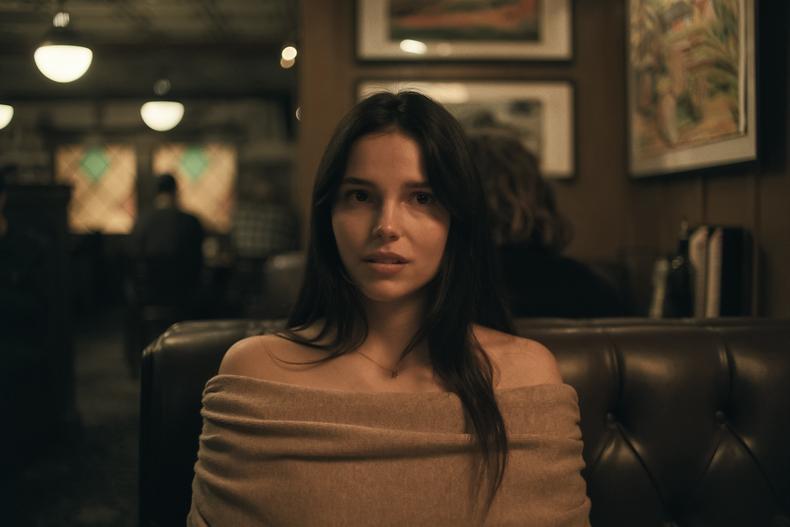
Inde shared that she walked away from the initial Zoom convinced that she bombed it. What advice would you give to an actor who thinks their audition went worse than it did?
In the self-tape Zoom era, I’m constantly talking to my directors about expectations. These actors haven’t talked to you yet; they don’t know what you want. They’re just doing a test with no textbook, basically. So you really have to give them grace and see potential. If you see anything that you like, know that they can do that better. You just need a little bit more time to express to them what you actually want. For the Zoom, there wasn’t a lot of context or information. We were being pretty standard with everybody, giving everyone the same reaction. Especially with Curry, he was very much taking everything in. Not until after could he really even know who was standing out to him because he was so in the moment. So, know that we see the potential in you, even when you don't see it in yourself.
Did the viral frown happen at all during the audition?
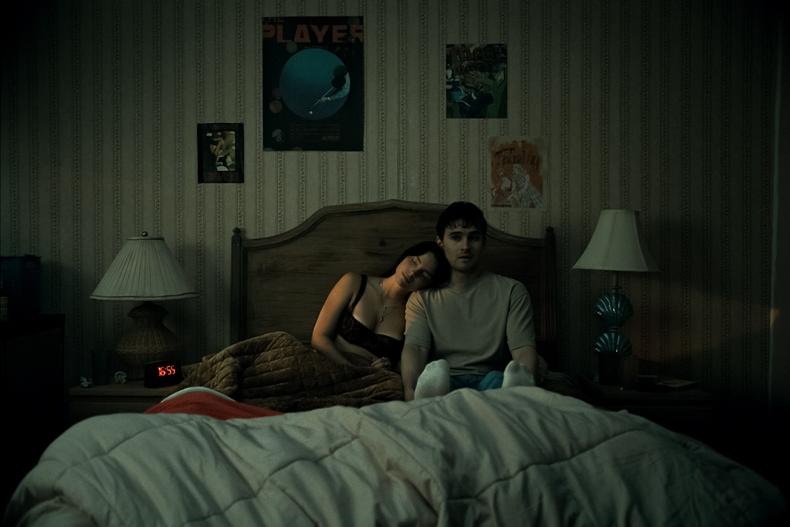
No, that scene was not part of the audition. There was a lot of play that happened with actual filming. Curry and Inde did a lot of prep and rehearsals, and the voices that she did in the bedroom were all discovered through rehearsal. We had some prototype things that we’ve liked in horror in the past, but we didn't want to mimic any of it. Curry did so many acting exercises with her—things that you would learn only in a BFA program or animal studies to get you out of your comfort zone. So it was fun. Like, when do you actually get to use that training from that weird class you did in college and it benefits you? This was the time.
Curry has an acting background and knows how to speak actor. Because of that, he’s able to go through the exercises, create comfort, and create safety so that you feel like there’s this full range that you can explore on set.
Now that Inde has officially blown up, has that affected your approach to casting?
I do think I can spot breakout talent. Although it’s about having the team that can spot it with you. In casting, we see actors all the time in so many different roles that we know who is getting to the top of each process and who each director is responding to. With each project you start on, you’re wiping the slate clean and having to present these actors to the production team. It’s just about having the right team that’s on board to take that risk as well. It is very, very rare because it is a risk. There are so many question marks in it.
But I’m looking for it constantly. I’m always looking for an opportunity to give a new person a role in almost every film that I do. It’s all about trust. If they’ve been auditioning for 10-plus years, have a recurring role, have a couple of guest stars, lots of good referrals, and they just need a moment to break—I want to be the one to break them. I want to have good casting and have new faces. I just need people to trust me.
Given Gen Z’s huge impact on the box office, is there anything new you’re looking for in an actor's performance these days?
In the indie space, I have to view you from the perspective of millions of people, not just my opinion of you. Technique is not the problem. It’s making it feel lived in, truthful, and grounded.
If you’re performing, I can easily see it, so I’m looking for authenticity. I know that sounds simple, but it’s because you can’t force it. Sometimes you’re pushing something that’s past your limit, but that doesn’t mean you shouldn’t try, because the more you do it, the more you’ll learn how to become comfortable in that character. The first time is always the hardest time. But future you will get that character again and be like, “OK, I know how to simplify this. I know how to approach this.” Because if you’re thinking, I’m seeing you think.
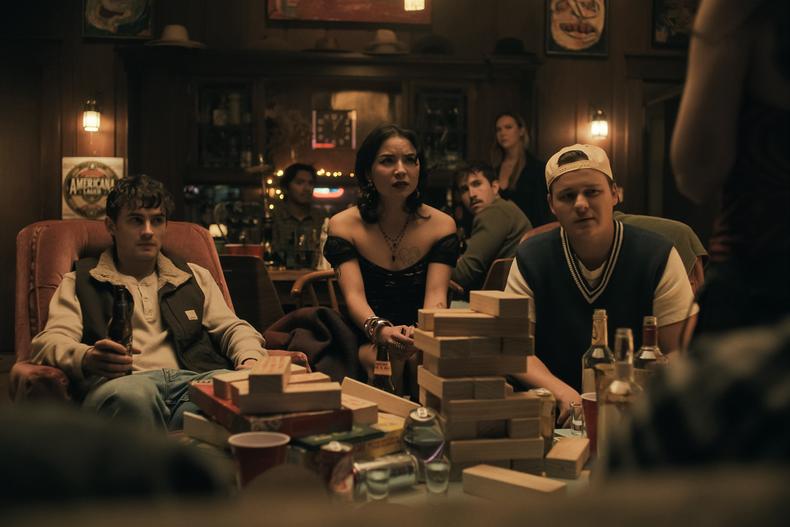
How can you tell someone is not just a good actor, but also someone who can respond well to the limits of low-budget filmmaking?
The callback process is so critical to that. We ask at the top of your audition, “Do you have any questions, comments, anything you want to talk about?” Most actors say no. You want to perform, you’re in the zone, you want to get right into it. However, that might be the only time you have the opportunity to talk to the director and casting director openly. Take that opportunity, even if you don’t have a question, to start a small conversation, like, “I really liked your short film that you did, and I wanted to see if this was a similar tone style to that” It just gets us to know you, your collaboration, and your personality. Don’t be scared to make conversation and show us a little bit of yourself.
Also, taking direction is a skill. Making sure you understand rather than just being like, “Yep, OK, great,” and then going into it. Take the time to download it, think about it, step off for a second. I would rather you do that than repeat the same thing that you just did.
Beyond Inde’s solo reads, her chemistry with Michael Johnston really anchored the film. What advice do you have for actors building a connection with a partner they’ve just met?
When actors first get into a chemistry read, they feel stuck and confined. I love it when they have a great consent conversation at the top, like, “Hey, are you OK if I touch you?” and then kind of all bets are off. Remind yourself to physically open up as well. You’ve just been practicing the dialogue, but when there’s somebody else there, what are you doing to incorporate that? Chemistry is all about each other, but sometimes people take that and run with it and lock on to the person, which also doesn't work. It feels a little too constraining, and it feels like you’re focusing on focusing rather than being present.
“Obsession” is generating some Oscar buzz. Do you think the new award for casting has changed the audition room at all?
No, no, no. I feel like it’s been a long time coming. This has been a category that’s needed to be added for a long time. Gratefully, actors have always appreciated us. I never feel unappreciated by talent, so I feel like they approach a room with respect and professionalism. Post “Obsession,” of course, I find people getting a lot more nervous around me, which is funny because I try to make it a really fun, cool, easy, safe process for everybody involved. I definitely feel a lot more tension and nerves around me that I have to break down. I'm forgetting like, “Yeah, this is a big deal for them,” where it’s like my day-to-day. So I just try to remember the stakes for them and just make it easy.
You’ve also partnered with Barker for “Anything but Ghosts.” What can you share about the casting process for that film?
It was a completely different casting process from “Obsession”—a complete 180. We do have named talents; Aaron Paul and Bryce Dallas Howard are a part of it, and they are incredible. But there was another discovery process in there. Curry and I now want that in every film—we’re like, “Where’s a discovery?”
There is a third ghost hunter who is part of their friend group in the film, and his name is Chris Reinacher. This guy, he’s gonna take over the world. He had one of the best auditions we’ve ever seen, just creative-wise, and it all came from micro-moments. He knew the character so well that it was outside of the lines—he was adding his own reactions. Watching him on set—that is my happy place, casting-wise. I think Chris is going to surprise the world.
What do you think is a common mistake actors make that blocks these micro-moments from happening in a self-tape?
The number one thing is memorization preparation. What you do to prep is you memorize it, and then you show up and you wing it. You might think that you’re just using your instincts, but those are the ones that all start sounding the same. The people who only memorized it and showed up all have the same ideas. Then there’s somebody who really gets it and brings the colors out.
Back in the room, you would have this 15-minute time in the waiting room where you were sitting with your pages. You had that anxiety; you go in, and you perform—and that’s how you would nail it. Because we don’t have that anymore, no one has that buildup, anticipation, and pressure that creates great performances. Before you start taping, give yourself a 15-minute ritual, whether that be listening to a playlist, holding the pages in your hand, or having a questionnaire. The questionnaire should be different for every role so that it unlocks different ways to look at the sides and this personality. I just think the prep process is lost completely.
Constantly challenge your capacity and your instincts to make sure that you’re not at this mid-level. It's like a muscle that you have to exercise.
If someone doesn’t have representation, what’s the best way for them to get in front of a casting director like yourself?
I do think that live performances, theater in general, are so important. Most of us casting directors started in theater. That was our love. I teach a lot as well, and learning from casting directors themselves is a really great way to get advice. Each person has their own method of discovery.
Most of the time, cold emailing is very much alive and well. You are in sales. A lot of actors forget that they are a brand; they have to do business development, and they have to do weekly outreach. You’re only as good as how many people know you in this industry sometimes. The more people that know you and recognize your name could help you get called in. If I’ve seen an email from somebody who sends me updates and check-ins, even though I might not be responding to every single one, I’m seeing their name. It’s top of mind. When I go through a breakdown, I’m more likely to call them in because I know this person—you feel this comfort with them. Instagram as well; we’re all on Instagram.
What advice would you give to actors to help them get noticed by a next-gen casting office like yours?
I really value somebody who knows exactly what they want. If you’re asking for something, the more specific you can be, the better. I want to be able to give you tangible, actionable things to do, rather than somebody who submits to me and says, “Hey, I’d love to be considered for any roles that you have.” If you’ve seen a breakdown of mine, you know exactly what role you’re right for, and you know that it was actively casting, then you email me—that’s something actionable I can do.
Don’t be afraid to put yourself on social media. Sketches, drama work, or working with a partner—the number of people I’ve seen because I’m constantly online, and then I recognize them in my breakdown, or I end up following them, and I reach out to them directly. I do think that it is such a vital tool. It helps me know that you’re fearless, you aren’t afraid to put yourself out there, and that you believe in your talent and your skills.
This interview has been edited for clarity and length.