"A woman wrote a sitcom about two girls and pitched it to a TV executive as a kind of "Wonder Years" coming-of-age-story. The exec said '"Wonder Years" is more universal. This is a girl's story.'"
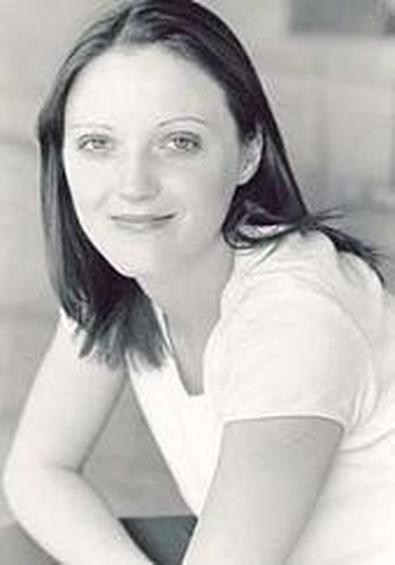
Jen Kirkman, the 27-year-old stand-up comic, writer and girlcomic.net co-creator explains, "People think anything done from a woman's perspective is only going to appeal to women." Along with Becky Donahue, Kirkman has founded an online phenomenon that has crossed international borders and boundaries of comedy and proven them all wrong. "We have to get women's stories out there so a guy will read it, laugh and think I'm not laughing at a chick story but a story." Plain and simple.
Girlcomics.net is a monthly web magazine that spotlights female comics, tracks comedy events, and publishes fiction and non-fiction submissions by both genders that have something to say. As a result the site has received a cult status and reminded people that women are funny too.
As a regular at B3, a comedy room Donahue hosts in New York, the girls were privy to a wealth of female talent. (Because it has a female booker, B3 has unintentionally become a popular place for women comics to perform.) "One night these guys came up to me, and said, 'thereare so many funny women here, how come I never see funny women?'" explains Kirkman on the genesis of girlcomic.net."Becky and I came up with a million answers." The one that stood out was the fact that women generally don't hustle as much as men. While all of their male friends who were comics were also writing screenplays, vignettes for television or serving some career side dish, their comedienne friends focused their attention on their looks in hopes of appealing to someone who could 'discover' them. "It's like a Cinderella syndrome," says Kirkman. "I'm like why don't you write the sitcom instead of waiting for someone to ask you to appear on it."
As a result, Kirkman,a former website employee,and Donahue, a comedy booker, combined their talents and started an online forum for women to flex more of their creative muscles and less of their leg muscles.
Club Kids, the Mafia and Monica Lewinsky
Kirkman began her career in comedy six years ago at Emerson College, where she acted and participated in campus improv troupes. While her heart was in standup, she was dissuaded when a professor deemed it a "lesser art form."
As social dictates never really got in her way, Kirkman began doing standup in Boston a year after graduation. "I was at an audition to be a game show host. There was this guy in the audience who was running an open mike. He invited me to be a part of it." Immediately she got her first glimpse at the long road ahead. "I thought he was this big producer until I found out his show was an open mike. That was when I realized you don't just start at the top."
Soon she became a regular at the Comedy Studio in Cambridge, a kind of basement-haven for up-and-comers practicing new material, where NBC scouts are known to show up in search of new talent.
"By the time I started doing stand-up, the club scene had died. What they call alt-comedy now is basically what comedy was like in the 80s. People tried different things and everybody went to the clubs, there was no other place. Then somehow the clubs became infiltrated by Dice Clay and Carrot Top types. People would go for their birthdays, expecting to be picked on and integrated into sets by the comics. (where does this quote end?)
Kirkman compares the comedy club scene nowadays to organized crime. "It's like the mafia. You can't break in from any other route besides hanging out at the club. I actually don't know anybody who does the clubs--even people on sitcoms."
The alternative, and what Kirkman found refuge in were rooms like the Comedy Studio in Cambridge, Largo in LA, and B3 and Luna Lounge in New York. All are places where you don't have to pay a cover charge or invite twenty friends to attend at 10 bucks a head.
In such places the breed of comedy is self-contained, and doesn't pander to the audience. Soon a new audience came calling: "We did well in the rooms we were playing because the people there were refugees from the comedy clubs. They didn't want to get picked on by the host or hear people talk about Monica Lewinsky."
Our Bodies, Our Careers
After Boston, Kirkman lived in New York for four years, where she temped and waitressed by day, performed at night and eventually met Becky and pioneered girlcomic.net. Kirkman now resides in L.A. where she is performing and looking for work as a sitcom writer. In the meantime she updates the site from her Hollywood pad, and goes out on auditions.
"I auditioned during pilot season for the part of an office manager for a situation comedy. The script kept making references to the character's weight and I was a little insulted. I'm thinking,'so I'm the fat character?' When I got to the auditions the girls were TINY.I thought,'are these fat girl auditions?--because I'd hate to see what the hot girls look like.' My manager was like,'I forgot to tell you--in L.A fat equals hot and hot equals anorexic.'"
What Kirkman is finding is that comedy has its own double standards. "[Generally as a woman stand-up] guys won't think you're funny and girls won't laugh because they're jealous their boyfriend thinks you're hot. If you self-deprecate, everybody can relax." Often women go straight for the body issues like a punching bag when they look to break in a crowd. "Usually these are the women who aren't overweight, but just have hips."
Paradoxically, Kirkman speaks of an obese male comedian who was making fun of his weight unapologetically. "This guy could have had a heart attack right there and yet he never put himself down because of it."
It is impossible to detach appearance from any of the performing arts, however comedy is a particularly cloudy window for aesthetic assessment. Physical imperfection can be beneficial alone on stage and prohibitive when in front of a camera lumped with the requisite army of model-types bred for celluloid. It seems that with comedy, you need to either find your niche in the limited field of sitcoms and character sidekicks, or you need to create a niche of your own. Kirkman has decided on the latter, writing her own sitcom which she one day plans to produce, and building a community of artists through girlcomic.net. "Because I have a production, my name is now recognizable. I've had some great, respectable female comics stay to watch my set-which is unheard of when they don't know you" On the other side of the coin, Kirkman and Donahue provide advice, support, a voice and a bent ear to novice comics who visit their website. If what goes around comes around, Kirkman's got a lot more coming her way.
To send questions and submissions to Girlcomic.net, email editors@girlcomic.net
Jen Kirkman's Tricks of the Trade
Starting any career is a challenge, but breaking into comedy is near impossible. Kirkman, who has representation, has performed on Comedy Central, NBC's late Friday and various live hotspots still finds herself cleaning houses and waitressing to make ends meet."There were some periods in my life where I didn't have to work and then have to go back to work again." Although still struggling, when it comes to understanding the business of standup and what works on stage, Kirkman is an unfailing professional. She gave BackStage.com some of her tricks of the trade:
Before You Do Anything:
Understand the difference between something that's funny between friends and something funny for the stage. People get told at work they should be comedians and think they can just get up on stage and talk. There is a way to make your personal life appealing to everyone so they fall in love with you and they picture themselves in your situation. But note: don't bring anything you have to explain to the audience to the stage.
Location Location Location:
If your ultimate goal is just to get on stage make people laugh I think Boston is a great place to start-there's no industry there. You can work out stuff where no one will know you and you're still close enough to New York to go to the big auditions. Plus networks are always scouting Boston for new talent. I also recommend any town that you know people in.
There are million open mikes? especially in New York? that you don't have to pay for, run by people who are nice and an audience who doesn't heckle and you. There are also lots of rooms where you just need a recommendation. Don't be afraid to tell the host you're a first timer. Hosts love first timers because they usually comeback and bring friends.
Standing-Up:
Get a couple of 5 or 6 minute bits down. that talk about who you are. Don't pander to the audience. When you have a good solid act rope your friends into going to the bringers clubs (pay clubs) so you can make a tape. For twenty bucks they'll tape your show. Once you have a tape you send it agents and managers. But give it a while. The standup myth is everyone does well their first time and bomb for a year after that.