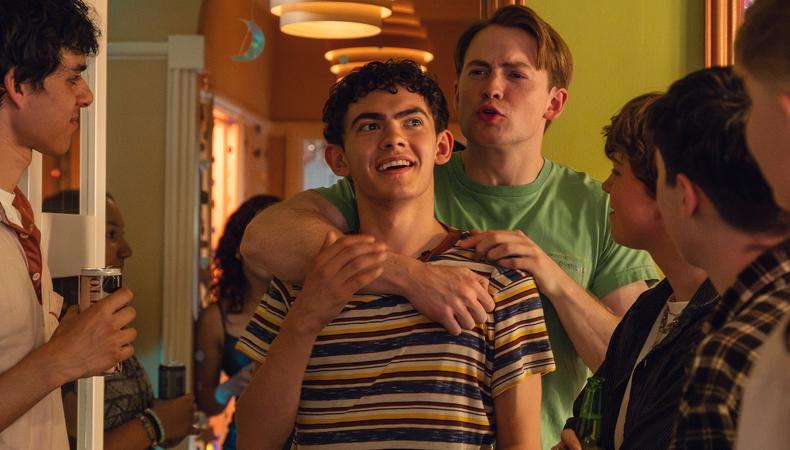
Before Joe Locke was an Emmy winner, a Marvel warlock, and one half of television’s most swooned-over romance, he was a schoolboy auditioning by propping his laptop on a stack of textbooks while his mum read lines from off camera. It’s a very Charlie Spring way to start a career—quietly, unassumingly, with no idea you’re about to become a phenomenon—and with it, Locke beat out roughly 10,000 other hopefuls to play the lead in Netflix’s LGBTQ+ rom-com “Heartstopper.”
Half a decade later, the series has launched him to Broadway, the MCU, and mainstream success—and now, Locke is saying goodbye to the character who started it all. “Heartstopper Forever” (2026), the feature-length finale written by series creator Alice Oseman and directed by Wash Westmoreland, follows Charlie and Nick Nelson (Kit Connor) as university looms and distance tests their relationship. Ahead of the film’s premiere on July 17, Locke spoke with us about moving on from Charlie, why he hates rehearsals, and the advice he’d give any actor trying to get a foot in the door.
 The 5 Best Recent Book-to-TV Adaptations + What Actors Can Learn From Them
This film closes the chapter on “Heartstopper.” What do you know about Charlie Spring by the end that you couldn’t have known at the start?
I could never have imagined Charlie becoming so self-confident and so self-assured. I’ve always said that he’s got this quiet confidence to him, but in the film, the confidence isn’t quiet anymore. He knows who he is and he knows what he wants—and that’s something I don’t think I would have said about him earlier.
You’ve played the character for five years. How do you draw boundaries between who you are and who you’re performing?
It’s far easier now than it was. Season 1 Charlie and Season 1 me are far more similar, whereas now I see us almost like siblings whose paths have diverged a little bit. I see the things that me and Charlie in the film have in common, but I also see these really nice differences between us.
What was your process of building chemistry with Kit Connor?
It’s almost hard to answer how the chemistry with Kit has been built, because it’s been so long now—it’s been half a decade, which is crazy. I’ve spent far more time with him than pretty much anyone else in the last five years. The difference is that our connection is like brothers. We’ll defend each other until the day we die; that connection will never change. And when we’re Nick and Charlie, obviously it’s far more romantic. But it’s really nice to move that brotherly bond energy into the characters. It almost just happens—we don’t know how, we just do it. It’s easy and it’s comfortable.
Do you two have plans to work together again?
Our friendship is past the point of colleagues; I’m probably going to go to the pub with him next week. And I’d love to work with him again one day. It’s like One Direction breaking up: You want to do your own thing, and then maybe you’ll come back for a reunion. That doesn’t mean we have any less love for each other.
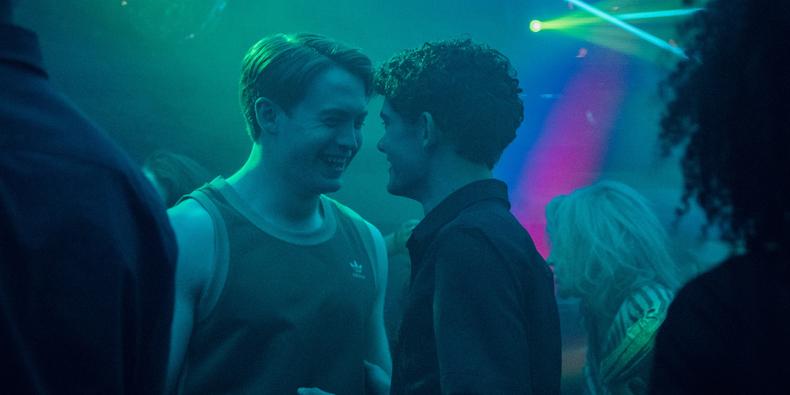
Was there a scene in the film that surprised you—something you didn’t expect to be doing as Charlie?
I never thought we’d do a scene where Charlie’s the center of attention. It felt very alien, but it also felt so right in the context of the film.
What was the most challenging scene to shoot?
The most challenging—and probably also my favorite—was the big fight in the middle of the film. It was definitely the most important scene to get right, but it was also one of the first times that Kit and I had the chance to have an argument and shout at each other. That in itself was so fun. When you trust your scene partner so much, you feel that you can just go for it and take those swings, and he’ll hit back.
“You belong in the room; you just have to show everyone else that you do.”
How do you emotionally prepare for those more intense scenes?
For me, it really depends on the scene. I wouldn’t say I’m an actor who has a specific process. Some people do, and that works for them, and that’s great. What’s important to me is making sure it feels true, not false, not fake—that everything I’m saying, I’m saying with the utmost belief and conviction in the words.
How do you get into that space of truth?
I hate rehearsals. I hate them; I don’t find them helpful. Theater’s very different, but on film, I would much rather go through the script with a pen and a highlighter and the director or the writer and say: Let’s talk about this scene, let’s unpack it, let’s analyze it—and then go and do it in the room. I don’t want to sit around a table and read the scene four times, because you lose the newness of something, the realness of it.
Can you speak more on how you work with directors and writers?
I’m a very analytical person; at my heart, I’m very academic. Understanding things is my key. To me, the lines are almost the least important thing: If I understand the character, and I’ve done my prep work and research, then the lines should just come out in the right way. And I love notes—I love when you get a good note from a director and it changes the entire way you’re doing something. I love sitting down and analyzing a script almost like an essay, figuring out that this happens here because four scenes ago, that thing happened. It means I might have learned my lines in the car on the way home the night before, because schedules are so crazy, but I’m not worried about that. I know I can learn lines very quickly; as long as I understand the scene, I’m fine. I’m at a place in my career now where I feel like I’ve found my groove in the way I work.
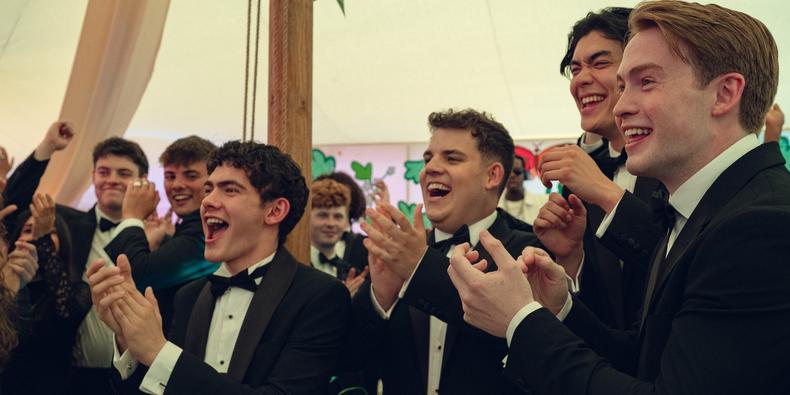
You’ve now performed onstage, too. What do those roles demand from you that’s different from onscreen roles?
Stage acting takes a level of discipline—being so switched on—in a way that you can get away with more onscreen. There’s more room for failure onscreen. With stage, that’s it: You’ve got to do it, and if it goes wrong, you’ve got to fix it. There’s an energy to the stage that’s maybe harder to recreate on screen.
Do you ever find yourself improvising?
I hate improvising. I find it so stressful. There’s a lot of improvising in “Heartstopper,” which works because we know the characters so well. But my worst nightmare is being in an audition and hearing, “OK, now improvise.”
“Our connection is like brothers. We’ll defend each other until the day we die.”
Speaking of auditions: You booked Charlie through an open call of roughly 10,000 actors. What was that process like?
It was really strange. I sent in a headshot for the open call, then did a self-tape. Then, a few weeks later, they asked, “Will you do a Zoom call?” I put my laptop on my school books and had my mum reading the lines offscreen. I had no idea what it was. But what I learned is that open calls are so great in that they’re not expecting you to be fully professional—to know exactly what you’re doing, have the right lighting, the right camera, all these expensive things. They’re looking for what they see as the character, and I was lucky enough that I was what they had seen.
What would you tell someone self-taping right now, trying to land that first major role?
Don’t worry about it not looking professional. There’s a lot online now about rules for self-tapes—how you need to make sure it’s this and this and this. I’m sure there are casting directors who work that way, and that’s great. But especially if it’s an open call, they’re not expecting you to have that. Focus on the work and on the scene, and do that to the best of your ability.
“Heartstopper Forever” is your first executive producer credit. What did that actually look like day to day?
Kit and I definitely both wanted to make the most out of the experiences we’ve been given. I think sometimes people can assume, “Oh, the actor was given an EP credit; it’s just a name in the credits, and they didn’t really do anything.” But I’m really proud of both of us. We got sent every script, and we gave notes. We felt very included in the discussions of how things were made, and we both felt almost like ambassadors for the cast. If anyone had any issues, I felt like I could actually talk about things. It taught me a lot about how movies are made, the background stuff, which some people might find boring but I find so interesting. How are you going to improve in your acting if you don’t understand the way the thing you’re in is being made?
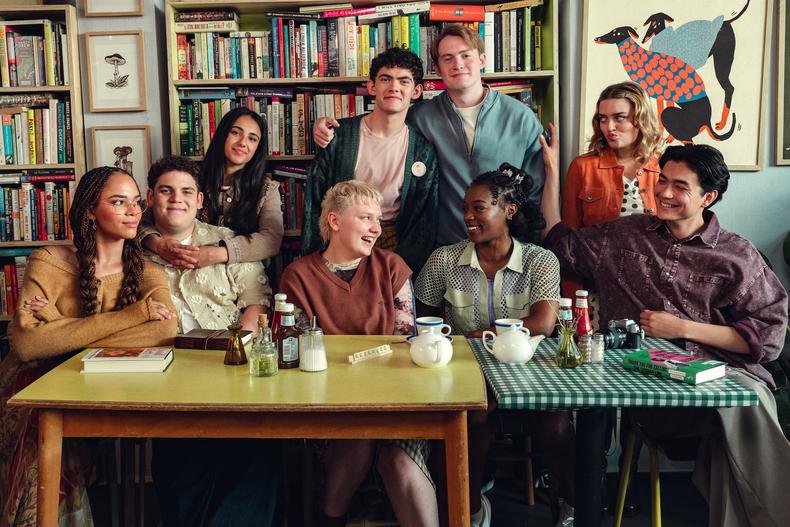
Fans talk about “Heartstopper” syndrome—that feeling of loss after watching the show. Are you going through it, too?
Not yet, but I know I will be. That’s it; it’s the end. I’ll probably just cry. But Charlie’s in the world forever.
Any parting advice for early-career actors?
Send all the emails. Don’t worry about annoying people, because once your foot is in the door, your foot’s in the door—but you’ve got to get to the door. Email everyone, go to every casting call, do all the things. Meet people, say hi, introduce yourself. You belong in the room; you just have to show everyone else that you do.
This interview has been edited for clarity and length.