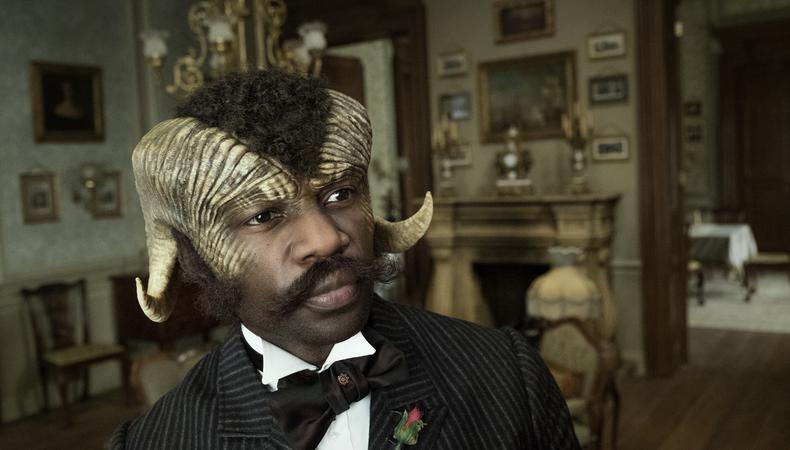
Though he may be best known for his work on the “Harry Potter,” movies, makeup effects designer Nick Dudman got his start in the industry with a different series of cult classic movies. After finding his way to makeup through an apprenticeship with Stuart Freeborn, the creator of the original Yoda puppet, Dudman has gone on to create the makeup designs for films like “The Mummy,” “Labyrinth,” and Amazon’s “Carnival Row.”
Speaking to Backstage, Dudman describes how the makeup design process combines both creative and logistical work and how a single phone call changed his career.
What does a makeup effects designer do?
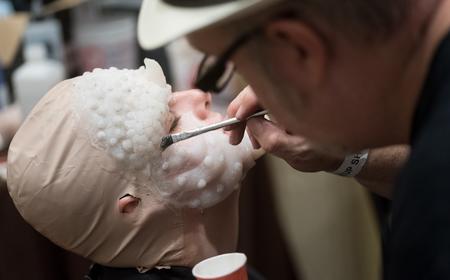
My job starts with reading [the] script. I’m brought on board when there are people who are non-human or people who have massive changes occurring to them. We have to create three-dimensional makeup changes to people. So in basic terms, we stick bits of silicone rubber on people to make them look different. I have to design what those looks are. I have to persuade producers and directors [of] what I think is going to work. They have to persuade me what their vision is and we work together to come up with a look of whatever something might be using concept artists. And then I have to put together a workshop and a team of people to manufacture all the bits to turn somebody from what they look like in the street to how they look in the show.
All the stuff I do is physical. We do a lot of prep for what’s going to happen in post-production. And we do work hand-in-glove with the visual effects supervisors who will be handling all the digital [computer-generated] stuff. So very often what you actually end up seeing on the screen [is] an amalgam of practical things that we’ve done and digital things that they’ve [done]. And hopefully, you can’t tell where one thing stops and another thing begins.
How did you become a makeup effects designer?
I did a three-year film and TV production course at a college in England. I thought I was going to be a cameraman [but] I’d always done sculpting and making body parts and prosthetic things and turning myself into strange things as a hobby. I’d never once thought of it as a serious job or as a career. But when I graduated, there was no cameraman trainee work about. My father said, “What do you like doing?” And I said, “Doing the monster stuff.” And he said, “Well, who does that?” And he found an article on a man called Stuart Freeborn who had done “Star Wars” and it mentioned he lived in a town not very far away.
My father got the phonebook, looked him up, got the number, held the phone to my ear, and said, “Speak to him.” I spoke to him and he was very sweet. I had no idea what he did, but he asked me to go along to the studios. I was sort of ushered into a room, met Stewart, and he was sitting there working on a little green puppet. [It] turned out to be Yoda and the movie he was working on was “The Empire Strikes Back.”
 From Spike Lee to Lulu Wang, Here’s Where Today’s Top Filmmakers Went to School
 What does a day in the life of a makeup effects artist look like?
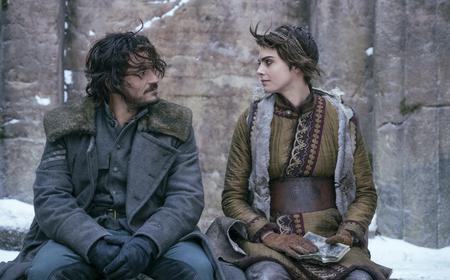
For “Carnival Row,” we had three distinct species of non-human cast and crowd. You’ve basically got a world where some of your principal cast and some of your crowd are in quite extensive makeup. For every day of shooting of a given character, a new set of pieces have to be made. And those pieces have to be sculpted, molded, pre-painted, [and] hair [has to be added] if you’re putting eyebrows in. If you have a crowd of 150 people who are not human, every single one has a set of pieces. So the workshop was very much a production line. We’ve got to be very fast, but of course, they’ve always got to look the same. So there is very much a discipline involved and a training scheme has to be worked out so that everybody knows how long they’ve got [and] what they’re doing. So it’s a logistical exercise. In fact, I think it’s a sort of perfect amalgam of a creative process and an utterly pragmatic and practical process.
We always work very closely with the makeup, hairdressing, and costume departments. I need to have a very personal relationship with the costume designer and the makeup and hair [department heads] because if they’re doing a lot of the cast who are human and you’re doing cast who are not human, everything has to feel like it belongs. I also work very closely with special effects departments and props departments.
What do you look for when hiring your crew?
Initially, there [are] two major things. One is a level of ability. The second thing is whether they will mesh well with the people that you’ve already hired because everyone has to work very closely. When I started doing this many years ago, there wasn’t anywhere where you could go to find people. Nowadays, people tend to go to a few different universities or colleges which run media makeup or 3D sculpting courses, get a degree and then get their portfolio together and come out and show everyone. And once in a blue moon, you see something and you think, “My god, that’s amazing. We better hire this person.”
The largest crew I’ve ever run was [for “Harry Potter”], which went up to about 160.
“Carnival Row” was probably about 50. It’s mould-makers and sculptors and fabricators—the people who make all the body parts. You have people who run silicone, people who paint, hairdressers, people who work with hair and fur, and engineers because very often we have to make mechanical under-structures—it’s a whole mixture of people. If you’re doing a big show, you probably need more specialists. If you’re doing a small show where it’s a group of four people, you need people who can turn their hand to anything.
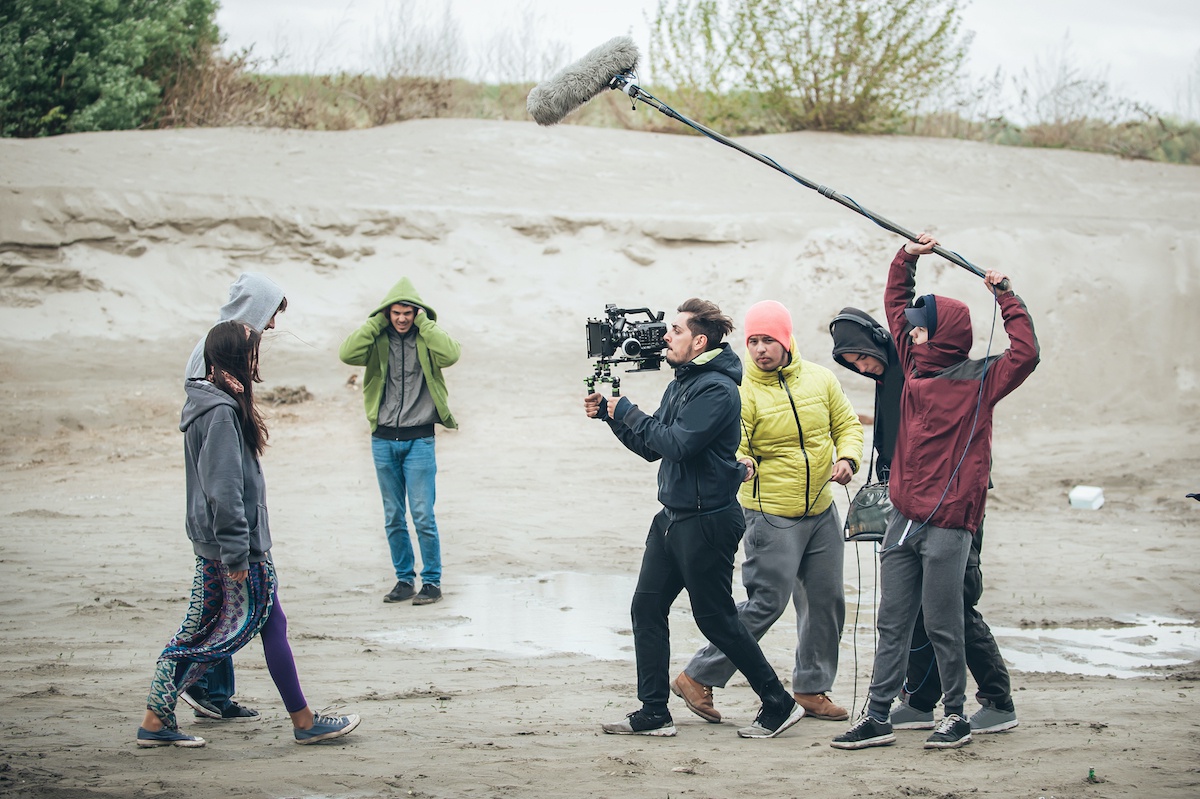 How + Why You Need to Build Your Crew Network
 What advice do you have for aspiring makeup effects designers?
It’s really important to try to understand how the industry works. It’s all very well wanting to make monsters for a living or be a makeup artist [but] you need to understand how movies or TV shows get made. The more you know that, the more useful you are to everybody. It’s also really worth researching the people within the fields you’re going to enter and the techniques. When I started, there was nowhere to go to find out this information. Now you can Google people and you can Google techniques and materials and it really pays off. I think the more knowledge of [the field] you have, the better.
What are some moments of special effects makeup that have inspired you?
I still remember things like “An American Werewolf in London.” Rick Baker has been a hero of mine for years. The work that Dick Smith did in makeup effects, it’s just staggering. I would love to have worked on “Lord of the Rings.” I remember the very early “Planet of the Apes” movies and just going, “How did they do that?” and wanting to understand.
For more on how to get work on a film crew, visit Backstage’s crew hub!