
Let’s face it, we all have to start somewhere. If you don’t feel comfortable letting go of your full-time job that pays the bills, this guide will help you decide if part-time acting is right for you.
JUMP TO

Lucky Business/Shutterstock
Realistically, most actors start their careers part-time because they may not book consistently in the early days. That leaves plenty of time to work a job that pays the bills and the rest to keep their skills sharp. “Unless you’re on a Broadway show doing eight performances per week or a series regular on TV, I would argue that you fall into the category of part-time actor,” says Kazy Tauginas (“The Equalizer 2,” “The Blacklist”). “Those who are able to exercise their craft for 40-plus hours a week are indeed very fortunate. While auditions are part of the game and can take up significant time, you don’t get paid for them.”
The caveat is that when a callback does come, you need to be available. How do you get around that? Aim for a flexible survival job, Tauginas says. “I would suggest an alternate source of income to make sure you can sustain yourself,” he adds. “If your ‘B job’ covers your basic bills, then you won’t be affected when the industry shuts down due to unforeseen circumstances or when you experience a dry spell.”
Many jobs offer flexibility, whether it’s the hours you work or, with the rise of remote work, your location. The main goal is to determine if you want to become a full-time actor or continue to act on the side.
 An Actor’s Guide to Survival Jobs, Side Hustles + Side Gigs

Grusho Anna/Shutterstock
Different types of roles and productions will have varying requirements when it comes to being on set. Some take a few hours. Others take days, weeks, or, in the case of a big Hollywood feature film, months. Knowing what to expect helps you to prepare and strategize what roles you’re seeking out. If you have representation, let them know what roles you prefer to focus on. “I am pursuing a career full-time as an actor, but the advice I give to my friends who are trying to work as an actor part-time, I tell them it is possible,” says actor Freddy Giorlando (“Adulthood,” “Vinyl”).
“It depends on the flexibility of the job, of course, but if you were to book a costar on television that shoots one day, it is totally possible to accommodate that booking. Taking on lead roles can be more of a time commitment and can be more challenging if you have a 9-5 job.”
- Lead: Playing a lead role means you’re in most of the scenes. Depending on the type of project, this could require several weeks or months at a time (which doesn’t even factor in the auditioning process). Landing a lead role usually signals a shift to full-time acting, unless you can take significant time away from your survival job.
- Supporting: Supporting roles are less demanding than lead roles but still require a fair amount of time on set. Because a supporting role is on hand for an entire production, it would take some skillful balancing to still have a part-time job.
- Day player: The contract for a day player (or “guest star”) usually only lasts a day or two, so it is often a role you can book in between your supplementary work.
- Extra: Background work is a fairly simple commitment both in terms of time and preparation, as you’re not fully establishing a character onscreen. The good news is that if you have a full-time job, you can most likely get away with taking a day off for an extra gig. The bad news is that background opportunities often come up at short notice.
- Commercials: On average, commercial work is filmed in one day that could run between eight to 16 hours. A higher-level commercial for big brands could take up to a few days. Commercials also require auditioning, which isn’t paid.
- Independent short and feature films: Whether a lead or supporting role, independent films take less time to film than big-budget Hollywood movies. They are often shot on weekends, since many indie filmmakers themselves have day jobs. Acting in independent films is a great way to build your portfolio and experience.
- Theater: Independent theater is a good way to act part-time since it’s local work, and rehearsals and shows often take place on evenings and weekends. If you’re aiming for a main role, you’ll need to audition, which is usually held on-site with the director. Depending on the magnitude and budget of the play, rehearsals can last between three to four weeks, and the show might last between two to four weeks.
Independent theaters tend to stage several plays throughout the year, so you can gain a good amount of acting experience at your pace. Once you’ve built up a body of work big enough to start thinking of Broadway, you’ll have to start seriously measuring the idea of acting full-time.
 5 Gigs to Kick-Start Your Acting Career

Grusho Anna/Shutterstock
Each type of full-time job will affect acting part-time differently.
Full time (weekdays 9-5)
Working a full-time job while also building an acting portfolio is a significant challenge. Auditions, callbacks, and shooting dates will often be during work hours, and you can’t leave work for a last-minute opportunity. If you’re okay with patiently carving out space for roles here and there over time, the benefits of a full-time job are financial stability and health insurance before you qualify for an acting union.
Giorlando notes that this difficult route is still “possible,” pointing to the example of J.W. Cortes, who appeared in 32 episodes of the Fox show “Gotham” over five years while also holding down a job as a New York MTA officer. “He certainly made it happen,” says Giorlando.
Part time
The idea of actors spending their days as waiters is a stereotype for a reason. Part-time jobs that you can commit to a few times per week and offer flexible hours are ideal for gig performers. The challenge, of course, is that part-time jobs offer less compensation than full-time careers, so you might end up hustling twice as hard to pay the rent—especially in production hubs such as New York, Los Angeles, and Atlanta.
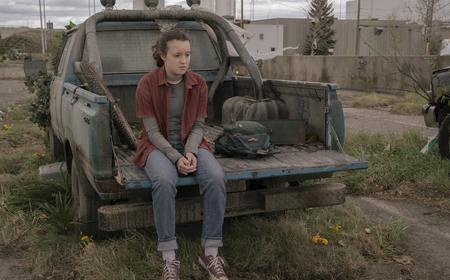 A ‘The Last of Us’ Web Series Needs Talent + Other Great Background Casting Calls
Night jobs
Although you might think a night job will solve your scheduling problems, consider this: After working an entire night, you’ll have to audition or act instead of going home to get some sleep. Acting isn’t a job where you can show up tired. Not only must you have the energy to perform, but you’ll need to deliver your best if you want to continue getting callbacks.
Freelancing
Freelance work allows space for acting part-time. You can set your own hours and the jobs are usually short-term projects. With the rise of apps focusing on gig work, the variety of those projects is growing as well, from writing services to dog walking and web development.
The drawback to freelancing is that you must seek out and pitch yourself for each project. This not only leads to inconsistent work, but it can also feel like an additional mental strain when paired with the acting audition process.
“It is all a matter of properly strategizing and prioritizing your time and energy. It is a case-by-case basis, though,” says Giorlando. “Some people I know have made a part-time career happen and some people could not do it. I’m of the mindset that anything you want to do in this life is possible. So to those that want to pursue an acting career part-time, I’d say go for it!”

Tinseltown/Kathy Hutchins/lev radin/Shutterstock
- Jennifer Aniston: The “Friends” star juggled a string of part-time jobs while acting in “six failed television shows” before finally landing her breakout sitcom role. “I waitressed for years in New York before I got anything,” she said in 2019. “And I was a telemarketer selling time-shares in the Poconos. I didn't make one sale. I was terrible at it.”
- Niecy Nash: The Emmy-nominated “Dahmer - Monster: The Jeffrey Dahmer Story” star used her part-time job booking reservations at United Airlines as acting training. “That wasn’t even a bad job because I got to play different characters when I answered the phone,” Nash said. “But then you’d put someone on hold and come back and not remember the character you were playing!”
- Samira Wiley: Wiley worked as a bartender while shooting the entire first season of her breakthrough project “Orange Is the New Black” on Netflix. “I just felt like I was not going to be asked back,” she said. “I would film all day and then I would work on weekends and I would work at night. It’s actually pretty funny now that I think about it.”
- Brad Pitt: While hunting down background gigs during his earliest days in Hollywood, the future Oscar winner also worked as a mascot for restaurant chain El Pollo Loco. “A man’s gotta eat,” Pitt explained.
- Edie Falco: Even after early successes, Falco realized she’d have to act part-time. “I got to do a movie [called ‘Sweet Lorraine’] the day after I graduated college, I had to be on the set, and I thought this is smooth sailing,” she said. “It was incredible. And then you sort of think, Oh, this is the way it’s gonna go, and it was not the way it goes. It was many, many more years—you know, those middle-of-the-afternoons a year and a half after that movie closed, realizing, ‘I’ve gotta get a waitressing job.’ ”