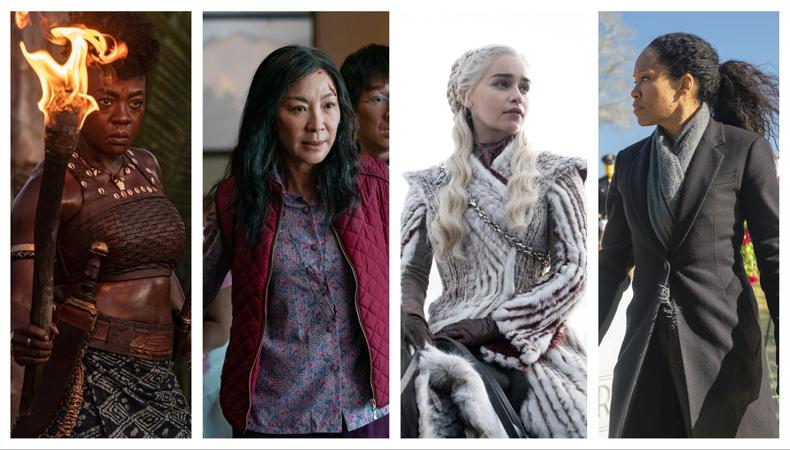
There’s no single way for a woman to be a badass—she can kick ass like the Bride (Uma Thurman) in “Kill Bill,” solve a crime like Clarice (Jodie Foster) in “The Silence of the Lambs,” or lead a rebellion like Princess Leia (Carrie Fisher) in “Star Wars.” Even before they became a trope of modern cinema, powerful female characters onstage and onscreen have shown that strength isn’t a gendered trait. These women embody a complexity of thought and character that makes them fascinating to audiences of any gender identity.
JUMP TO
The best examples of strong female characters are multifaceted and authentic and challenge traditional stereotypes of both their gender and what it means to be strong.
Strength: While not every character has to be physically strong, it goes without saying that there are some fantastic examples of buff women in film and TV. Take, for instance, some of pop culture’s favorite ladies of the 80s like Ellen Ripley (Sigourney Weaver) in “Aliens” and Sarah Connor (Linda Hamilton) in “The Terminator,” or consider more contemporary examples like Luisa Madrigal (Jessica Darrow) in “Encanto.”
Emotional depth: Emotional complexity and nuance, like that of Michelle Yeoh’s Evelyn from “Everything Everywhere All at Once,” make these women relatable and realistic. There’s an intense emotional resilience that these characters often possess, making them able to stand strong in the face of danger, prejudice, or hardship. This is precisely what draws together the many protagonists in “The Help”: Aibileen Clark (Viola Davis), Minny Jackson (Octavia Spencer), and Eugenia “Skeeter” Phelan (Emma Stone).
Agency: The fiercest femmes of film, TV, and theater, like Katniss Everdeen (Jennifer Lawrence) from “The Hunger Games” and Elphaba (most famously portrayed by Idina Menzel) from Broadway’s “Wicked” are highly independent, exercising their right and will to choose their own path forward. They’re driven by personal goals, beliefs, and desires, and these choices drive the narrative forward.
Resourcefulness and intelligence: Many of the best female characters are incredibly smart and resourceful. Over the years, we’ve been blessed with a multitude of female characters that drive the story with their intelligence and wit, like Hermione Granger (Emma Watson) from the “Harry Potter” series, Dana Scully (Gillian Anderson) from “The X Files,” and Jessica Fletcher (Angela Lansbury) from “Murder, She Wrote.” Consider Angela Abar (Regina King), aka Sister Night, from the “Watchmen” TV series: She’s an incredible detective whose skill rivals Batman’s. Or for a more comedic role, consider Marge Gunderson (Frances McDormand) from “Fargo,” the seven-months-pregnant police chief who solves a small-town mystery.
Leadership: Whether they strive for leadership or have it thrust upon them, there’s no doubt that many strong female characters share the attribute of social influence. Like Daenerys Targaryen (Emilia Clarke) from “Game of Thrones” or General Nanisca (Viola Davis) from “The Woman King,” they are confident, competent, and inspiring, and their choices have significant impact on the story and characters around them. Strong leaders inspire those who follow them to be better. While Princess (and later, General) Leia Organa is a classic among female leaders onscreen, an equally valid example is the bright and bubbly Leslie Knope (Amy Poehler) from “Parks and Recreation.”
Moral ambiguity: Life is full of moral gray areas, and some of the best female characters reflect this murkiness through their own actions. Olivia Pope (Kerry Washington) of “Scandal” comes to mind, as do many of cinema’s classic femme fatales like Catherine Tramell (Sharon Stone) in “Basic Instinct” and Selina Kyle (Michelle Pfeiffer) in “Batman Returns.”
What narrative role do badass female characters play?
Strong protagonists of the womanly persuasion play a powerful narrative role, driving the plot forward with their actions, challenging traditional notions of gender roles, and complementing the other characters that make up the cast. Because they often have a well of emotional depth, these characters offer layers of complexity to a story, often making it more engaging to a diverse audience.
Here’s a deeper dive into some of the awe-inspiring characters already mentioned.
Leslie Knope, “Parks and Recreation” (2009–2015)
The parks and rec deputy director’s ambitions, dedication, and competence are constrained only by the red tape of bureaucracy. Deftly portrayed by comedian Poehler, Knope is a beacon of positivity with a strong moral compass who constantly strives to empower those around her—especially women and girls, as exemplified in her founding of the Pawnee Goddesses.
Evelyn Wang, “Everything Everywhere All at Once” (2022; dir. Daniel Scheinert and Daniel Kwan)
Evelyn faces family, money, and cultural challenges, but never gives up—even when facing the multiverse as different versions of herself. Yeoh’s portrayal of this stereotype-breaking, everything bagel of nihilism-busting badass was so powerful it garnered her a Best Actress Oscar.
General Nanisca, “The Woman King” (2022; dir. Gina Prince-Bythewood)
As the leader of the Agojie, an African all-female warrior regiment, Nanisca exemplifies leadership, resilience, and wisdom. Davis plays her as powerful as she is emotionally vulnerable, as skillful as she is complex. As if that’s not enough, Nanisca is a fierce combatant whose team of women warriors is more than capable of taking down hordes of men.
1. Study your character. The best are emotionally complex beings, so spend plenty of time studying her to understand where she’s coming from and what drives her in any given scene. Know her backstory, traits, and motivations, understanding on the deepest possible level who she is and how she might convey her strength to others.
2. Practice conveying emotional resilience. While emotional resilience will likely be written into the character, you’ll need to home in on facial expressions and body language that help convey this trait to audiences. After studying your character’s backstory and motivations, consider how those might manifest in behaviors and actions.
3. Exude confidence. These women command attention, so use strong body language and a clear speaking voice to project confidence and authority.
 Fake It Till You Make It: How to Look Confident
4. Understand your character’s evolution. People like watching characters grow and change over time, so decide how that transformation can be reflected in your performance. Think about the little tics, gestures, expressions, and other such mannerisms that your character may have dropped or picked up as she’s evolved.
5. Challenge gender stereotypes. It’s natural that a strong female character will challenge some traditional notions of gender, but the best of them have the power to send the message that no one is defined by their gender. Resist the temptation to bring girlboss vibes to your character and instead focus on highlighting what makes her an interesting person.