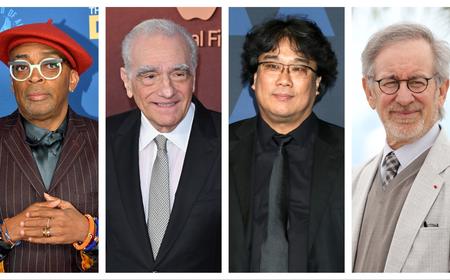
When you close your eyes and picture a director, what do you see? Is it a man with a beret and a cigarette dangling from his mouth? A guy wearing a fishing vest and gazing into a lens? A domineering fellow in a suit? None of these images are wrong. But the image of a director is vastly different from what a director actually does. The reason we know the names of famous filmmakers like Scorsese, Nolan, Gerwig, and Spielberg is because they are in command of the project. And as commander, they have one of the most difficult jobs in entertainment.
It is easy just to say that the director directs the project. But the reality is even bigger. If the writer’s job is to create the blueprint for a story, and the producer’s job is to gather the tools and crew to put the story together, then the director’s job is to envision the story and bring that vision to life.
The responsibilities of a director include:
Analyzing the script: The director analyzes and interprets the script to create their approach to the story. They determine the tone, look, atmosphere, and style of the story. They also work with the writer to reshape the script if necessary.
Casting: Working with the casting director and producers, the director reviews auditions and chooses the right actors for the roles.
Meeting with department heads: The director works with the cinematographer, production designer, prop master, costume designer, location scout, and every other crew leader to convey what they want the film to look and feel like. This includes discussing storyboards and production.
Rehearsing with the cast: The director meets with the actors and rehearses the scene, aiming to bring out the right emotion and nuance for every beat in the script. While the director has the final say, they collaborate closely with the cast.
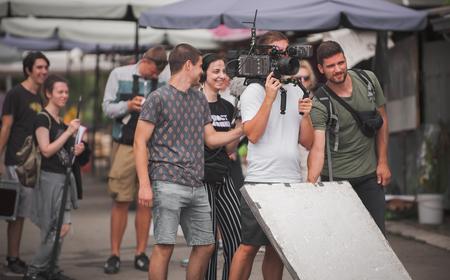
Commanding the set: The director leads the set, making sure each scene stays true to the script and the overall vision for the film. They guide blocking, staging, camera work, and tone, shaping actors’ performances and making adjustments from take to take as needed. They also collaborate with the cinematographer and other department heads to make sure the scene is captured the way they intend. Production generally moves on only when the director is satisfied they have what they need.
Editing the film: While directors aren’t usually the editors themselves—although they can be—they work closely with the editor in postproduction to shape the film from the footage that was shot, giving notes on performance, pacing, and structure. They also weigh in on the score, sound, visual effects, and color, among other elements.
A typical day for a director looks wildly different across the major phases of production: preproduction, production, and postproduction. Below is a hypothetical example of production, or principal photography:
4:30 a.m.: Wake up! Ah, another beautiful day in New Jersey (a newly popular place for production). Before the sun shows its first rays, you head for the hotel room coffee machine and make the first of many cups.
5:00 a.m.: After your first cup of joe, you crack open your binder filled with notes, script pages, memos, email printouts, and the like. You flip through until you find the current day and check the call sheet. Today is going to be busy: five scenes and several pages of script.
5:30 a.m.: A driver picks you up outside the hotel. On the drive to set, you quickly watch the dailies from the previous days on your iPad. You jot down notes on various takes and actor performances, and then you email the editor (who has already begun the rough cut) what you’re thinking.
6:00 a.m.: Once on set—a lovely little house in Cranford being used as the day’s location—you greet the crew, who have already begun to set up for the first scene: a family breakfast.
6:15 a.m.: In your trailer, you pour another cup of coffee, study the upcoming scenes, then focus intently on the first one. You go through the storyboards, reading the script and visualizing it once more in your mind.
7:00 a.m.: You head to set and meet with the cinematographer. You run through the camera and lighting setups for the first scene and compare them to the storyboards you developed during preproduction. The setup largely matches the storyboards, but you make a few adjustments based on the actual space, lighting, and camera placement.
7:30 a.m.: After grabbing a few bites from crafty, you make your way to hair and makeup to meet with the cast. You don’t want to get in the way, but you still discuss, broadly, the scenes that are going to be shot today.
8:00 a.m.: Actors finish hair, makeup, and costumes, then arrive on set. You rehearse a few times, giving the actors notes as needed, and review blocking. You make tweaks to the cameras and lighting, and soon the actors begin to feel the scene.
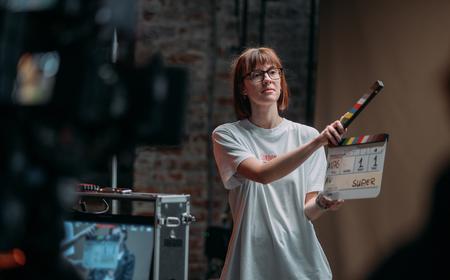
8:20 a.m.: Happy with the rehearsal, it’s time for cameras to roll. More often than not, the 1st AD calls “Quiet,” “Roll sound,” and “Roll camera.” You call “Action” after the slate hits.
9:40 a.m.: The first scene is shot. You and the actors move to a trailer and discuss the next scene while the crew resets the camera and lighting for the next scene.
10:30 a.m.: By some miracle, the crew setup didn’t take nearly as long as you thought. You throw back a double shot of espresso and quickly rehearse the next scene with the actors.
10:45 a.m.: Cameras roll. You watch from video village, monitoring the camera feed as the actors perform. You aren’t David Fincher, so you don’t ask for 50 takes. But you also aren’t Clint Eastwood with two. “Cut!”
12:00 p.m.: Break for lunch. But is it really a break? Retiring to your trailer, you go through the afternoon’s schedule (luckily you aren’t behind) and answer emails and messages. The editor has thoughts on the dailies. A producer delivers bad news about an upcoming location. Your agent tells you about a possible next gig. You keep spinning plates and putting out fires.
1:00 p.m.: Back at it. The next scene is even more intense than the last. It’s an emotional scene in which a husband and wife realize their marriage is over. It needs to be raw. You want Cassavetes. You spend more time preparing with the actors than before.
4:00 p.m.: That took a lot out of everyone. A few of the actors need a minute to gather themselves, so you work with the crew on the next scene. Another espresso down the hatch.
4:15 p.m.: Luckily, the next scene isn’t nearly as intense and is mostly wordless. In fact, the majority of the shots are close-ups and inserts.
5:30 p.m.: Time to shoot the final scene. Everyone is showing signs of exhaustion, so you throw in some words of encouragement: a rallying cry. It works, and everyone is ready to push on.
8:30 p.m.: The scene took longer than expected, and you ran a little over schedule. But you’re happy with what you got, and that’s a wrap for the day.
8:45 p.m.: You quickly meet with the producers to discuss the day’s shoot, as well as the next day’s shoot. You all discuss a possible solution to the location you lost.
9:30 p.m.: Back at the hotel, you watch some of the dailies on your iPad, jotting down initial thoughts. It was a challenging day—but they all are. When you’re done, you climb into bed, flip on the TV, and find “Casablanca” playing on TCM. As you watch, you remember why you fell in love with movies in the first place, even if you fall asleep five minutes in.