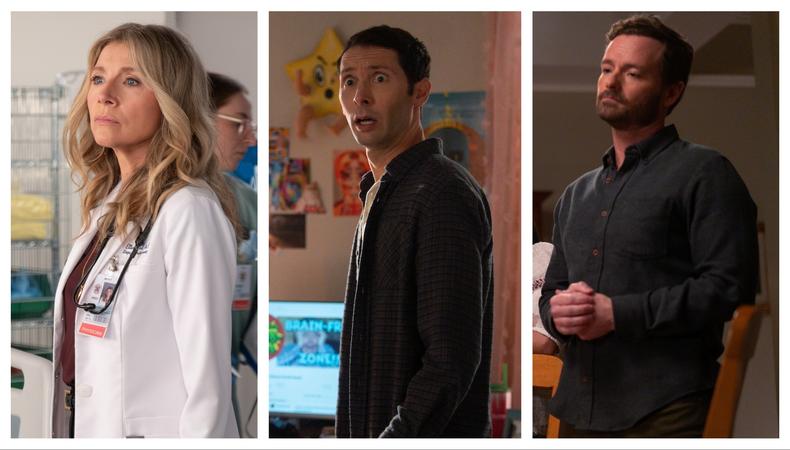
Justin Berfield, Chris Masterson, and Sarah Chalke portrayed some of the most memorable characters of early 2000s television—and now, they’re returning to their iconic roles. Berfield and Masterson are back as Malcolm’s (Frankie Muniz) older brothers on the Hulu series “Malcolm in the Middle: Life’s Still Unfair,” and Chalke has redonned her stethoscope for ABC’s “Scrubs” revival. Each actor had the same disorienting realization: Their characters hadn’t changed much, but they certainly had.
There’s no cookie-cutter approach for reprising long-dormant roles. Some actors tap into old habits and quirks, while others rely on cast mates to trigger nostalgic memories. It can be both an intuitive and complicated process, filled with plenty of questions: How has the character changed? How do you find your physicality and rhythm again? And maybe the trickiest one: How do you honor what audiences loved without drifting into an impression of your former alter ego?
These questions hit particularly hard for Berfield, who took a two-decade break after “Malcolm in the Middle” ended its seven-season run in 2006. The young actor had been appearing in commercials since he was five years old and on TV projects since the mid-’90s, going from the short-lived 1994 NBC sitcom “The Good Life,” to a longer stint on the WB’s “Unhappily Ever After,” and then right into “Malcolm in the Middle.” The work eventually took a toll on him.
“The first 15 years of my life, I was just working on stuff,” he says. “I wanted to take a little break from the camera because I was just burnt out.” That “little break” turned into nearly 20 years, with the actor trading on-camera work for behind-the-scenes production jobs and eventually becoming a stay-at-home dad. When rumors about a “Malcolm in the Middle” revival materialized, Berfield was initially thrilled; he couldn’t wait to reunite with his fictional family and inhabit the reckless, impulsive second-oldest child Reese again.
“And then I realized I hadn’t really done anything since the show [ended],” he says. “I haven’t memorized two or three pages of dialogue in 20 years. Can I even do this again?”
Happily for fans, the answer was yes—and Berfield even discovered that becoming a parent gave him a newfound appreciation for Reese. Although he didn’t relate to his character during the show’s initial run, today Berfield feels empathy for Reese, whose antics he now sees as survivalism. “It’s [no longer] about, ‘I need to go beat up the school bully,’ ” he says. “It’s mostly about, ‘I need to make an extra thousand bucks this week. What can I get myself into?’ ”
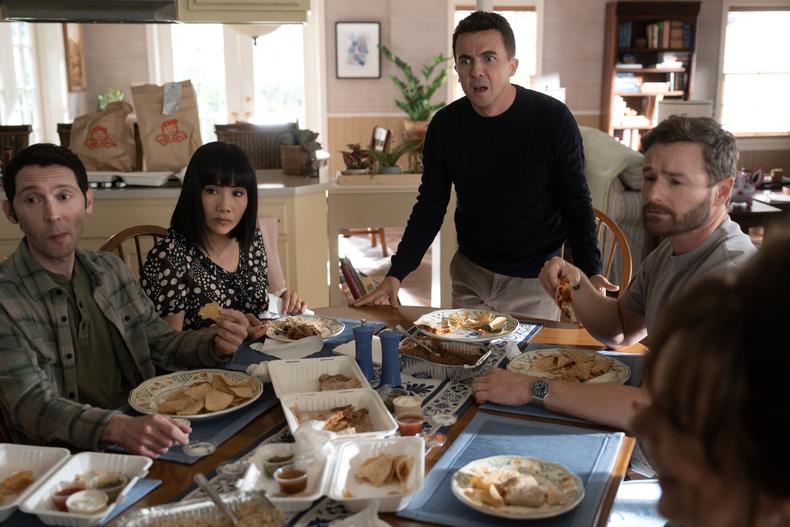
Masterson agrees that having more life experience—including taking on guest roles on series like “White Collar” and “Haven,” stepping into producing and DJing, and becoming a parent—made it easier to reapproach his character, the charismatic, troublemaking eldest son Francis. He says, “It was a little easier for me to go, ‘OK, what is it that we’re doing? What are the problems that are going to come up within the character? What is he trying to do?’ I have the framework of how to deal with life through my experience, and so now I could just apply that to this. I find it much handier.”
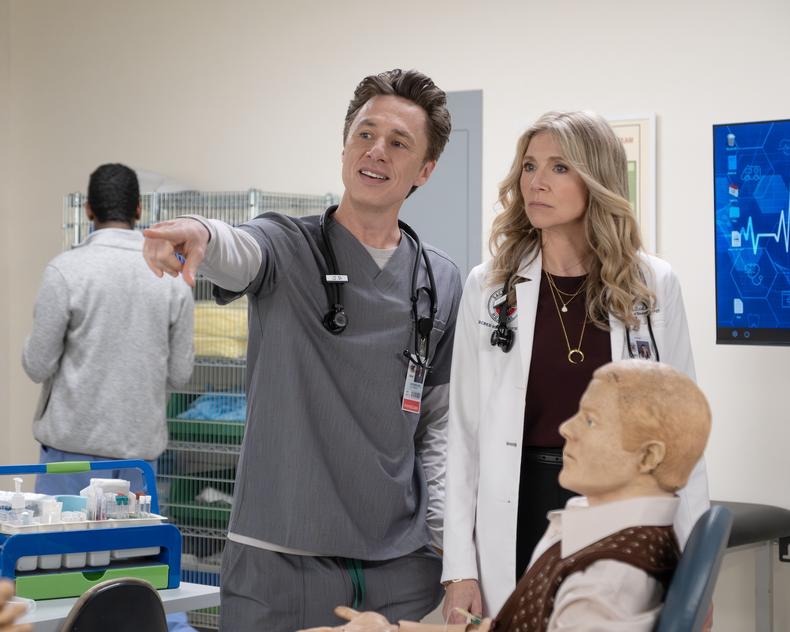
Talk about an experiential framework: Chalke has kept her career thriving across television and voice work since “Scrubs,” including starring in the Netflix hit “Firefly Lane” (in which she, interestingly enough, plays versions of her character at different ages) and the “Roseanne” spinoff “The Conners.” Returning to her role as the endearingly awkward Dr. Elliot Reid, Chalke found she had new tools at her disposal, including the ability to cry on command. The skill had eluded her in the show’s early seasons, when she needed extra assistance to find the right emotional catalysts.
“I would get so made fun of because I’d have my iPod Nano with my headphones listening to a sad song playlist when I had to cry,” she recalls. But now she no longer needs a trick to produce authentic tears. “I had to cry in last week’s episode and everyone’s like, ‘Well you don’t need the iPod anymore! You figured out new triggers!’ ” she says.
All three actors also relied on external factors like their physical environment and cast dynamics. Berfield explains that the revival’s faithful set design allowed him to refamiliarize himself with the show’s world. Although “Life’s Still Unfair” was filmed in Vancouver, far from the original series’ Los Angeles home, the production team painstakingly recreated the exact dimensions of the family home’s interior, including the same kitchen table and living room setup, and a modified take on the bedroom where Reese pulled off countless pranks.
“Stepping back onto the actual redesigned set—that’s when it clicked,” Berfield says. “It’s like, ‘We’re doing this. This is for real.’ ”
Hearing his cast mates revert to their old habits during a table read was enough to pull Masterson back into character. It wasn’t long before he recognized the family’s arguing and speaking patterns, particularly Lois’ (Jane Kaczmarek) guttural ferocity and Hal’s (Bryan Cranston) anxious devotion. “She’s sort of this tidal-wave force and he’s kind of dipping in and out,” he says. “To be sitting between them, feeling that happen again, was very anchoring.”
Cast mate dynamics provided a useful trigger for Chalke, too. The “Scrubs” actors spent lots of time together during the show’s initial nine-season run, and their friendships didn’t end when the series did: Chalke even appeared with Zach Braff and Donald Faison for several episodes of their “Scrubs” rewatch podcast, “Fake Doctors, Real Friends With Zach and Donald,” which she says “brought back the totality of the whole experience” of filming the show.
The cast’s real-life relationships translate into legitimate chemistry, which made tapping back into their roles years later all the easier. “The biggest part was just being with everyone again and playing that part—you’re reacting off them,” Chalke explains, noting the importance of having the space to improvise together. “The only way I think comedy works is when you have the freedom to fail, because that’s when you’re going to find something that’s fun and that’s different and that’s unique—when you’re just trying anything.”