Vampires have stalked the silver screen since the earliest days of cinema. From Max Schreck’s silently terrifying Count Orlok in F. W. Murnau’s “Nosferatu” to contemporary vamps like Robert Pattinson’s perpetually teenaged Edward Cullen in the “Twilight” franchise, Hollywood actors have portrayed these fanged bloodsuckers in a wide variety of ways.
“There are no rules,” movement coach Lorin Eric Salm (“Hellraiser,” “Lisa Frankenstein”) tells us.
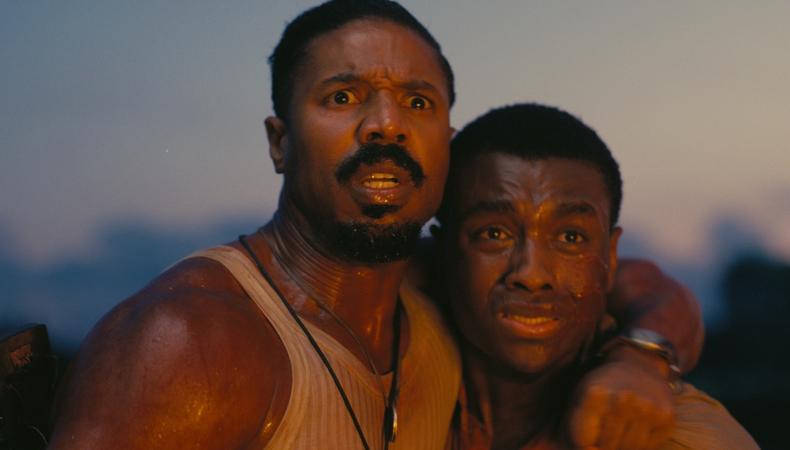
On April 18, Ryan Coogler is dipping into this supernatural subgenre with “Sinners,” which follows a pair of identical twins (both played by Michael B. Jordan) trying to fend off a gang of vamps attacking their Mississippi juke joint. To celebrate the film’s release, we’re exploring what makes a vampiric performance iconic, plus the techniques actors should (and shouldn’t) use to play a creature of the night.
No two vamps are alike.
“Vampires are completely culturally led,” says acting coach Kevin Kemp. Early performances, such as Schreck’s Orlock in “Nosferatu” or Bela Lugosi’s often-imitated Transylvanian count in Tod Browning’s “Dracula,” played on the idea of otherness—specifically, of evil foreign invaders. Today’s cinematic vampires, however, tend to be more relatable, alluring, and even revered.
“What I think is really fascinating is how much of the historical accent people choose to bring into their characters,” says dialect coach Audrey LeCrone (“Nope,” “Fear the Walking Dead”). “You can choose to sound like you are from 300 years ago, or you can assimilate to the culture and reflect modern-day society.”
RELATED: How to Act In a Horror Movie
Because of the sheer number of vampires that exist on film and TV, any actor playing one has to reckon with what came before. Interpreting Dracula, for example, means acknowledging Lugosi’s performance, says dialect coach Amy Chaffee, who worked with the stars of AMC’s “Interview With the Vampire.” “You’re either doing a really faithful rendering of some version of the original, or you’re doing a complete reenvisioning and telling it through a different lens,” she explains.
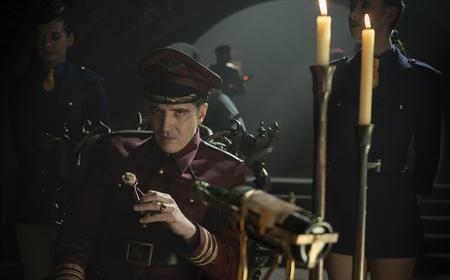
For his reimagining of Anne Rice’s 1976 novel “Interview With the Vampire” (which was previously adapted for the big screen in 1994), creator Rolin Jones moved the beginning of the story from the 18th to the 20th century. This prompted the cast and crew—including Chaffee—to develop entirely new backstories for the characters. “We had to chuck a lot of what was in Rice’s book because it was set in a different time period,” she says. “I went with what was historically accurate and let the actors play with it.”

“Sinners” Courtesy Warner Bros. Pictures
Nailing your vampiric performance
According to the experts we spoke to, here are some essential questions a performer should ask when breaking down a script in which they play a bloodsucker.
- How old is this character?
- Where and when were they born and raised, and where have they lived since?
- When were they turned into a vampire?
- Are they part of mainstream culture, or are they an outsider?
- Do they want to assimilate into the world of humans or remain separate from it?
From there, decide how you want the character to move and sound. “They would probably be very confident,” says Salm. “They would have decades or centuries of experience interacting with humans; so they would know what to do, what to expect, how to manipulate people, how to conceal their identity, and how to get whatever they want.
 8 Actors Who Played Dracula—and How Each Sunk Their Teeth Into the Role
 “Any actor who’s going to play a vampire needs to know how to stylize their movement, and how to control and choose those movements carefully,” he adds. “There’s something about most vampires that’s a little different when you see them. There’s something that’s not quite everyday about them.”
A performer can choose to be theatrical, à la Lugosi or Bill Skarsgård with his operatic take on Count Orlok in Robert Eggers’ 2024 “Nosferatu” remake. Alternately, they can opt to be slow, measured, and intense like the vamps on HBO’s “True Blood.”
“If you look at ‘Interview With the Vampire,’ they’re very regal, but then there’s something off about them,” says Kemp. Sometimes, he adds, the best choice is not to move at all. “That stillness suggests aristocracy or high bearing—being so old that you’re comfortable in your own body.”
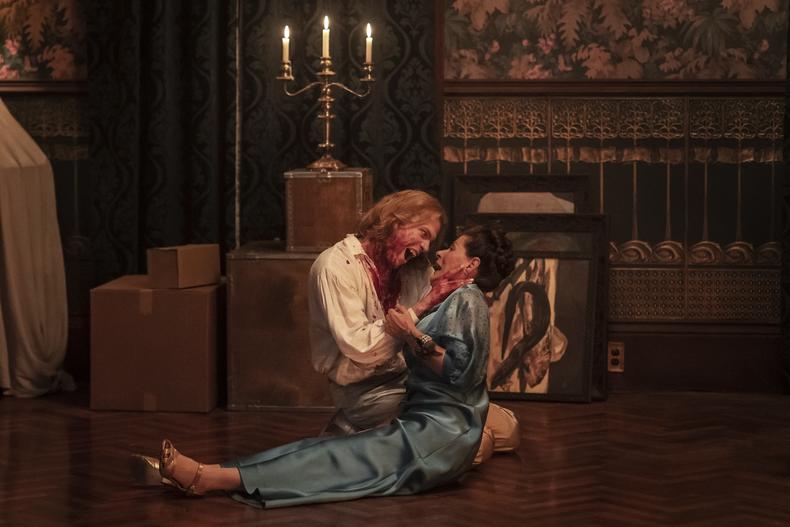
“Interview with the Vampire” Credit: Alfonso Bresciani/AMC
A big part of the process lies in the vocal work. “In something like ‘Twilight,’ they’re gonna sound like they are part of [human] culture, but they have something different about them. So it’s about identifying what is different,” LeCrone explains. “Is it an energy thing? Is it the rhythm of how they’re speaking? Do I speak as if my words are all a ribbon coming out of my mouth? Do I [transition from] a really slow tone to a really quick tone? Do I throw my words away? Vampires onscreen are [often] portrayed speaking in more of that ribbon sort of sound.”
Historically, vampiric dialects on film have been used to emphasize a character’s otherness, even beyond the supernatural sphere. (Think of how often villains spoke in Russian accents in the wake of the Cold War era, or the outdated, offensive use of a Southern drawl to indicate a low-IQ character.)
Contemporary audiences have sometimes maligned Lugosi’s performance because his stilted readings and thick Hungarian accent come off as if he learned his lines phonetically, which wasn’t the case. If it works for the character, Kemp says that it’s worth considering “neutralizing that accent to maybe something Transatlantic, or not even changing your accent—slightly changing the articulation or being slightly over-articulated.”
Don’t fear the fangs.
Once you find your vampire’s voice, there’s one finishing touch: the incisors. Sure, you won’t always have those fangs in. But “when those teeth are out, how does it change your voice?” Kemp posits. “You might have to purposefully get into the growl a little bit.”
Any unnatural prosthetic will take some getting used to, but you can use this to your advantage. If having fangs in your mouth makes you feel inhuman, hold onto that during your character’s more human moments. “There’s an old Shakespearean technique where you [speak your lines with] a wine cork between your teeth, then try to make them sound exactly the same, even without the wine cork,” says Kemp. “Basically, it makes your articulators work over time.”