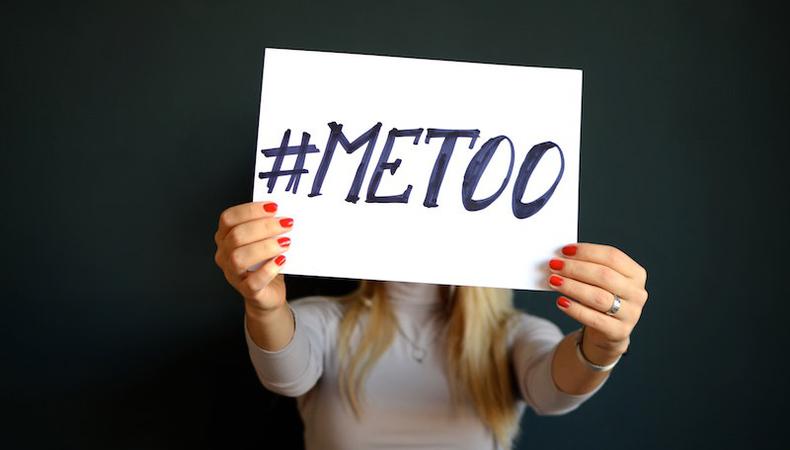
Three years after allegations against Harvey Weinstein of his heinous sexual harassment within the Hollywood community were made public, the mega-house film producer has been charged and found guilty of two felony counts of sex crimes after six survivors came forward to report their experiences.
The verdict represents the most substantial legal win for the #MeToo and Time’s Up movements—in addition to the trial of disgraced comedian Bill Cosby—and is a big win for victims made vulnerable in part by their careers as actors. Since allegations were initially published, the entertainment industry has begun a process of reckoning and accountability—a cleansing that has seeped into the United States’ culture at large.
Shortly after the allegations became public, SAG-AFTRA, the nation’s union for film actors released a statement at their 2017 convention praising the bravery of the women who came forward, acknowledging “the behavior alleged on the part of Harvey Weinstein is abhorrent and unacceptable. Unfortunately, it is more prevalent than our industry acknowledges.”
Today, the union shared a statement from president Gabrielle Carteris on the jury’s guilty ruling: “This verdict sends a thunderous message to other harassers and abusers: You can’t run and you can’t hide any longer. Increasingly, if you harass or abuse, you will be reported, you will get caught and you will be prosecuted.”
Since Weinstein, the #MeToo-conscious industry also saw a rise in the hiring of intimacy directors on sets and rehearsal halls. Trained to choreograph moments of sex, intimacy, abuse, or eroticism, intimacy directors have become increasingly mandated on film shoots and in Broadway productions. Major theaters like the Oregon Shakespeare Festival have added an in-house intimacy director to their payroll. Earlier this month, SAG-AFTRA released official protocols for how intimacy directors should be activated on union projects. From national newspapers to television news, the intimacy director profession has seen a boom in press coverage.
Since the allegations against Weinstein, there has been a multi-organizational effort to educate actors about out-of-the-ordinary work requests. Earlier this year, the Time’s Up foundation released informational guides written by 15 activists for actors to know what they should expect at work and what behaviors should raise red flags. The foundation emphasized educating actors on their rights in auditions, nude scenes, and reporting dangerous behavior.
 Keeping Yourself Safe During Auditions
 In recent years, there have also been struggles to understand how the entertainment industry should assess degrees of abuse, intimidation, and harassment. Currently, there are daily protests of Broadway’s new “West Side Story” revival after principal actor Amar Ramasar was fired and re-hired at the New York City Ballet for participating in the online dissemination of non-consensual nude photos of female co-workers. While producers acknowledge Ramasar’s past, they have committed to keeping him in the “West Side Story” citing the issue’s arbitration, and lack of complaints of such behavior over the course of their production.
While there have been many internal policy changes, shifts in approaches to gender, online activism, and mainstream debate, concrete laws have yet to hit the books in most states. However, Weinstein’s charge of guilt could be the first of many more to come.
“Justice was served today and Harvey Weinstein was held accountable for his crimes,” said SAG-AFTRA’s Carteris. “But it is only a beginning. We look forward to the Weinstein prosecution in Los Angeles where he will be brought to answer for other offenses.”
Shortly after the #MeToo movement avalanched online, the L.A. District Attorney’s Office set up a task force to investigate abuse in Hollywood.