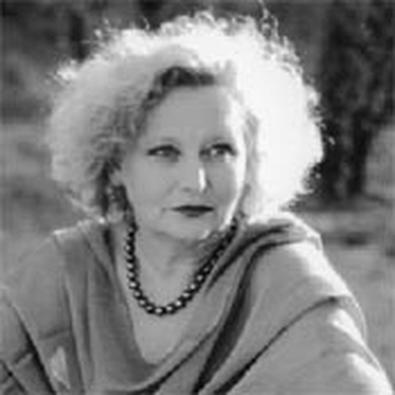
"American actors have this fantasy that the English have a secret about Shakespeare," says Di Trevis with a wry smile in her London office. But "there's no way to do Shakespeare that you can buy off a shelf like a product."
Trevis considers herself a director first, but she often teaches and coaches. She recently taught a Shakespeare course, one of her specialties, at the Irondale Center for Theater, Education, and Outreach in Brooklyn, N.Y., and she teaches regularly at Carnegie Mellon University. In the past year, her directing duties have included London Cries for New York's Irondale Ensemble Project and the debut of Ronald Harwood's play An English Tragedy. She's even collaborated with Harold Pinter on adapting Marcel Proust's challenging Remembrance of Things Past.
When it comes to Shakespeare, Trevis says, "Americans are possessed of an inbred advantage, in that emotion is served through vowels and sense through consonants." Americans, she maintains, are used to extending vowels, something the contemporary English more often than not need coaxed from them. "We cannot imagine what he was hearing," she says of Shakespeare, "but we know he felt the long vowel."
Asked to describe the English actor's hang-up more closely, Trevis tersely replies, "Stiff upper lip," and traces it to the Victorian era brought through to World War II. When working on her native English soil, "I often have to get actors to sing the text more, open their mouths more. In America, the movement is forward into the land." She's talking about an openness of attitude that extends to speech. "The voice in America reveals that," she says. The perception elsewhere is that "Americans talk too loud." She mimics in high decibels: "Oh my God, on this he said this, and I said, 'No way!' "
Contrasting English and American actors on stage and film, she says, "I do think that English actors excel at walking a razor's edge between profound emotion and high technique. The emotion wells underneath, is kept under control. Americans can abandon themselves to more-generalized emotions. There's the American work ethic: The more you do, the better you are at it. There are fewer notions of restraint."
When working with actors on either side of the Atlantic, Trevis puts use of the voice in the larger context of acting technique and focuses attention on complex texts, or "writing that expresses thought in a complex way," she says. "Difficult language, complicated dramatic structure, and extremely dense thought and images. It usually denotes the 16th or 17th century and is mostly associated with Shakespeare, Marlowe, and the Jacobeans." It's the rhetorical technique "taught to the educated class of Elizabethan England," she adds, and its basic thrust is "the development of thought as argument to persuade."
Furthermore, Trevis emphasizes that argument is action and that action is the underpinning of drama. When delivering a speech, she says, an actor "always has to remember what the action is. It's a forward motion. It's trying to convince. You have to get the actor to examine the backbone of the argument. The actor can't get lost in the colorings. One way to get the action is at first to play a generalized action, as if giving a university lecture, then bring in the colorings."
Earn That Pause Because she's speaking soon after Pinter's death, her friend is much on her mind. "I can't believe I'm talking about him in the past tense," she says. She stresses his humanity in the rehearsal room and "the clarity, simplicity, the limpid use of poetry" in his writing. He "got so sick and tired of questions about Pinter pauses. All he's really suggesting is there's some way that actors earn that pause. The pause isn't there just as a pause." Trevis cites James Joyce and Samuel Beckett as his influences and observes that Pinter "took Beckett into the rooms," meaning he applied Beckett's techniques in domestic settings. Of all the men with whom she's worked in the theatre, she says, Pinter was the only one who "didn't mind clever women. He didn't mind you had a brain."
For all her beliefs about acting and Shakespeare, Trevis doesn't want to be considered a be-all-end-all type: "I hate the guruness of it. I don't like hearing, 'I'm a Meisner actor.' I don't want to pick on Sanford Meisner, but if you ever say, 'I'm a Trevis actor,' I'll kill you." About acting, she says, "In a sense, you can't teach it. It's really bizarre to think you can. You have it or you don't."
Trevis greatly enjoys working in the U.S. and would like to set up shop on these shores at least twice a year. She gets enthusiastic when reporting her attendance at Lincoln Center Theater's Broadway revival of South Pacific, where "one of the first actors on stage was someone I taught at Carnegie Mellon." That, she said, was high gratification.