Whether it’s the perpetually bloodstained Lady Macbeth or the master manipulator Iago, the best Shakespearean villains are defined not only by their body count and betrayals, but by their delicious complexity. The Bard captures the array of good versus evil with every shade of gray in between; here are 12 of his most nefarious characters to sink your teeth into.
- They’re complex. William Shakespeare wrote well-drawn, nuanced figures driven by raw ambition, calculated revenge, and other motives that evolve and deepen throughout each play, showing how everyone is the hero of their own story—even when they’re cast as the antagonist.
- They’re manipulative. The most compelling villains excel at psychological and physical manipulation. Their prowess isn’t just in combat or cunning, but in their ability to channel dark emotions like envy into a focused drive to achieve their goals.
- They’re enduring. Shakespeare has shaped and influenced our sense of archetypes as much as the language we use. What makes a baddie truly bad shifts based on cultural context, but the best villains are evil no matter the year. Actors have an opportunity to tap into myriad desires and driving forces that make Shakespeare’s plays so timeless and timely after all these years.
- They’re boundary-blurring. Genre and context inform our reading of whether the villain is misunderstood, tragic, dastardly, comically evil, or a combination. Some villains can embody multiple archetypes simultaneously, making them particularly rich roles for actors.
Cassius, “Julius Caesar”
Julius Caesar’s last words might be about Brutus, but his brother-in-law Cassius is the mastermind behind his murder. As the chief conspirator, Cassius uses his shrewd political skills to convince others to take down Caesar, even manipulating Brutus with forged letters. His potent mix of jealousy, a personal dislike of Caesar, and disdain at how the Roman public celebrates him make this trusted leader a nuanced character.
There is also depth to Cassius, as he has genuine affection toward Brutus—even if they eventually come to blows. These two-hander conversations with his close friend underscore the range of this role. Similarly, the shift from being skeptical about omens and fate to believing the warning signs of symbols (like ravens) adds another layer, reaching its crescendo when Cassius realizes his persuasive powers have failed him.
Claudius, “Hamlet”
Killing your brother, snatching his crown, and then marrying his widow ranks pretty high on the bad guy scale, but smooth-talking politician Claudius isn’t quite as cruel as the plot makes it sound.
King Claudius exhibits a range of emotions, including regret and guilt, about his actions toward his sibling. Considering that Claudius is the catalyst for the events, it puts this character central to the action.
Claudius freely admits his crimes (and subsequent shame) to the audience and God, but this doesn’t stop him from plotting to take out his nephew, Hamlet. The death of his ally Polonius incites anger, giving actors an array of emotions to play in this epic tragedy with family at its heart. Although the role inspires a literal cartoon villain in “The Lion King,” with Jeremy Irons twirling his mustache as Scar, Claudius is far more measured in the text—even if his body count by the end of the play suggests otherwise.
Don John, “Much Ado About Nothing”
Histories and tragedies don’t have a monopoly on who gets to play the scoundrel, as Don John proves in one of Shakespeare’s most beloved comedies. There is a darkness simmering beneath Don John’s romantic mood as he plots to ruin Claudio’s union with Hero. Like Edmund in “King Lear” and Cassius in “Julius Caesar,” envy has soured Don John’s mind, prompting him to sow seeds of discontent to match his own misery.
Due to his single-mindedness, Don John’s plan to ruin a wedding and hurt his brother, Don Pedro, falls apart. Don John is honest about his dislike of Claudio and desire to cause mischief, so actors can tap into his bitterness or dial up his comically evil scheming. Shakespeare doesn’t repeat his scoundrels, even if motivations tick similar boxes, and Don John gives an actor a confessed “plain-dealing villain.”
Edmund, Goneril, and Regan, “King Lear”
At the heart of “King Lear” are two fathers who will come to regret the amount of trust they put in their children—whether too much or not enough.
The first father, the Earl of Gloucester, bequeaths his fortune to his legitimate son, Edgar, leaving his illegitimate son Edmund to rail against the unfairness of being born a bastard. In contrast, King Lear’s two eldest daughters, Goneril and Regan, are far from satisfied with their riches, adding to the push-pull tension.
The three offspring—Edmund, Regan, and Goneril—conspire and indulge in wicked acts, with Goneril lusting after Edmund. Depravity reigns as Regan and her husband, the Duke of Cornwall, pluck Edmund’s father’s eyes from their sockets. Edmund realizes the gravity of his actions and repents his sins (too late), offering a reminder that humans are fallible and that morality is often relative due to circumstances
Iago, “Othello”
The term gaslight didn’t exist in the early 17th century, but if it did, Iago would be its personification. Othello’s second lieutenant manipulates the Moor with lies and gossip to such an extent that he kills his own wife. And since Iago is in a position of trust (and is even described as “Honest Iago”), his betrayal stings even further.
This role continues to entice actors across the generations, thanks to Iago’s psychopathic tendencies and Machiavellian scheming. While other Shakespeare villains make terrible decisions based on greed or envy, usually explained in a moment of self-reflection, Iago lacks an apparent reason for his devious path beyond hatred and envy. In 2025, Jake Gyllenhaal will play Iago opposite Denzel Washington’s Othello on Broadway.
Macbeth and Lady Macbeth, “Macbeth”
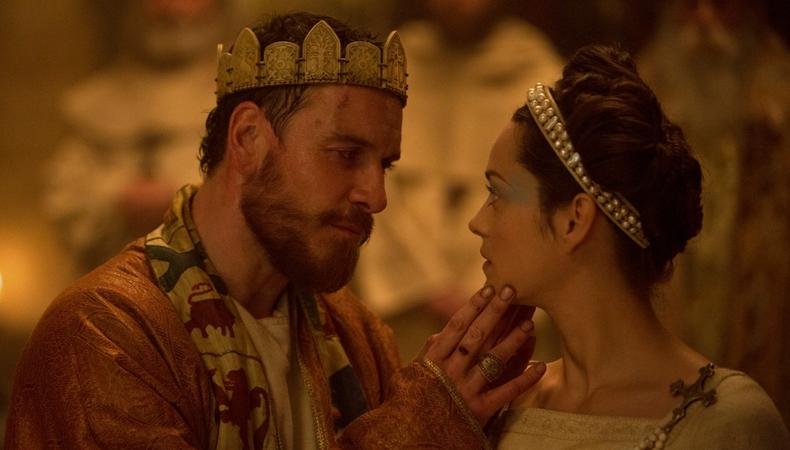
Ambition can corrupt, which is why both Macbeth and Lady Macbeth earn the villain crown in this play. Lady Macbeth usually gets a significant portion of the blame, as the scheming wife whispering in her husband’s ear about becoming king. However, Macbeth is far from an innocent man bewitched by women (including witches) into breaking a moral code.
What makes this play and these two roles so fascinating is that the degrees of villainy aren’t set in stone. Like a lot of Shakespeare’s work, sparse stage directions and lack of additional text about characters’ interior lives allow directors and performers to interpret the material themselves. Yes, you can emphasize Lady Macbeth as the key architect who dominates her husband, but there’s also room to capture her humanity during the bloody hallucination sequence.
“Macbeth” is Shakespeare's shortest tragedy, but the playwright crams a lot of bloody moments and intrigue into those five acts. The Macbeths each get killer soliloquies, underscoring the reasons that they are on many actors’ wish lists.
Richard III, “Richard III”
Shakespeare’s titular figures are prone to bend their morals for the crown, and Richard III is no exception. While some of the historical elements are more in line with propaganda than fact, if you get the chance to play this leading role, you have multiple juicy monologues at your fingertips.
Like many of the flawed figures on this list, Richard III isn’t a straight-up bad guy; he can even be played for sympathy when exploring his physical disabilities and quest to maintain power. However, he’s also a spiteful tyrant who is quick to dish out a death sentence, even for family. He’s willing to slaughter his two young nephews, and it is these darker moments that add to the complexity of playing this king.
 Be Not Afraid of Greatness With These 28 Shakespeare Monologues for Actors
Tamora, “Titus Andronicus”
Watching her son be sacrificed to the Roman gods gives the Queen of the Goths, Tamora, enough reason to plot her revenge against the man who orchestrated the punishment. Titus finds his fortunes are dramatically altered when Tamora marries the new emperor and uses her position of power to play the monster. This play is considered to be Shakespeare’s bloodiest and most violent, especially when Tamora sends her two sons and her lover, Aaron the Moor, to do their worst to Titus’ daughter, Lavinia.
Because Tamora’s motivations are rooted in her desire for vengeance, performers can use her character to emphasize the cycle of violence: Tamora gets Aaron to rape, mutilate, and murder in her name. The children are the ones to suffer, and Tamora gets a meaty monologue that leans into the shock value.
Tybalt, “Romeo and Juliet”
No one hates the Montagues more than Tybalt, who loathes the Capulets’ rivals with every inch of his being. “What, drawn, and talk of peace! I hate the word, As I hate hell, all Montagues, and thee,” he says to Benvolio in the first scene of the famous tragedy. Juliet’s cousin isn’t afraid to draw his sword, which makes this a physical role that allows for stage combat—the weapon of choice will depend on the production itself.
Probably the most famous portrayal of Tybalt is Baz Luhrmann's 1996 movie adaptation, in which John Leguizamo plays the villain with swagger and confidence. Proud, vain, and quick to anger, Tybalt is driven by family pride. He may lack some of the subtlety of the other baddies on this list, but the role is no less enticing.