
When director Paul Thomas Anderson finally accepted his first, decades-in-the-making best picture Oscar for his 10th feature, “One Battle After Another,” he made sure to graciously list his cast, a starry who’s who of Hollywood’s A-tier—Leonardo DiCaprio! Sean Penn! Benicio del Toro! Regina Hall!—before turning upstage to emphasize: “And especially Chase. My American girl, Chase. You are the heart of this movie.”
He was talking to Chase Infiniti, a name probably unfamiliar to more than half the room just one year prior. For the 26-year-old actor, the moment capped a truly meteoric rise unheard of in the modern entertainment industry: from unknown to auteur favorite beaming under the Academy lights in roughly 365 days. How did Infiniti pull off the impossible?
Well, it all started in front of a bare wall.
“I have such a boring setup,” Infiniti shares during an increasingly rare moment of downtime. “I always keep a blank wall in my bedroom, or if I’m in a hotel room or something I take the paintings off the wall. A clean background and good, natural lighting.”
We’re talking, of course, about her self-tape setup. You can’t avoid the topic—a divisive one, I’ve learned, over hundreds of conversations with working actors—if you want to discuss Infiniti’s ascent to stardom. A 2022 musical theater graduate from Columbia College Chicago, she is of the generation that considers the self-tape the industry norm. Every massive part she’s landed—from her TV debut as Jake Gyllenhaal’s daughter on Apple TV’s “Presumed Innocent” to her film breakout as Leonardo DiCaprio’s daughter in “One Battle After Another” to, most recently, the lead in “The Handmaid’s Tale” sequel “The Testaments”—has come from a remote audition (or, in the case of catching a manager’s eye, from her virtual college showcase).
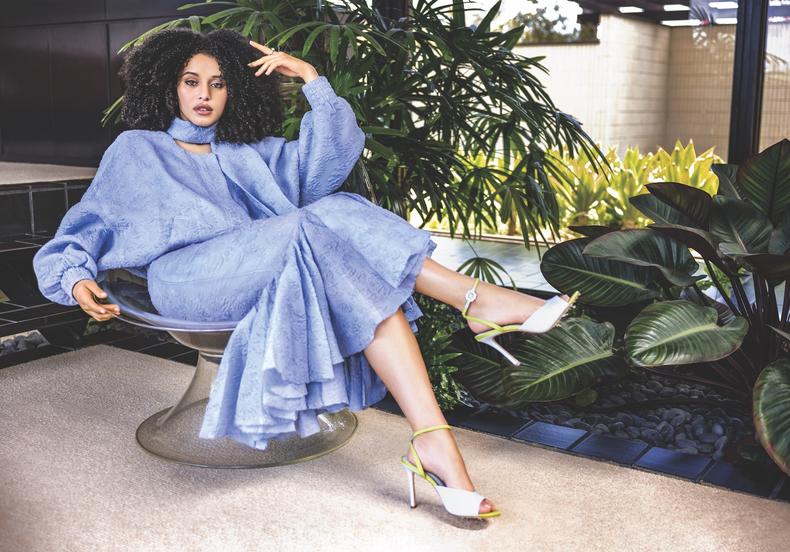
Infiniti’s story does reflect the nebulous nature of what makes or breaks a modern-day audition. Because there’s no secret sauce here, no formula to steal. She keeps it simple, shooting with her phone and a “cheap tripod” (and, always, that blank wall), sticking to a three-take limit. “I started only filming three takes after college, because I would just keep on repeating and repeating to where I’d be doing, like, 20 takes and be burnt out,” she says. But there’s also just no denying that Infiniti has that unexplainable something, a talent and charm that’s easy to read even through a Zoom window.
“I wish I was one of those people who has all my special lighting. Whenever I see that I think, You guys are doing it right,” she says, before adding, without a hint of irony: “I’m not doing it the way I should be.”
Clearly, that isn’t correct. Just one day after the Oscars, she was on a plane to Paris to start promoting Hulu’s “The Testaments.” Adapted by “The Handmaid’s Tale” creator Bruce Miller from Margaret Atwood’s 2019 novel, the series was a nearly instant leveling up in confidence and responsibility for Infiniti. In comparison, the whirlwind experiences of “Presumed Innocent” and “One Battle After Another” felt more like building a ladder and climbing it at the same time. “I didn’t know what ‘hitting a mark’ was. I remember being confused why there were pieces of tape on the ground,” she recalls. With “The Testaments,” though, Infiniti is no longer the new kid in town; the narrative has shifted from “meet Chase Infiniti” to “Chase Infiniti, series lead.”
One thing’s certain: She’ll hit a mark every time now. “That feels like second nature,” she says with a laugh. But there were far bigger obstacles to overcome to play Agnes MacKenzie, an upper-crust student at a prep school designed to churn out dutiful wives in the totalitarian theocracy of Gilead. (The character is the biological daughter of June Osborne, Elisabeth Moss’ “Handmaid’s Tale” protagonist—though Agnes doesn’t know it.) Raised by adopted father Commander MacKenzie (Nate Corddry), Agnes has known only obedience and repression; straight back, no unwanted emotion. For Infiniti, that meant suppressing her natural theater kid instincts.
“It was very painful at times, both physically and emotionally,” she says. “There were so many points, especially when we first started, where I was so tired all the time because of how stiff I held my posture. Because Agnes is the princess of Gilead. Of course she’s going to be prepared, she’s going to be perfect.”
Like the watchful Eyes of Gilead, the camera catches everything. And like Agnes, Infiniti had to learn when (and how) to deploy subtle touches. “There are moments in life where we suppress our emotions to put ourselves in survival mode, and these girls are living in that 24/7. There’s so much you can’t say, so much you can’t express,” she says. “That’s why the small, subtle eye twitches, your nose flaring in a specific way, maybe a slight grin… Those little things feel so big because they’re not allowed. It’s painful to watch as a viewer, but also
to perform.”
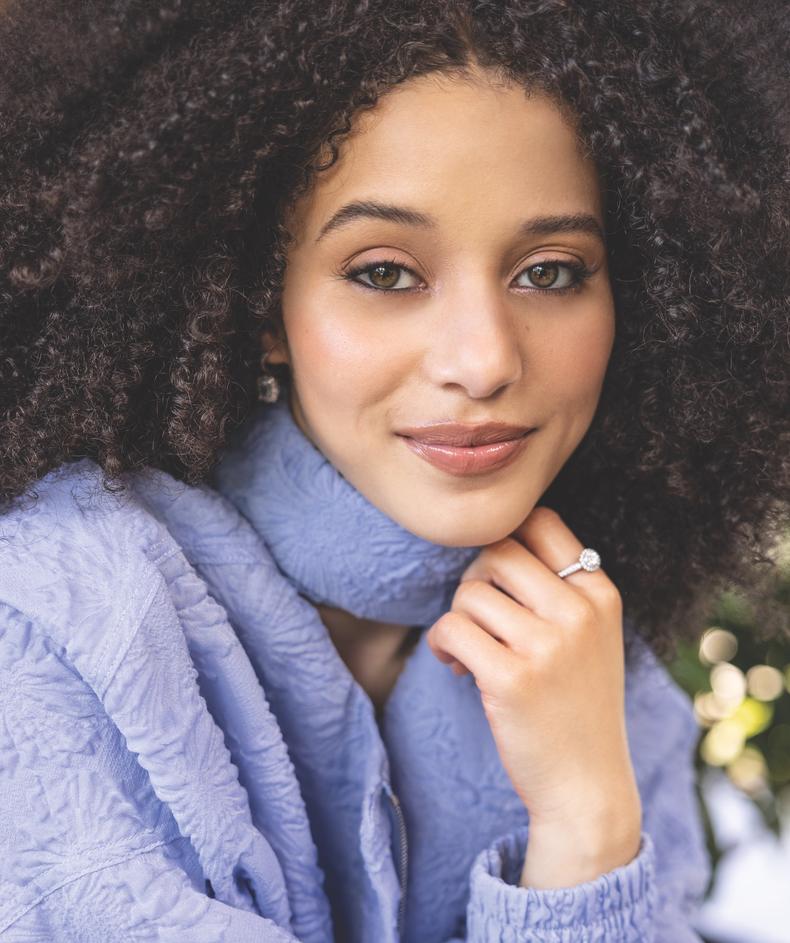
Before production, Infiniti found herself taking a deep dive into cults, particularly those with religious underpinnings. “Across the board, something that I found intriguing was the amount of shame,” she says. It’s an emotion she had to conjure for two pivotal, harrowing scenes involving Dr. Grove (Randal Edwards), the school’s resident dentist and a friend’s father. In the first, Grove gropes Agnes under the guise of celebrating her “coming of age”; in the second, Agnes wakes from a procedure to find her clothes askew, hints of a sexual assault she cannot be sure of.
“The shame that she feels afterwards, that was the biggest piece of information I took from my research and brought to her,” Infiniti says. “Because in those moments, she feels like she genuinely is the cause of this happening to her. She feels so much shame, when truly she is the victim in this situation.”
It’s heavy material for an actor at any level. In those darker moments, Infiniti looks to her more experienced colleagues—as she did with Peter Sarsgaard on “Presumed Innocent” and Regina Hall on “One Battle After Another”—who know how to set a tone. In this case, that was fellow Chicago-made actor Ann Dowd, reprising the role of Aunt Lydia from “The Handmaid’s Tale.”
“She is somebody who brings so much light onto a set,” Infiniti beams. “It could be 3 a.m., and everyone is so exhausted because we’re on take 10 of something, and then Ann Dowd walks onto the set and it’s like a wave of light just washes over everybody. You have that second wind, and it’s literally just because of her.”
That, for Infiniti, was the real gift of “The Testaments”: an example, in Dowd, of not only the type of actor she wants to be but how to handle being at the top of a call sheet.
“Outside of the incredible things [Dowd] taught me just from observing her in our scenes together, the main takeaway was just the amount of love she brings both to her work, which she loves so deeply, but also the amount of love she carries forward to the entire cast and crew,” Infiniti says. “When I would see that, I wanted to be that. I wanted to be that for other people.”
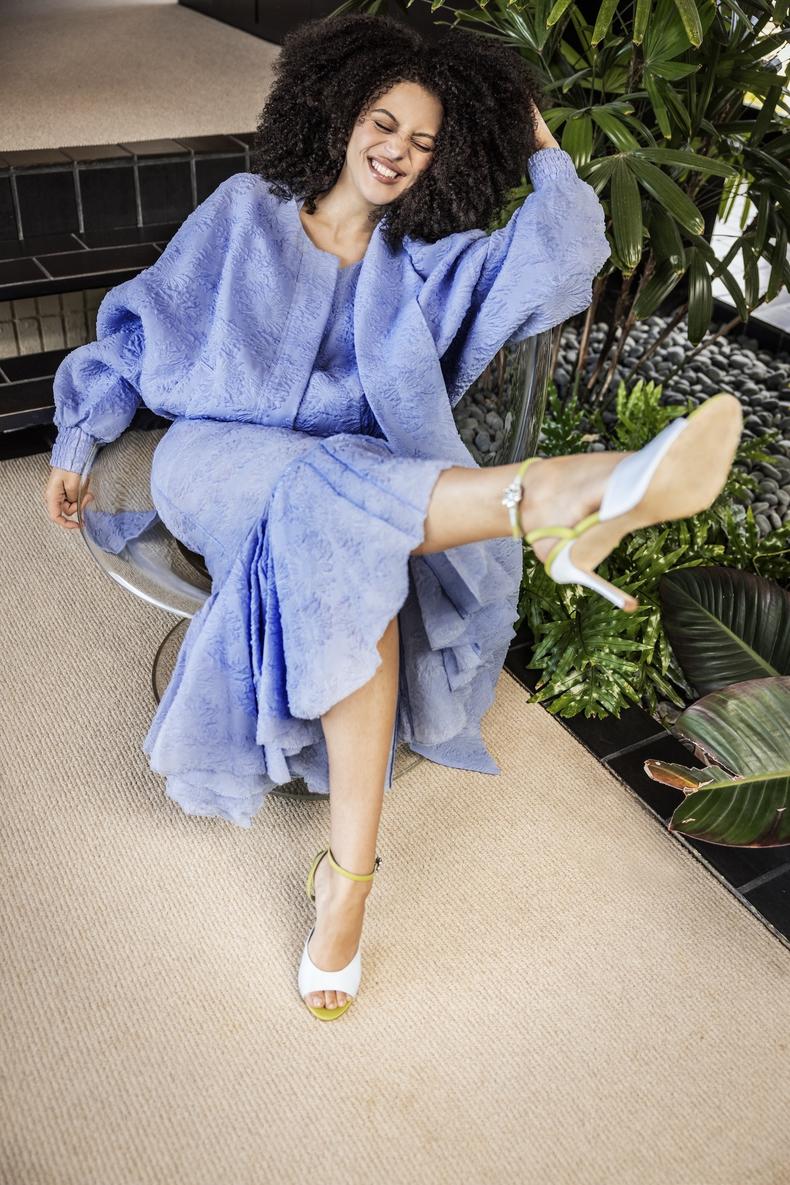
When will she get that opportunity? When we spoke, Infiniti still wasn’t completely sure what’s next on the schedule. She had wrapped Niki Byrne’s coming-of-age dramatic film “The Julia Set,” and exactly when the recently confirmed “The Testaments” Season 2 would appear on her calendar remained a mystery. “I would love to know…. I might have to call Bruce and be like, ‘What’s the tea?’ ” she says. The final shot of the first season leaves the narrative wide open: Agnes and classmates Daisy (Lucy Halliday) and Shunammite (Rowan Blanchard) walking hand in hand, fully disillusioned with Gilead and ready to take down its regime from within.
“That was actually the last thing I shot. I was like, Oh my God, I’m getting my slo-mo walk moment with my friends,” Infiniti says. “I’m always sad when something wraps. We were in this new city, tackling this new show together, and it really gave me that childlike feeling of leaving theater camp.”
As she looks ahead, Infiniti hopes her future holds a return to those theater roots with a stint on Broadway. “That’s still my biggest dream…especially if it’s new work from a new writer, anything I can do to uplift a project that isn’t getting that light and shine it deserves.”
So, yes, even Infiniti—Anderson’s “American girl,” the “Where did she come from?” story of a generation—can feel unsure about her next move. And here’s the other thing: She’s still hearing no.
“Your rejection period never ends. Everything is a rejection period. You’re gonna receive a no regardless of where you are in your acting journey,” Infiniti says. “I was actually talking about the term ‘overnight success’—the ‘came out of nowhere’ thing—with one of my friends the other day, because there’s so much that you just don’t see.”
For Infiniti, what we didn’t see was the decade-plus of her teens and early 20s when she tried to break into musical theater. The Indianapolis native—her parents own a construction company there—has been auditioning since she was 10, fully bought into the showbiz life since she booked her first role in a local production of “Hairspray.”
“My dad, very early on, told me, ‘You have to be comfortable hearing no,’ ” she remembers. “It’s going to hurt, it’s going to suck, but you have to let it hit you and pass through, because it’s painful to sit in that much frustration.”
She still thinks about her most formative no, her first major callback for a New York musical. “I flew out there, had all of my stuff prepared, my scenes and my songs, and then I completely bombed,” she says. “My voice was cracking. My voice was not doing the things I wanted it to do.”
 The experience sent Infiniti into a tailspin. “It was enough to make me have this very dark period where I thought, If I can’t perform in an audition, maybe I won’t be able to perform on the day. And of course, that’s just not true,” she says. “But you go through those periods where you start to doubt yourself.
“That was the moment I realized I need to take care of myself for the really great callbacks and the really bad callbacks,” Infiniti continues. Her well-honed self-care method, to my ears, is foolproof. “I do an audition, I get a treat after. I go to a callback, I get a treat after. It’s a little reward.”
When in doubt, the little-treat method has proved to be an effective way of navigating the industry. “You deserve it, because it’s hard to put yourself out there like that,” Infiniti says.
And that, really, is the takeaway from talking to her: The road is long and full of bumps for everyone, even when it looks like it’s been effortlessly smooth. The reason you don’t need the perfect self-tape lighting is because it’s not about that one self-tape. It’s about having the drive to send the next one, and the next one. Maybe the reward is standing on the Oscars stage as a medium-defining director calls you out by name. Maybe it’s something a little (OK, a lot) smaller.
Maybe it’s knowing you did it at all. “You shouldn’t have to wait to get a coffee, a pastry, [some] fast food…. You shouldn’t hold yourself back from treating yourself,” Infiniti says, before making sure to emphasize: “Because it is hard.”
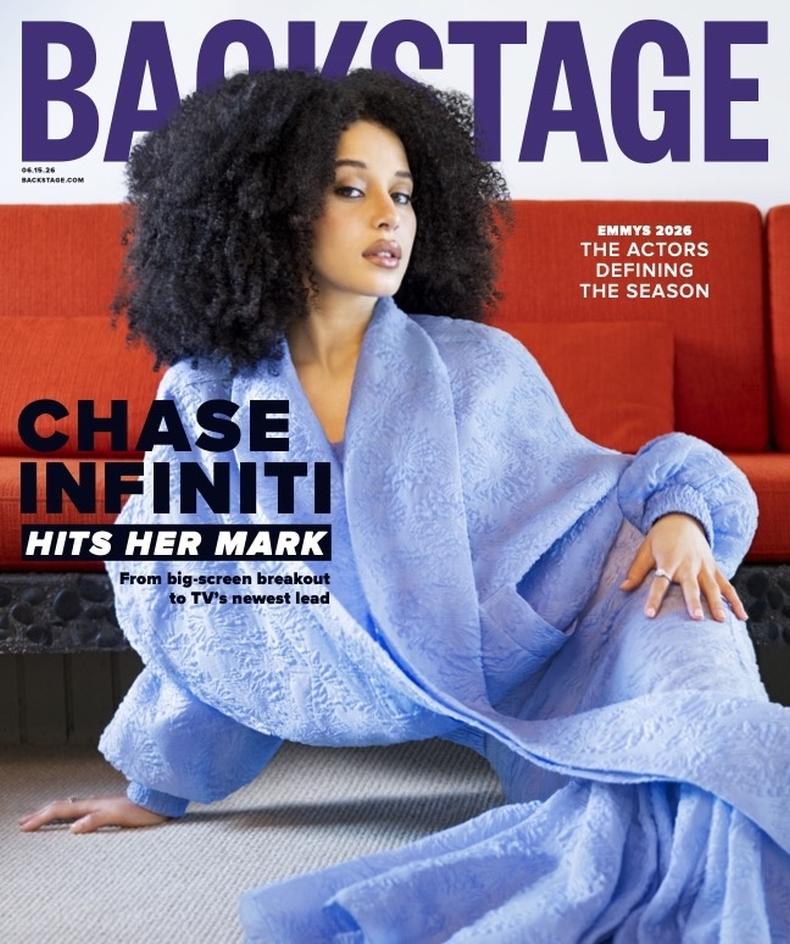
This story originally appeared in the June 15 issue of Backstage Magazine. To hear our full conversation with Infiniti, subscribe and listen to In the Envelope: The Actor's Podcast.