Sing it with us now: “Together, we’re unliiiiimited.” It’s true, there’s nothing quite like two voices melding together for a good old-fashioned musical theater duet. Grab a partner, study the iconic two-person tracks below, and you’ll be hitting Chenoweth-worthy harmonies in no time.
 Kozlik/Shutterstock
Both singers hold equal importance in a duet, with their own points to make and stories to tell. Generally, these songs begin with individual verses from each singer and culminate in a harmonized section.
Why are duets used in musical theater?
These are essentially sung conversations that both advance the plot of a musical and establish the relationship between the characters performing the duet. They can be used to air disagreements, reconcile arguments, inform, inspire, persuade, divide, or woo.
“Do You Love Me?” from “Fiddler on the Roof” (1964; music by Jerry Bock, lyrics by Sheldon Harnick)
This classic duet is a conversation between Tevye, the lead character in “Fiddler,” and his wife, Golde, about their daughter Hodel’s upcoming nuptials to a man she chose for love. The older couple juxtaposes this discussion with the question of whether their own 25-year marriage, which was arranged, has led to true affection.
Originally performed by: Zero Mostel (Tevye) and Maria Karnilova (Golde)
“My Own Best Friend” from “Chicago” (1975; music by John Kander, lyrics by Fred Ebb)
Roxie Hart and Velma Kelly, the two accused murderers at the center of “Chicago,” sing about how the men in their lives have disappointed them over the years, leading to the realization that they can only rely on themselves.
Originally performed by: Gwen Verdon (Roxie) and Chita Rivera (Velma)
“All I Ask of You” from “The Phantom of the Opera” (1986; music by Andrew Lloyd Webber; lyrics by Charles Hart and Richard Stilgoe)
In this soaring slow-burn duet, opera diva Christine Daaé and her childhood friend Raoul acknowledge the romance developing between them and express their determination to shield one another from harm. Meanwhile, the Phantom lies in wait.
Originally performed by: Sarah Brightman (Christine) and Cliff Richard (Raoul)
“Take Me or Leave Me” from “Rent” (1996; music and lyrics by Jonathan Larson)
Lovers Maureen Johnson and Joanne Jefferson argue about their relationship and give each other an ultimatum in this belter. But don’t let the upbeat music and playful lyrics fool you—this song is a relationship maker or breaker, with serious consequences for both characters.
Originally performed by: Idina Menzel (Maureen) and Fredi Walker (Joanne)
“Come What May” from “Moulin Rouge!” (2001; music and lyrics by David Baerwald and Kevin Gilbert)
This is one of few original songs in Baz Luhrmann’s beloved jukebox-musical film. In the duet, courtesan Satine and impoverished writer Christian acknowledge that their secret tryst has blossomed into love. The film was later adapted into a stage show.
Originally performed by: Nicole Kidman (Satine) and Ewan McGregor (Christian)
“Defying Gravity” from “Wicked” (2003; music and lyrics by Stephen Schwartz)
This powerful duet marks a breaking point in the unlikely friendship between Elphaba and Glinda, two powerful witches who ultimately find themselves on opposite sides of the war in Oz. Elphaba embraces her outsider status and asks Glinda to join her, but the latter ultimately turns her down.
Originally performed by: Idina Menzel (Elphaba) and Kristin Chenoweth (Glinda)
“All I’ve Ever Known” from “Hadestown” (2006; music and lyrics by Anaïs Mitchell)
In Mitchell’s adaptation of the Greek myth of Orpheus and Euridyce, the two lovers sing this powerful ballad about the budding romance between them—as well as their different approaches to life. Euridyce’s point of view in this song ultimately leads her to make the fateful decision to abandon Orpheus for an uncertain future in Hadestown.
Originally performed by: Ben Campbell (Orpheus) and Mitchell (Eurydice)
“You and Me (But Mostly Me)” from “The Book of Mormon” (2011; music and lyrics by Trey Parker, Matt Stone, and Robert Lopez)
Elder Price and Elder Cunningham, the two wide-eyed Mormon missionaries at the center of Parker and Stone’s religious satire, differ greatly in their levels of confidence. In this duet, Price expresses his belief that he’s destined to change the world—and that he’s all too happy for the assistance of the shy, awkward Cunningham to make it happen.
Originally performed by: Andrew Rannells (Elder Price) and Josh Gad (Elder Cunningham)
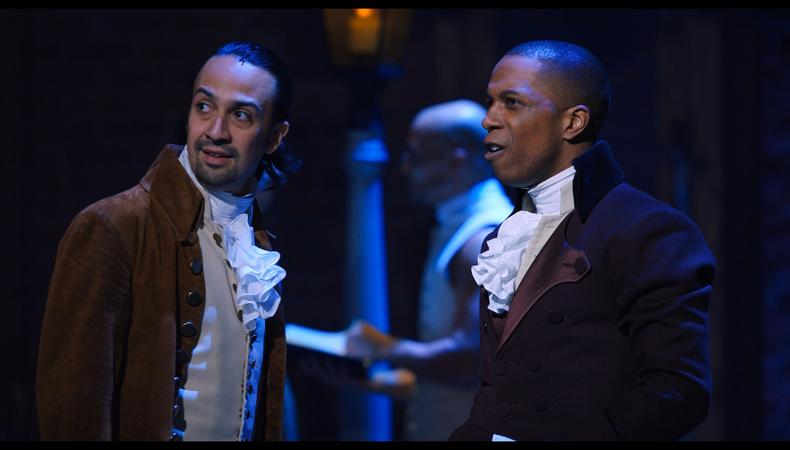
“Dear Theodosia” from “Hamilton” (2015; music and lyrics by Lin-Manuel Miranda)
This Tony-winning musical juxtaposes the lives and philosophies of Founding Fathers (and frenemies) Aaron Burr and Alexander Hamilton, culminating in their fateful duel. They find themselves in the same place for once in this optimistic duet, as they each make a pledge to their newborn children to create a better world for them than the one they were born into.
Originally performed by: Leslie Odom Jr. (Burr) and Miranda (Hamilton)
“Only Us” from “Dear Evan Hansen” (2015; music and lyrics by Benj Pasek and Justin Paul)
This duet marks the beginning of anxious high schooler Evan’s relationship with his longtime crush, Zoe Murphy. But due to Evan’s lies about his friendship with the latter’s deceased brother, their romance is haunted by the specter of omission.
Originally performed by: Ben Platt (Evan) and Laura Dreyfuss (Zoe)
“That’s the Way It Is” from “& Juliet” (2019; music and lyrics by Max Martin, Kristian Lundin, and Andreas Carlsson)
In this metatextual duet, Shakespeare’s real-life wife, Anne Hathaway, entreats Juliet Capulet from her husband’s “Romeo and Juliet” to not give up on love. The song was originally sung as a solo by Céline Dion in 1999.
Originally performed by: Miriam-Teak Lee (Juliet) and Cassidy Janson (Anne)