Welcome to Straight to Series, where Backstage takes a deep dive into how some of the most successful television shows of this Golden Age got made—and how you can make one, too.
“The Marvelous Mrs. Maisel” may be Amazon’s best investment yet. A bonafide hit with critics and audiences alike, the fall 2017 premiere of Amy Sherman-Palladino’s dramedy series about an Upper West Side Jewish housewife navigating feminism, family, and professional boys’ clubs in the New York comedy scene proved to be the exact balm that many audiences were seeking in the early-days heat of the burgeoning #MeToo and Time’s Up movements. Seeing a woman at the top of her game refusing to take no for an answer—and one with a slew of powerful, independent women at her back—was and is resonant the world over.
With an overabundance of effervescent charm, to-die-for costuming and design, and an unimpeachable cast, “Maisel” was set for success from the jump (and has won fistfuls of Emmys, SAG Awards, Golden Globes, and more along the way). Below, we take a look at how it all came together—from pastels to punchlines.
 How to Get Cast on ‘The Marvelous Mrs. Maisel’
 A Seed of an Idea
Pitching, developing, and shooting a series is typically an arduous process, but for Amy Sherman-Palladino, the first part came with relative ease. Still in the afterglow of the success of her “Gilmore Girls: A Year in the Life” reboot on Netflix, the fierce, wisecracking auteur took a meeting with Amazon brass and tossed out a spontaneous pitch about a ‘50s housewife navigating the Greenwich Village comedy scene. “They were like ‘Great, go do it!’ " Sherman-Palladino told Elle. Their knee-jerk support took her aback, later telling the crowd at the show’s Village East Theater premiere, “It’s never happened before in my life, ever. I’m not used to ‘OK.’ I’m used to fighting for everything. That’s what I’m used to, that’s my life.” The greenlight on “Maisel” was the first time, really, that Sherman-Palladino and her husband, Dan, had been given complete creative control.
“I’m not used to ‘OK.’ I’m used to fighting for everything. That’s what I’m used to, that’s my life.”
The roots of Sherman-Palladino’s inspired idea go way back. Despite growing up in the San Fernando Valley, as a child she had an romanticized conception of the New York comedy scene, “where everybody’s smart, everybody’s political, everybody’s brilliant and funny, and music is always playing.” Her father was a standup comic, and his tales of Greenwich Village basement basket houses had always stuck in her mind. Later in life, he would help her get a gig at the Comedy Store in Los Angeles, where for two years she hocked cigarettes while watching Sam Kinison, Andrew “Dice” Clay, and Arsenio Hall perform. Cut to post-”Gilmore Girls” fame, and outside of her love of the comedy club milieu, she found herself wanting to create a large-scale world with period detail, in contrast to the quaint small-town setting of Stars Hollow.
As for the series’ lead character, it was important that one of her defining characteristics was joy. “Amy designed the character and the character is joyful,” Dan Palladino told the Hollywood Reporter. “When Midge gets knocked down, she gets right back up again…. She is just going to morph back into someone who is going to take control of the room. That was the intention, and I think there’s not a lot of that out there, especially in roles for women.”
 Rachel Brosnahan: A New Chapter
 Casting
Naturally, no casting decision was of greater import than that of the titular Mrs. Maisel. True to auteur form, Sherman-Palladino wrote a character that seemed impossible to cast, her husband and series co-creator Dan Palladino told Backstage. The comedic actresses they first auditioned weren’t clicking. Then, Rachel Brosnahan came before them as an upstart with promise and chutzpah. At the time, the then 26-year-old NYU graduate starred as Desdemona opposite Daniel Craig in an Off-Broadway production of Othello, of which the New York Times noted the “piquant freshness” and “clear eyed, sharp-witted” carriage she brought to the role. She also so impressed “House of Cards” showrunner Beau Willimon that he greatly expanded her bit role, and she spun that opportunity into an Emmy nomination.
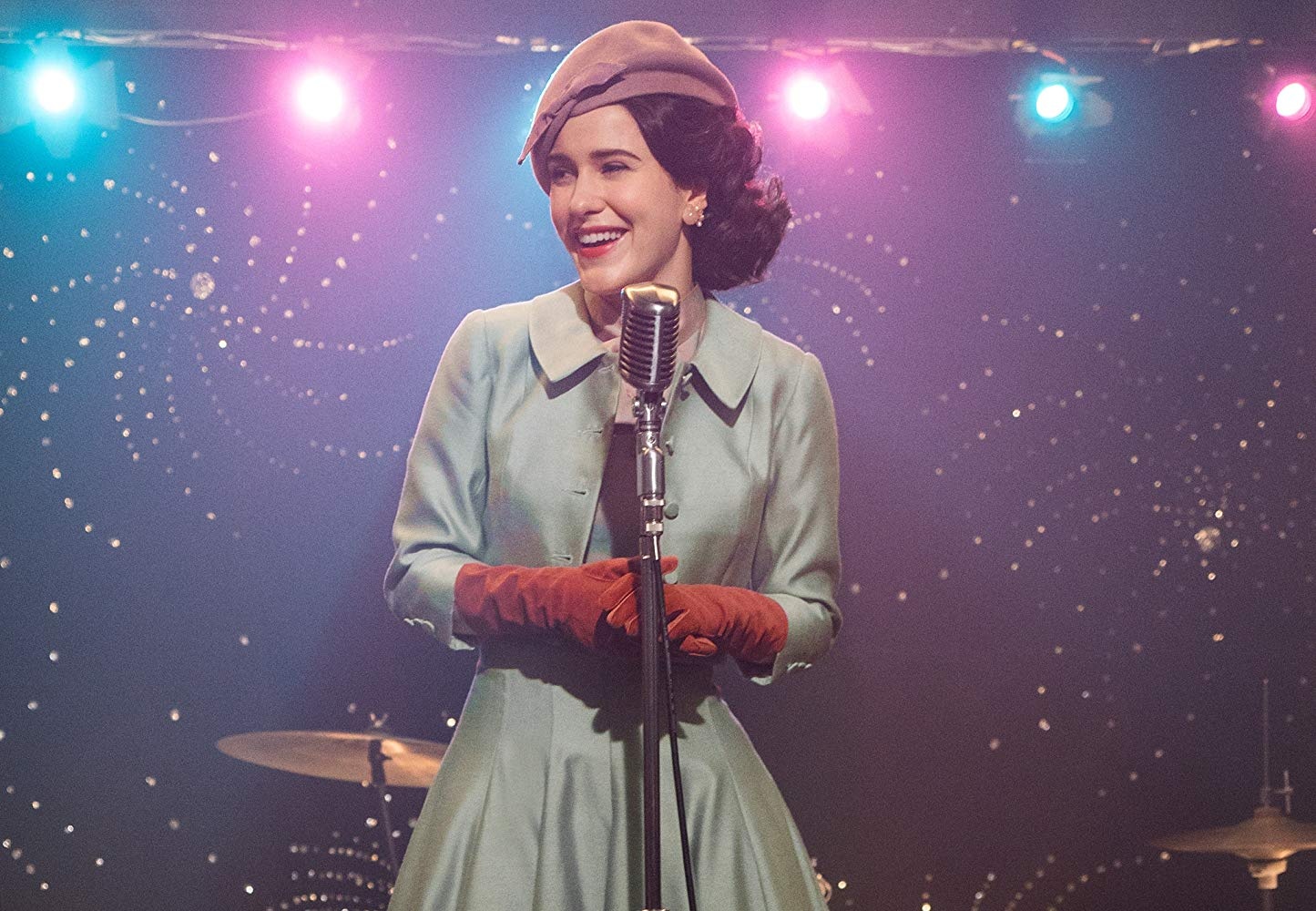
While she had displayed clear dramatic chops, Brosnahan had never really sunk her teeth into a comedic role—though she flashed Midge’s chatty energy in “Hereditary” director Ari Aster’s monologic short, “Basically”). Her relative inexperience actually worked to her advantage tackling one of her three audition scenes—the pilot episode’s five-minute Gaslight Café stand-up monologue (while literally dripping sick, no less). Her dramatic acting skills enabled her to imbue the cathartic scene with a measure of blistering distress. “She leaned into the anger,” Sherman-Palladino told the New York Times. “That’s what all stand-up comics do.” As a comedy neophyte who nevertheless commanded the stage from word one, the parallels between Brosnahan and her soon-to-be TV counterpart were obvious—and they booked her the role.
 Love ‘The Marvelous Mrs. Maisel’? Audition for These Amazon + Period Projects
 “We were extremely intrigued because she didn’t have any comedy on her résumé,” Dan Palladino recalled to Backstage. “To say, ‘I’m going to play not just a comedic part but a comedian,’ that takes a lot of hubris, which we like, and a lot of confidence.” Expanding on this to Vanity Fair, Palladino noted that she was the only audition who did everything right and “understood innately that [Midge is] not secretly unhappy, which is the core of the character.” Amy is more blunt: “There is no fear in [Brosnahan] whatsoever.” Ironically, the Emmy-winning actor told the Times that “the idea of doing an open mic makes me throw up.” So chalk the Palladino’s impression up to acting talent.
Tony Shalhoub Is on the Ride of His Life
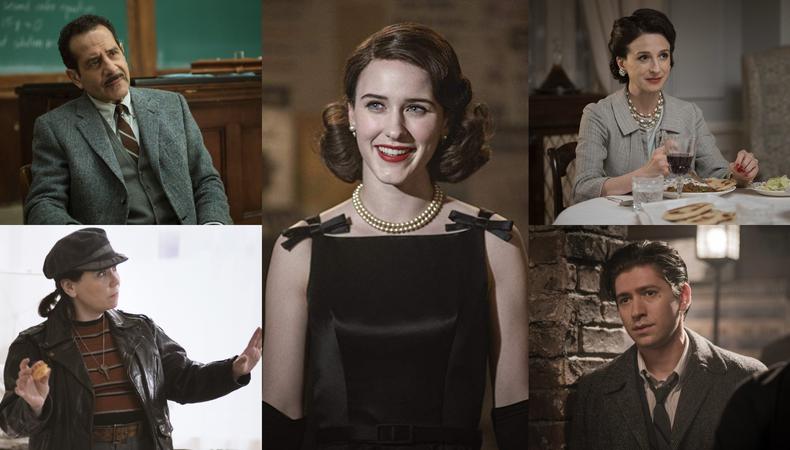
From there, successfully building out the rest of the supporting ensemble relied heavily on finding the perfect actors for the roles of Abe Weissman, Midge’s father, and Susie Ryerson, her eventual manager and best friend. Casting director Jeanie Bacharach envisioned Tony Shaloub in the role but figured, given Abe’s initially small role in the pilot, that he wouldn’t be interested. Fortunately, that was not the case. Speaking to Vulture, Shaloub revealed that his fondness for both the Palladino’s sensibility and the show’s midcentury setting influenced his decision to climb aboard. “I just love going into another period. I feel like I was born in the wrong time.”
“Magic was born…. Usually, you think of chemistry reads as being for love interests, but their chemistry was very important and it was pretty apparent from the get-go.”
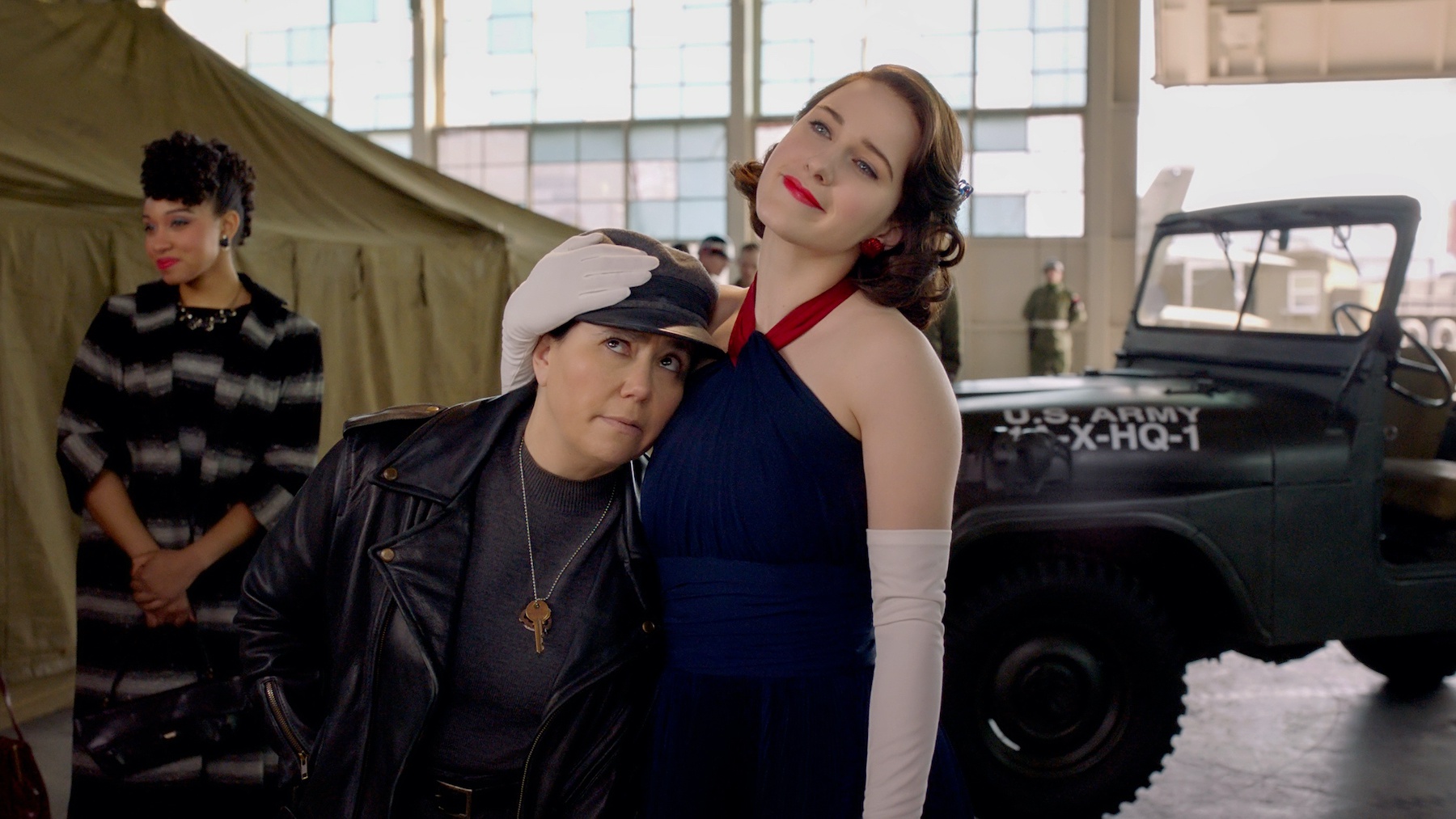
The crucial character of Susie Myerson was first imagined as being of similar age to Midge. But after seeing various young actors come through to read without finding a good fit, Bacharach sought to contact Alex Borstein, who she had first pictured in the role. Bacharach told Backstage that Borstein seemed like a proper fit for a character with a wellspring of vulnerability beneath a “wiseass tough lady” exterior. As told to Vulture, the “Family Guy” voice star was living in Europe on a break from acting following the cancellation of her HBO series “Getting On.” When she read the script that her longtime friend (Borstein was once set to be a recurring cast member on “Gilmore Girls”) sent her, Borstein’s first words in response to Amy Sherman-Palladino were: “Fuck you, now what do I do?” The opportunity was too great to pass up. “I couldn’t possibly say no to it because I don’t know if anything like this would ever come up again,” she said. After a chemistry read with Brosnahan, Bacharach says “magic was born…. Usually, you think of chemistry reads as being for love interests, but their chemistry was very important and it was pretty apparent from the get-go.”
4 Marvelous Things I Learned on the Set of ‘The Marvelous Mrs. Maisel’
Michael Zegen first became aware of the project at a time when, coincidentally, he was tooling away on his own script about the New York comedy scene, according to Twelv Magazine. After helping a friend run lines as Joel Maisel, Midge’s philandering husband and hack wannabe comic, Zegan called his agent and insisted upon pursuing the part. He was no stranger to 20th Century New York period pieces—the actor was fresh off “Boardwalk Empire,” a show with which “Maisel” shares production designer Bill Groom and director of photography Eric Moynier.
Marin Hinkle leaned into her audition for posh family matriarch Rose Weissman with sartorial aplomb. In an interview with Backstage, Hinkle revealed how, before going on tape, she went out and acquired a wig and feather boa from a theater costume shop. Then while at callbacks in New York, she took it upon herself to swap out looks mid-audition. “I do feel for auditions, don’t hold back,” she said. “If you feel the character should have a glass of wine, bring in something that looks like wine and a glass and actually sit it there and drink.”
Who is Mrs. Maisel based on?
Once Brosnahan was aboard, she undertook the hard work of molding her first marquee role. Midge is a multifaceted character, but it was especially crucial to the show’s premise that she be credible as a hit-and-miss rising comic. Brosnahan studied the likes of Joan Rivers, Lenny Bruce, Jean Carroll, Phyllis Diller, Moms Mabley, and Don Rickles, as well as comedy’s midcentury shift from vaudeville to storytelling. That working knowledge of comedy history would certainly help, but it doesn’t cover the in-the-moment dynamics between the performer and the crowd. Brosnahan frequented comedy open mics around the city to get a grasp of how first-timers interacted and reacted to the audience. Although present-day comedy culture differs wildly from that of 1958, what hasn’t changed is the painfully human act of putting oneself alone on a stage before strangers for the first time.
Rachel Brosnahan + Tony Shalhoub on How ‘Maisel’ Has Made Them Better Actors
Brosnahan did extensive research to ground Midge in her cultural moment, including looking at who would have been the character’s contemporaries. Jean Carroll, with her silk gloves, elegant dresses, and pearl necklaces provided reference for onstage physical carriage, although she is situated in that vaudevillian tradition. As a forebear of the shift towards personal, narrative comedy, Joan Rivers is perhaps Midge’s most salient and oft-cited touchpoint—brassy broads at the vanguard of breaking through the comedy boys’ club. But their personalities couldn’t be more distinct. “Joan’s comedy came from a place of feeling like she never belonged. She always referred to herself as the ugly duckling,” Brosnahan told Vanity Fair. “Midge is the opposite. She knows she is beautiful; she knows she is great at what she does, and she will be the first to tell you about it.”
Yet Brosnahan did not believe that she had that kind of self-possessed, confident femininity innately, telling Backstage that “[Midge is] the most unapologetically confident woman I’ve ever played…. [She] doesn’t struggle in the same way that I do.” So she looked to cultural references, such as vintage Good Houskeeping clippings on wifely deportment. But she also examined her own lineage. “Looking at photos of [my grandmother, June] and knowing who she was when I knew her and the kinds of stories that people tell about her, she was bold and sometimes brash,” Brosnahan continued. “But, also similarly to Midge, she really enjoyed ‘performing’ woman. She loved Jackie O. She had a fabulous sense of style.”
“[Midge is] the most unapologetically confident woman I’ve ever played…. [She] doesn’t struggle in the same way that I do.”
Finally, it would be reasonable for any actor to be intimidated going into a Sherman-Palladino production. The show’s scripts push well past the typical page-per-minute rule-of-thumb into the 70–80 page range, per Vulture. Luckily, she had a solid foundation from which to work. Her prior Method training at the Lee Strasberg Theatre & Film Institute equipped her with the tools and strategies to handle Sherman-Palladino’s brisk, word-perfect dialogue.
Production and Costuming
Even with a committed lead, stellar supporting cast, and peerless creatives at the helm, the project would flounder if it did not look the part—and then some. The design team had to not only fulfill requisite period details, but inject those details with verve and pizazz.
Properly evoking 1958 New York City hinged upon fleshing out three principal interiors: the lived-in Gaslight Café; Midge’s palatial “Classic Six” uptown apartment; and the B. Altman department store perfume floor. Luckily, they had an ace-in-the-hole with production designer Bill Groom. Fresh off of four straight Emmy wins for his work replicating Prohibition-era Atlantic City on “Boardwalk Empire,” the “Maisel” team nabbed a ringer in Groom. Not only did he have immaculate bona fides, but he was one of the show’s few creatives old enough to draw from personal reference. As an overall guiding principle, Groom emphasized to Vanity Fair how it was crucial to not simply transplant dead-on catalogue looks, but to bear in mind New York’s historical bones. “In New York in 1958, people were living in buildings built in 1919, just like they are now. So we were trying to do layers of various periods to make [it] as real as possible.”
How Rachel Brosnahan’s Costumes Help Her Become ‘The Marvelous Mrs. Maisel’
The Gaslight Cafe, the basement Greenwich Village club where Mrs. Maisel first cracks wise and meets Susie, had recently been central to the Coen brothers’ “Inside Llewyn Davis.” Groom took cues from that evocation, but tweaked its melancholic tones with warmer theatrical lighting rigs and added elbowroom. Miriam’s lux upper west side apartment took on the look of Doris Day films and was naturally limited to the small assortment of vintage pastel and chocolate paint swatches available at the time, Groom explains. “It’s not something I imposed on the show. Those colors were just true to the period.” For the B. Altman set where Midge expands her social and professional life, Groom scouted an old Williamsburg bank building and was taken with the beautiful wood moulding, ceiling, and its overall credible doubling for the department store. Since the minute details, such as the actual perfume packaging, no longer exist, they had to be painstakingly re-created. “You’re not going to find 200 products from 1958 sitting on a shelf somewhere,” Groom told the Credits.
Without the stylistic complement of impeccable costuming, “Maisel” could have fallen as flat as a nervous open-mic first-timer. Sherman-Palladino and costume designer Donna Zakowska were in agreement from the jump that iconic fashion would be one of the show’s hallmarks. With roughly 85% of the outfits being bespoke creations, they were as tailor-made as Sherman-Palladino’s witty banter. Yet simply getting fabrics, cuts, and colors correct would not be enough: they had to evoke the tone and heightened exuberance of “Maisel.” They had to sing.
As a foundation, Zakowska told Deadline that she worked from a wealth of historical knowledge and style research to articulate a postwar cultural moment in which a certain class of New Yorkers were “looking for visual stimulation and excitement.” The “beyond signature” pastel pink that defines the show’s color palette came about through Zakowska’s intuition and fate, as she didn’t know “why [she] felt like that was the color. But that was the color it had to be.” At once evocative and expressive, coloring was as essential to building a rhythm as dialogue and movement. Speaking to Vanity Fair, Zakowska explained that “although we’re not doing a musical per se, the clothes and the colors, to a certain degree, are musical.”
If You Love the ‘Maisel’ Costumes, You Should Hear What Marin Hinkle Wore to Audition
However, none of this may have translated if the actors didn’t feel the intent. As a Yale School of Drama alum and former roommate of John Turturro, Zakowska understood how much costuming enables an actor to physically, and by extension psychologically, inhabit their character.
“The best thing is the fittings where the actors participate and collaborate with you. The best costumes I’ve done are the ones in which the actor had something to contribute to the process. I think it’s fuller, and it’s always a better costume when they are a part of it and absolutely buy into the image you’re trying to create,” Zakowska told Backstage.
Alex Borstein related to Vanity Fair that she was grateful to be solicited for input on Susie’s look, often composed of sweaters, caps, and men’s pants. Brosnahan’s first fitting was epiphanic. “Rachel and I had talked about the fact that sometimes, when she puts those hats on, she feels more like Midge,” Zakowska told Backstage. “The hat goes on and she’s like, ‘I’m Midge now.’”
The Release
Amazon dropped the first episode of “The Marvelous Mrs. Maisel” on March 17, 2017 as part of its spring pilot season. Viewer response was overwhelmingly positive, as the pilot netted a 4.8/5 average customer review, with 92% 5-star ratings. Riding that wave, in April Amazon greenlit two more seasons, becoming the streaming platform’s first show to do so. A few months later, Amazon signed Amy Sherman-Palladino and Dan Paladino to a multiyear overall deal, ensuring that their inimitable voice will be financed and supported for the foreseeable future.
After the release of the whole first season in the fall, the sheer force of its charm offensive led to an equally charmed awards season. Newly anointed as a star, both Brosnahan and the show won big at the Golden Globes and the Emmys, as did Alex Borstein, Sherman-Palladino (for writing and directing the pilot), and Meredith Tucker, Cindy Tolan, and Jeanie Bacharach for their casting. It was the first-ever streaming show to win a series award at the Emmys, putting a landmark feather in Amazon’s cap. The indispensable guest stars Luke Kirby (as a ‘fairy godmother’-esque Lenny Bruce) and Jane Lynch (as the ultra-posh and cynical comic Sophie Lennon) also pulled in Emmys for their second season work.
When does “The Marvelous Mrs. Maisel” return?
Now three seasons deep, Midge Maisel’s world and the people within it have expanded and enriched considerably from where they began. Amazon announced in Dec. 2019 that it had renewed “The Marvelous Mrs. Maisel” for a fourth season, which was expected to come out in late 2020. However, production on Season 4 was delayed by the COVID-19 pandemic—shooting is now slated to begin in January 2021. Stay tuned to Backstage for casting opportunities, interviews, and more. Stay marvelous!