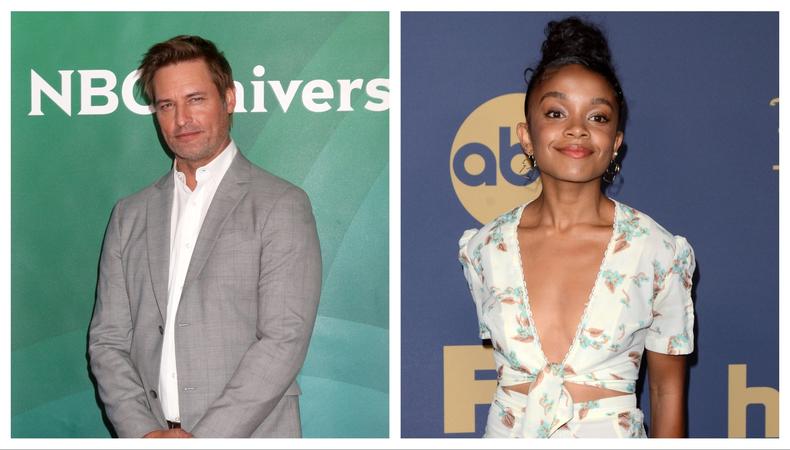
Max’s new crime thriller “Duster” is finally coming to the small screen this year after being delayed due to the SAG-AFTRA and WGA strikes. The series is one of J.J. Abrams’ projects from his 2019 deal with Warner Bros. Discovery. It will feature “Lost” alum Josh Holloway and “Love, Victor” star Rachel Hilson and promises to be an action-packed adventure.
For those interested in learning how this exciting new Max show came together, we’ve got you covered. Here, we’ll share everything you need to know about the “Duster” casting process, including audition advice from the period drama’s biggest stars and the CD who cast them.
JUMP TO
Created by Abrams and LaToya Morgan, “Duster” follows Nina (Hilson), the first Black female FBI agent, as she recruits a getaway driver, Jim (Holloway), to take down a major crime syndicate. Set in the Southwest in 1972, Season 1 consists of eight episodes and focuses on both characters as they take on prominent criminals, with some high-speed car chases, of course.
“ ‘Duster’ is an amalgam of all my favorite things—high-octane storytelling with deep characters and so much heart,” said Morgan. “It’s a dream project, and I’m supremely grateful to all the folks at Warner Bros. and HBO Max for believing in this show. And I couldn’t have asked for a better partner in crime than J.J. to build this incredible world.”
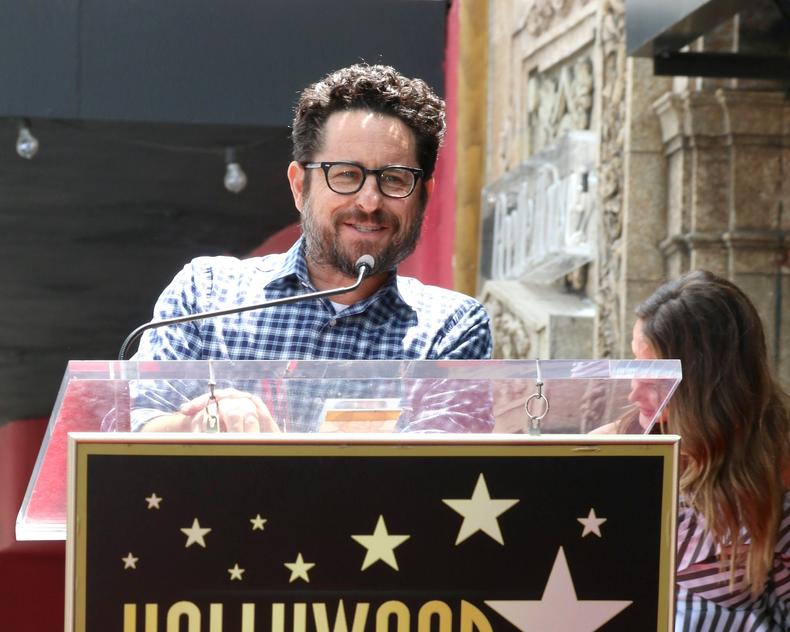
JJ Abrams Credit: Kathy Hutchins/Shutterstock
Season 1 of “Duster” will feature:
- Josh Holloway as Jim
- Rachel Hilson as Nina
- Keith David as Ezra
- Sydney Elisabeth as Genesis
- Greg Grunberg as Abbott
- Camille Guaty as Izzy
- Asivak Koostachin as Awan
- Adriana Aluna Martinez as Luna
- Benjamin Charles Watson as Royce
- Corbin Bernsen as Wade Ellis
- Gail O’Grady as Charlotte Dean-Ellis
- Donal Logue as Sergeant Groomes
- Kevin Chamberlin as Bob Temple
- Sofia Vassilieva as Jessica-Lorraine Sims
- Dan Tracy as Agent Chad Grant
- Mikandrew as Angelo
Kim Coleman (“Dear White People,” “Sistas”) served as the principal casting director on “Duster” Season 1.
Coleman told us that CDs are always rooting for actors. “We love what we do and it’s a great job. We work closely with directors, producers, networks, studios—it’s so collaborative,” she explained. “I think most actors may not know we love the actors, and that’s why we’re in this business. We respect them. I could not be on the other side of that camera; it’s a hard job, and you must stay focused and train constantly. We are their friends. I want them to do well. They need to know we’re always supporting them, even if we don’t show it sometimes in the room. We work long hours, just like they are constantly going to auditions, because we really want the actors to shine and do well.”
“I work so closely with actors, and I believe in all of them,” she said. “It’s very important to me that I am genuine with them and make them comfortable so they can give their best work. You just never know when the right role will pop up for a talented actor, so I like to bring actors in as much as possible for everything I can. Practice makes perfect, and I think giving actors opportunities for different types of projects helps them grow. I like to be surprised by seeing new things from people I believe in.”
During a conversation with us, Coleman explained how her auditions usually begin. “I will initially audition an actor, and then I will present them to my creators. We’ll send their tape or their audition to the network and the studio, and if everyone is on the same page, they will test,” she said. “It’s the same process if you’re doing an independent film or feature film; it just depends on the director. They may want to see [actors] once; then they may want to see them another time. If it’s a romantic comedy, you may have the actor chemistry read with another actor. They may do it another time. It depends. Some folks think that in a feature film you just audition and that’s it. It really depends on what the role is and what the director is looking for.”
She also shared that there’s one thing each actor shouldn’t do during their first audition. “In an initial audition with a CD, I don’t think an actor should [perform] any type of physical activity, unless we have discussed that and we know ahead of time. If there’s a scene and in the scene they grab my arm, that’s something [that] I think should be discussed. I want to roll with them and be in the scene with them. Something like that they should discuss ahead of time,” she said. “A couple of actors over the years—if there’s a scene where there’s a weapon involved, even though it’s a plastic knife or gun, if they whip it out, it’s like: Whoa! Hey, stop; hold it. Basically, in my office, I just want everyone who comes in to shine. Try to have a lot of fun. I always want them to leave feeling good about themselves.”
Ultimately, however, Coleman said those who exude professionalism and confidence stand out from the others auditioning for the same role. “I always appreciate an actor who really comes in and may have a different take on a character. I’m always open to that, because it feels like they put in the work and really thought about it. Read the script; take it seriously with the sides. I appreciate that, too. If I’m seeing 150 people, to have everyone come in prepared and knowing their lines, it just makes the process a little easier.”
She added, “Most actors fit that bill; every now and then you get a few who don’t. But once I tell them, they’re usually on time and prepared the next time I see them. I’ll tell them, ‘It needs to be off-book. Come back when you have it.’ I really need them to think about this, and I’ll reschedule. A lot of times they do. Sometimes people have personal situations or things going on, and if that’s the case, come back—it’s OK. I try to be very understanding about it. Everyone is in different situations.”
Coleman often works outside the audition room, too. From theaters to concerts, she always has her eye out for someone who might be perfect for a role, even if they’re simply walking by on the street. “Years ago, I was looking for a Bob Marley movie. The CD had gone around the world, and I was in the Beverly Center with my family, and I saw this young kid on the escalator who looked like Bob Marley. I was going down the escalator and he was coming up. I literally ran behind him and just said, ‘I’m not a crazy woman, but we’re doing a movie about Bob Marley. You look just like him; please call me,’ ” Coleman said. “You just never know; it’s like we’re always on. I’m constantly thinking about what project I’m working on. I think it’s just something that’s embedded in us as CDs. We’re always thinking about the next role.”
Currently, there are no open casting calls available for “Duster,” as we don’t know if the series will return for a second season. However, if the show gets picked up, we suggest bookmarking the Film New Mexico website, as it may have future opportunities. (According to a behind-the-scenes video posted to Reddit, the series filmed most of Season 1 in Tucson, Arizona. It’s likely Season 2 would be filmed there, too.)
For those hoping to keep their acting résumé fresh, you can always check out our casting roundups, which are updated weekly:
Embrace your curiosity. As Hilson wrote for us, she has played countless roles on both stage and screen, but she still makes time to pursue interests outside of acting, because doing so informs and enhances her ability. “I’ve been, in no particular order, a married woman, an athlete, a babysitter, a teacher, a farmer, a bread salesman, a college student, an old woman, an old man, a playwright, a high schooler, a receptionist, a gardener—and the list goes on,” Hilson wrote. “What I’ve realized is that taking on all of these different roles, whether as Rachel or as another character, has set me up to be a better human and artist.
“Curiosity has made me a better empath,” Hilson continued. “While acting is now my primary career, I’m still trying on different hats. I’m not much different than the little girl who played doctor or news anchor with her parents. As actors—as artists—we have the privilege of being so many things, and I hope that the fear of missing out on a ‘big break’ doesn’t deter anyone from following their curiosities. I encourage us all to make time for them, for they can only make us better.”
Train between jobs. “Study acting. [And] voice acting is still acting…. If you don’t know how to act, then the voice is empty. If you know how to work, and you know how to act, then the voice is engaging and that gives the animator more to animate,” David told us. “Study theater, because theater is the greatest training ground that you can have. There are people who have never done theater who can be wonderful screen actors, but it all depends on your training. We all have great natural instincts, but they need to be honed.
Coleman echoed this sentiment, saying preparation is essential. “Be prepared for your opportunity before it comes. Audition for projects big or small and focus on performance and training,” she noted. “Become so good that your talent is undeniable. And when the opportunity presents itself for you to audition or be reviewed, give us no choice but to say, ‘This person has something special; let’s see where they fit.’ ”
Let it go. O’Grady’s advice might sound like it’s straight out of “Frozen,” but as she told Medium, in the audition process, there’s only so much within your control—so once you leave that room, it’s best to move on. “Some of the best advice I have ever received, although it took me years to follow, was to move on to the next one. Whether it’s an audition or an interview for another kind of job, your only job is to audition or interview. Once you’re done, close the door and move on to the next one,” O’Grady said.
“This reminds me of something I read in a book about what they don’t teach you at Harvard Business School. It says that even if you don’t get a job, you’ll have another interview, so you must move on to the next one,” she added. “You don’t want to carry the bad meeting or audition with you to the next one. You need to compartmentalize it, but because we’re human, there’s always a little strand that comes with you. But I was told to let it go and move on to the next one. Don’t obsess about the audition you just gave. Don’t try to think about what you could have done better on your way back home in the car. Just leave it all in the room.”