Casting director Rick Montgomery has spent decades building ensembles with director Peter Farrelly. But their latest film, “I Play Rocky,” came with an almost impossible task—finding someone to portray a young Sylvester Stallone whose approach didn’t feel like just another impersonation.
The biopic is a feel-good triumph that transports audiences back to the 1970s, tracking a struggling Stallone as he risks everything to make it in Hollywood—even if that means writing a masterpiece script (“Rocky”) with one ironclad condition: He must star in it (“No, I play Rocky”).
The movie’s real-life casting story mirrors that same hustle. Anthony Ippolito, who delivers a brilliant performance, bypassed the traditional audition route, winning over the casting team with a cold self-tape shot in his grandmother’s basement on Long Island. Montgomery calls the breakout discovery “heaven-sent.”
We sat down with the CD to find out how that tape landed on his desk and how he knew his search was over. He also dives into his decades-long partnership with Farrelly, a creative run spanning from ’90s cult-comedy classics like “Dumb and Dumber” and “There’s Something About Mary” to the 2018 Oscar-winning picture “Green Book.”
“I Play Rocky” has a unique casting story. Let’s start there: How did you find our young Sylvester Stallone?
When we start a project, casting directors normally start to send out scripts and let the world know. Every agent, everywhere, coast to coast, started getting scripts. I was getting responses and looking for that guy, for Stallone. And it was very difficult. I was meeting actors, reading actors… It got to the point where if I was in a restaurant [and saw a waiter who looked like Stallone], I figured I had a 50-50 shot that they might be an actor. I would actually approach him and ask. I had a few people read that way.
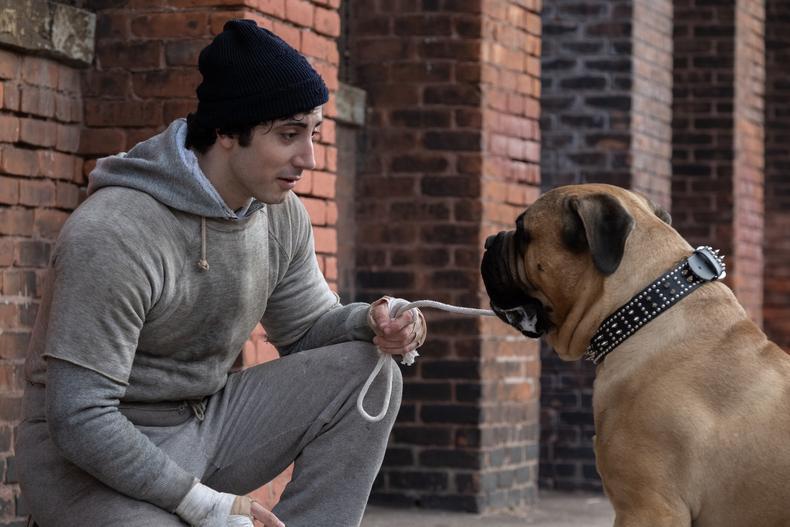
Nonetheless, about six weeks into the process, I got a call from Anthony’s agent—a very trusted friend of mine—who said, “I’ve got your guy.” She sent [the tape] to me, and Anthony had put together four scenes on his own. He had picked four scenes from the script, and two of those I was already using for auditions. I was astounded with his talent. It was so based in reality. He showed vulnerability. He showed comedy. He showed anger. He just showed all the emotions. Instantly I knew I had struck gold.
Any casting director you talk to will tell you the same. Sometimes that person just walks in and blows you away, and you know that’s it. Instinctively, you know that’s the guy. So that was it with Anthony. I sent it to Pete, and he said the same: “We found him.”
What can an actor learn from Anthony’s self-tape?
It’s about hard work. Anthony labored on that tape, and made it as fantastic as he absolutely could and as perfect as he could. I think it’s just that for all actors. It’s about your work ethic and really going for it.
There’s a joke in “I Play Rocky” about actors always lying about being able to do a skill in order to land a role. How often do you see that happen when you’re casting?
Not too often. But it’s true. All actors will tell you that if somebody said, “Can you ride a horse?” you say, “Yeah, I can ride a horse.” Because you figure you can go to the stable and somebody can teach you to ride.
Along with Stallone, you had to cast well-known legends like Carl Weathers. What was your philosophy on finding actors who could capture a real essence of these people without slipping into just an impression?
That was just it. That was the hard part. Because these are all such iconic characters in cinema. It was very important for me to get as close as I could to their look, [while finding] the same reality-based work that we already saw from Anthony.
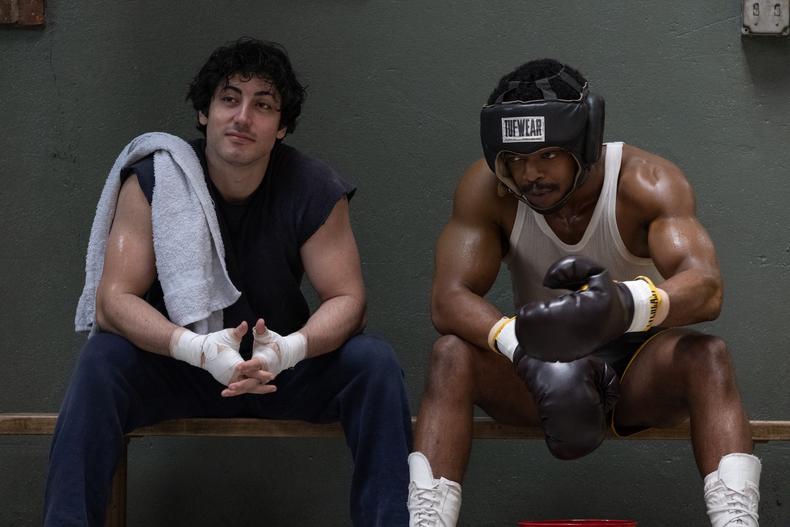
With Stephan James, I had really been looking for Carl Weathers [who played Apollo Creed in “Rocky”] and I just hadn’t found him. I had talked to a lot of guys, including a couple of good friends of mine who I would have loved to have put in the film. But I got a call one day from Stephan’s manager, who said, “Hey, what do you think of Stephan for the role?” And I was like, “Are you kidding me? He’d be perfect.” I didn’t think the role was big enough. But his manager said, “No, no, he really likes it.” I was so excited. He actually went so far as to do a reading, and we all liked him, number one. And then he did this reading for Pete, and it was so good, unbelievably good.
The movie deals heavily with Hollywood rejection and studio executives looking for bankable stars over unknowns. Did working on the film make you reflect on how the industry evaluates or appreciates fresh talent today?
Definitely. It’s kind of a dream come true for any casting director if you can cast whoever you really love. That’s the creative license we took on this—we were able to put all of our favorite people in it, and they didn’t have to be major movie stars. That’s the difference.
The other thing I like to do is—each one of these actors is unique. I try to do that in most of the films that I cast; from the smallest roles to the major roles, everyone has their own look. Nobody is going to look the same. Sometimes in movies, there’s a guy with dark hair, and then there’s another guy with dark hair, and they’re about the same height, the same build. Depending on the script and how fast it moves, it can get confusing. I think that’s the one thing I love about this project: Everybody was so completely unique to themselves.
The cast also really fit that 1970s vibe. What were you looking for when casting this type of period piece?
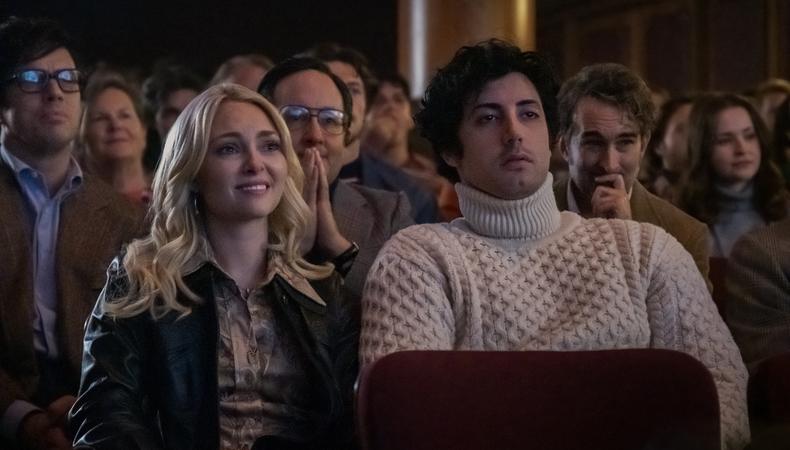
Great faces, great characters, and great actors. Let’s talk about Sasha [Stallone’s first wife]. So [for the role of] Sasha, Pete and I picked four actresses. They read and they auditioned for the role. AnnaSophia [Robb] had the dialect worked out. She looked like the actual Sasha Stallone—blond hair, cute, petite. There were a lot of similarities there. And I didn’t have to hit it right on with her, but I wanted the feeling to be close enough that it motivated Anthony. When we were done reading all four women, it was completely unanimous between Pete and me. We instantly knew it was her.
She also worked really hard. Whenever we have a reading in front of Pete, I always tell agents that if the actor wants to call me [to talk about the role], I’d be happy to. AnnaSophia definitely took care of that. She had very probing questions about her character. I knew that she was doing all of her homework. She really wanted the job, and it showed. And her work—isn’t she amazing in the movie?
What is your working relationship like with Peter Farrelly?
I am one of the luckiest guys in Hollywood to have met Pete Farrelly when he was just starting out. I cast “Dumb and Dumber” for him, and he has been my ally, partner, mentor, and just a hell of a good friend for all these years. I can’t say enough great things about Pete—he has almost defined my career. When you look at “I Play Rocky,” “Green Book,” “Dumb and Dumber,” and “There’s Something About Mary”—a worldwide hit—those four films sort of envelop my career. That is my career. I’ve done a lot of other movies, obviously, but working with Pete is just one of my favorite things to do in the world.
I care so much about the guy, and it’s so much fun creatively working with him. And he always makes it fun. He’s a very serious guy, and a very, very smart man, but he likes to keep things loose, and I think that shows in the films. Any actor who works with Pete wants to work with him all the time. Everybody wants to work with him—not only because of his talent, but his personality, and how he runs a set. I could go on and on about Pete Farrelly. He is just the absolute best.
Speaking of “Dumb and Dumber,” do you remember how you knew Jeff Daniels’ chemistry with Jim Carrey would work?
I knew [Jeff Daniels] was living in Michigan at the time. His hair had grown out, and he was playing a lot of golf. He came in looking just like he did in “Dumb and Dumber.” He auditioned with Jim—Jim was there in the room—and the two of them read together.
It was so good. Jeff was so good, and Jim loved him—we all loved him. That was a long time ago, when we were actually in the room, all of us together. Being there made it very obvious that he was the right guy for the part.
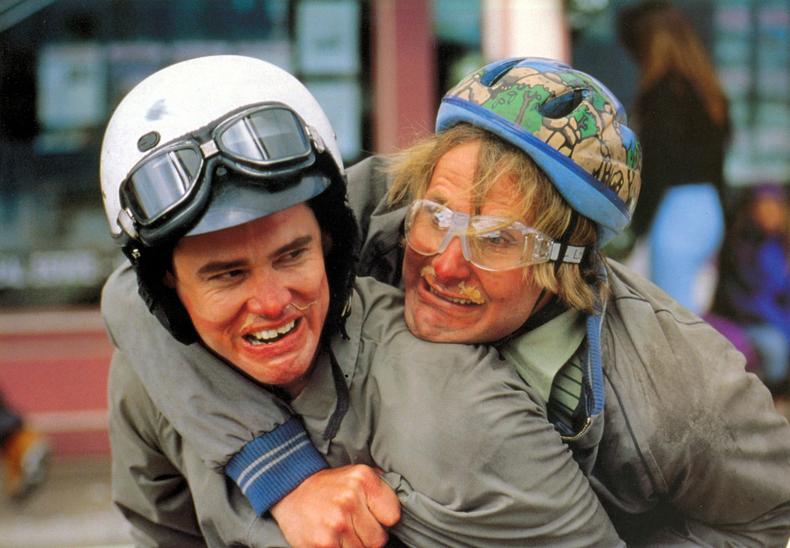
“Dumber and Dumber” Courtesy MovieStillsDB
You’ve cast a long list of iconic ’90s and early 2000s hits. Can you name an audition that still sticks with you?
There are so many when I start to think about it, really. I mean, Eva Mendez [for “Stuck on You”]… I can go on. It’s just like, on every picture, we were always finding new people. So no, I don’t have any one special story. I have many, many, many stories.
For an actor trying to leave a lasting impression with a casting director, what advice would you give to them?
Show me your best work. Make your best choices. Don’t worry about what the director’s choices are. That’s one thing actors always ask: “What’s the director looking for?” We’re looking for your choices. Pete is a very collaborative guy. He loves it when actors can enhance what is on the page through their performance, what they do, or what they might say. That is what makes a project grounded and more real.
We do all these broad comedies—but it’s still all rooted in the same place: Always ground it. I think those are the best [tips] for any young actor.
Do you think the new Oscar for casting has changed the audition room at all?
No. Not for me. I’m thrilled for all of us that we could be recognized at that scale. I think that’s wonderful. David Rubin and a lot of the people who worked a long time to get that done—hats off to them.