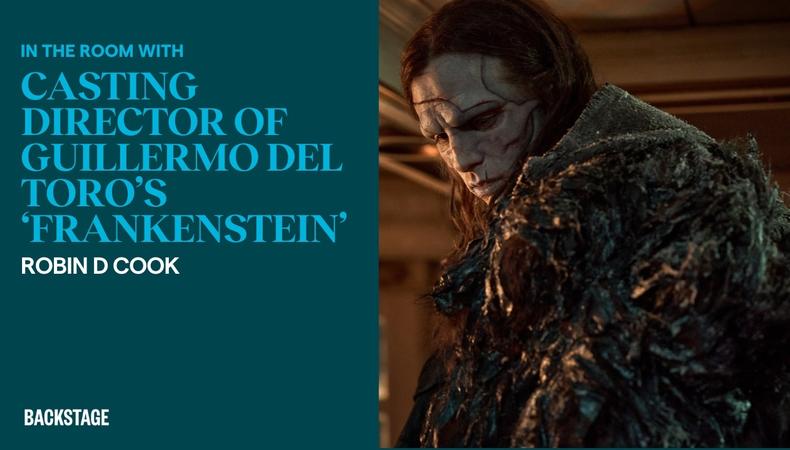
Guillermo del Toro’s “Frankenstein” has already solidified its status as a major 2026 awards contender, bolstered by Jacob Elordi’s moving and now award-winning performance as the Creature.
So, we sat down with casting director Robin D. Cook to understand how this standout ensemble came together—including Oscar Isaac as the brilliant, egotistical Victor Frankenstein; Mia Goth in dual roles as both Victor’s love interest, Elizabeth, and his mother, Claire; and Lars Mikkelson as Captain Anderson, an Arctic voyager who serves as the audience’s window into the Creature’s tragic tale. Here, Cook, a longtime del Toro collaborator who also cast his Oscar-winning masterpiece “The Shape of Water,” offers an intimate look at working alongside one of modern cinema’s greatest visionaries.
I’d love to start by asking you about Jacob Elordi’s casting, especially because Andrew Garfield was originally supposed to play the Creature. How did he redefine the role?
I cannot imagine the film, in any way, with anybody else now. It was pure kismet that this happened. We had four days to recast, and it went to camera in nine weeks. It was crazy. We had to find someone 6-foot-5 or taller. We had to find somebody who had the vulnerability and the strength to go up against and work with Oscar. Jacob had to embody a child all the way to this Creature—this imposing, intimidating Creature. So there are so many levels to the part. We had talked to three people, and as soon as Guillermo met with Jacob, the rest is history.
One thing that was also very important [for casting the role of the Creature] was whoever we cast had to agree to sit in that chair for up to 10–11 hours. And so that meant sometimes having a call time at 10 o’clock the night before for a 6 a.m. call. And what Jacob did was he used [that time] so well to figure out [the role], because he had very little time [to prepare]. He brought so much to it that I don’t think I can describe it in words. We’re very thrilled.
Guillermo del Toro’s sets are highly interactive with makeup and prosthetics. How does that influence the casting process?
You have to make sure everyone’s aware of it, because that is a commitment. Some actors wouldn’t necessarily embrace it. Jacob embraced it and embodied it and took it like almost a spiritual thing. It wasn’t sacrificial. It was a gift—and that’s the way Jacob saw it, that it was a gift.
So you have to just be upfront and honest, because there were people who were just not interested. But as Jacob has said, he would’ve played a tree [to be in the film].
Were there any choices Jacob made that surprised you?
He brought such a vulnerability to [the Creature]. I mean, he broke my heart after he had been resurrected or born, when Victor is abandoning him, and he’s yelling, “Victor! Victor!” and he breaks the chair; that breaks my heart every time I see it. Because there are so many levels. He went from being born to truly being a monster. And you loved him. There was such sympathy for that part. And Jacob brought all of that to it. Again, I can’t imagine anybody else now doing it.
Del Toro has stated that “50% of film is looking at, and 50% of film is being looked at.” Because of this concept, he casts actors based on their eyes. He’s noted that Jacob’s and Oscar’s eyes already held the performance—Jacob showed an innocence, while Oscar conveyed brilliance and madness. I would love to know your take on this concept.
Guillermo casts people’s eyes, but it’s Guillermo’s eye that has the talent for casting. So I can bring actors in, and I can suggest actors, but Guillermo can tell right away if the actors embody the part. Jacob didn’t audition; he met [with Guillermo]. And the same with Oscar. So Guillermo just knew, as an individual, both are such lovely human beings that they could totally bring everything that they needed to and more. So I think Guillermo has the eye. He may cast other people’s eyes, but it’s Guillermo’s.

Is there a quality or specific trait you look for when casting a del Toro project?
I have done 10 [projects] with Guillermo, so there’s a shorthand between the two of us. It’s very organic. I know what Guillermo is looking for. [“Frankenstein”] specifically was a period [piece], and we’ve done period pieces before with “Nightmare Alley,” “Crimson Peak,” and “The Shape of Water.” So because I have that history, it’s much easier.
As a casting director, the most exciting part for me is seeing what’s on the page, but then also changing what’s on the page. So when we had [the original “Frankenstein”] script, there were two [younger] Victors. There was a 10-year-old and a 15-year-old. We auditioned all over, and then when I showed him Christian Convery, he changed the script so that it was only one younger Victor. I feel that was because of something I helped with, so I’m super thrilled about that.
Same with all the Danish-speaking [talent]. We didn’t know whether we were going to do subtitles—I mean, I’m sure Guillermo did. But when we first auditioned, we auditioned accents, and then we auditioned for various languages, any Scandinavian language.
Then we cast Lars Mikkelsen [as Captain Anderson]; that cemented Danish. We searched in Canada, because we shot in Canada; then we did searches in Denmark, and the rest we cast out of Copenhagen. The cast is incredibly international. There are Australian, German, Austrian, Guatemalan, English, Danish, and Canadian actors. We’re so grateful. It’s very lucky.
How do you think an actor can stand out to del Toro?
It really depends on the role. I think this goes to any [project]. I think the actor should bring something to the part, but be able to be directed. I think the actor should make a choice, but again, be malleable so that they can take direction. I think you should be on time and open, courteous. I think less is more. But in reality, it’s really hard to tell an actor not to act.
You should have fun and enjoy it. I think it comes off when somebody enjoys it and is there because they want to be there. Especially with children—you can tell with children if they want to be there or if their parents want them to be there. And that’s a big one, for sure.
Like anything, just be as truthful as you can.
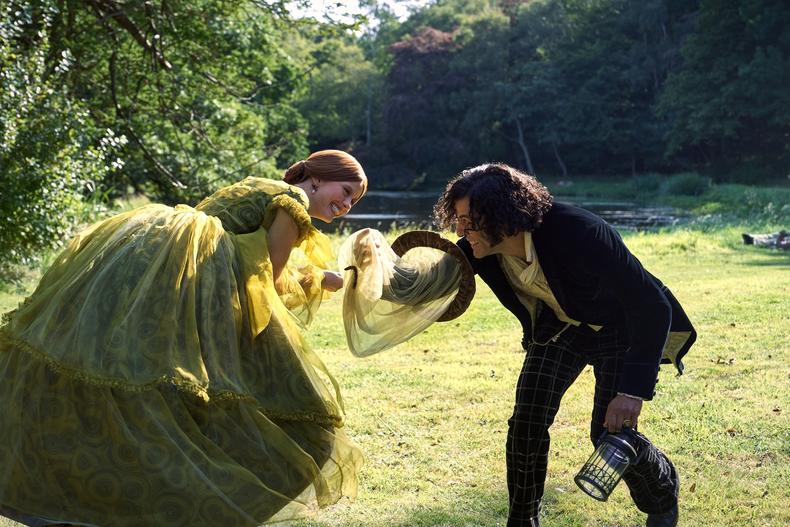
Mia Goth plays two roles in the film: Victor’s love interest and his mother. What qualities were you looking for to ensure she could portray these distinct emotional roles?
Guillermo had met with her, and she was attached even before I started the casting. Guillermo really watches everything. I can bring an actor to Guillermo—and we know a lot of the same actors—but Guillermo knows so many actors. So he had been overly familiar with Mia’s work. If you look at Mia’s work, from “MaXXXine” to “Emma,” [the roles] are so different. I think Guillermo just knows—again, his eye knows.
I think he’s been doing it long enough that there’s a confidence in himself, and there’s a confidence that he gives to the actors, as well. He trusts them. He lets the actor be.
Do you have a favorite audition from “Frankenstein” that resonated with you?
Christian Convery’s audition was [memorable] because he changed the script. He was it. It’s like when you watch a performance and you just know. There are auditions that are [just] auditions; they’re not performances. And I’ve said this before, but I see potential; Guillermo sees performance. He knows the end. So I can show him somebody, and I’ll be like, “What do you think about them?” and he knows. Within seconds, he knew that it was Christian; he really, truly did. And we saw so many people for those [young Victor roles]. We saw hundreds upon hundreds—over 500 people, I would say.
What advice would you give someone trying to get in front of a casting director like yourself?
I would just say try. An audition is your five minutes, your 10 minutes. So take hold of those 10 minutes. Own it. That is your 10 minutes. If you’re not happy, speak up. Tell the director, “Listen, I can do it better.” But then do it better.
There is a reason why you’re in that room. We want the actor to succeed, because the better the actor looks, the better we look.