It’s been 14 years since Suzanne Collins’ “The Hunger Games” jumped from the page to the big screen, pulling audiences into Panem and introducing us to Jennifer Lawrence’s Katniss Everdeen. Since day one, casting director Debra Zane has been responsible for populating this world, a job that comes with Capitol-like expectations. She remembers receiving a handwritten, full-page letter from a 12-year-old fan accusing Zane of casting the wrong breed of cat as Buttercup, Primrose Everdeen’s pet. “She was right,” the veteran CD tells us. “Unfortunately, that was not something that I had a say in.”
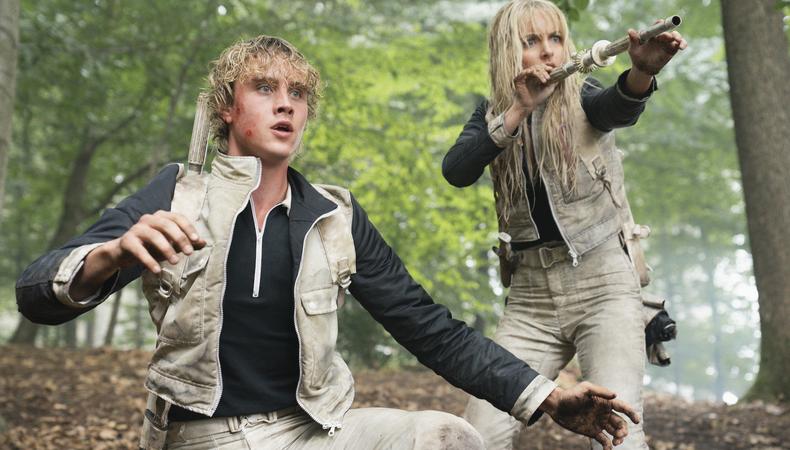
Feline controversies aside, the CD recently turned her attention to the franchise’s second prequel, “The Hunger Games: Sunrise on the Reaping”—helmed by Francis Lawrence, who has directed every installment in the series except for the original film. Zane teamed up once again with casting director Dylan Jury (her collaborator on “The Hunger Games: The Ballad of Songbirds & Snakes” and the upcoming “Zelda” movies), and the duo pulled off a Second Quarter Quell–sized feat. Together they found newcomer Joseph Zada (“We Were Liars,” “East of Eden”) to step into Woody Harrelson’s shoes as a young Haymitch Abernathy, tapped Ralph Fiennes to bridge the gap between Tom Blyth’s and Donald Sutherland’s portrayals of President Snow, and brought in Jesse Plemons to honor the late Philip Seymour Hoffman’s performance as Plutarch Heavensbee.
We sat down with Zane and Jury to hear how they assembled the prequel’s cast—and kept the franchise’s fiercest fans happy.
When you’re casting a younger version of an iconic character, how do you balance honoring the original actor versus starting from scratch?
Dylan Jury: You start with physical characteristics. Then it’s: Who is he in this story? Because [the stories] are so many years apart. It’s not exactly Woody Harrelson’s Haymitch that you’re trying to cast; it’s who he was at this more undamaged time in his life.
Debra Zane: I think it’s safe to say that you do want to honor the resemblance of people as much as you can without trying to completely match, and also for the actors not to completely mimic those other performances. Because, like Dylan said, this is a different time in people’s lives—perhaps, in many cases, a more innocent time for all of these people.
I think Francis described this a lot when he was meeting with actors—it’s really about capturing the essence of the character. So it’s not just a copycat version or anything like that. It’s just finding whatever you can that would suggest the characteristics, the behaviorisms, of the established characters that we all know.
When auditioning Joseph Zada, did you look for subtle hints of Woody Harrelson?
DJ: Definitely a vibe. You want to feel this guy could grow into Woody Harrelson’s Haymitch and have certain mannerisms, or just in voice inflections. But, like Deb said, it wasn’t about imitating a much older Haymitch. It was creating a new, younger Haymitch who you can imagine feels like the same guy.
DZ: Woody and Joe both have a really sort of chill vibe, which was a nice starting point. You’ve probably seen Joe talk about this—he did all the research to try to create his Haymitch, and then I think maybe dialed it back a little bit. Because, like I said, Francis really was not looking for imitations of people that we know.
I remember when I saw the first trailer for this movie, and there’s that moment in the trailer where you hear Woody’s voiceover. I think it’s one line toward the end of the trailer. I thought that was such a stunning decision to add that at that moment, because you can tell the difference in such a subtle way, but it’s so meaningful.
Which “Sunrise on the Reaping” character sparked the biggest debate in the casting room?
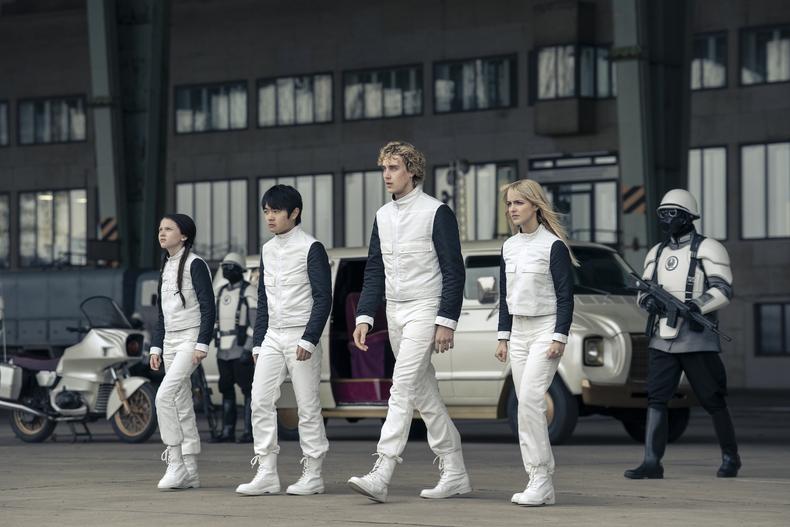
DZ: I remember the session we had when Molly McCann and Iona Bell both read, because it wasn’t until after that session that I think Francis had the genius idea [for them to both star as lookalike characters].
First we tried to make it one girl that would play herself and then the damaged version of herself, but then we saw these two girls who were both so great and they sort of resembled each other.
DJ: Molly was more right for Louella and Iona was more right for Lou Lou, and it suddenly just was like an epiphany of: They should be two. It felt so much more correct, because they’re two completely different people, and part of why the other characters are disturbed at having to pretend that it’s the same girl is because it’s not the same girl. It made more sense.
It was not a debate, but it was challenging to find Silka Sharp [played by Laura Marcus] and Panache Barker [played by Jhaleil Swaby], because they’re so intimidating and physically imposing.
DZ: You know, we’re talking about the sixth movie, that people have a lot of opinions about. The studio has opinions, and, of course, Francis has opinions, and we have opinions. The good bit of that is, we’re all so familiar with each other and also respectful of each other. In any department, the director is going to have the final decision. It’s always going to be his or her final decision. But Francis is genuinely a collaborator and genuinely is open to hearing why we think what we think.
So much of the casting process on any film is like proving your point with evidence—with existing footage, maybe have them do another scene, whatever it is to help us build our case. I’ve said this to Francis and Nina Jacobson almost on every movie we’ve done together: If we’re gonna be in the trenches—which we really are when we do these movies—there are no people I’d rather be in the trenches with than those two. We really work it out. We really get through it.
What would you want the book readers to know about the decisions you made casting the franchise?
DJ: When we started, there was no book. But we started with the characters that we were familiar with, at least their older versions, and that was a good starting point. But once the book came out, we read every line. We scoured through the pages to find the smallest descriptions that might be lost in the shuffle and might not be talked about in our meetings, and we incorporated all of that—hair color and size and shape and all of it. It’s always on our minds. We want to nail it for the readers.
DZ: You first want Suzanne to feel honored, and then the fan base is so vast. In any book that you’ve read and loved, you don’t want to go see the adaptation and feel like, “What?” You want to feel like, “Oh my god.”
A director that I worked with many years ago and I adore is Bill Condon, and he once said that casting is for life. In film and television, what you see is lasting, so it is always in the back of our mind to want to get this exactly right.
We did a really extensive search for the young Haymitch in this movie. But Dylan and I, when we met Joseph Zada—we met him a month or more before we started this project, and we were trembling. We were like, “Oh my god.”
We knew we were going to be casting [“Sunrise on the Reaping”], but we hadn’t gotten up and running yet; it wasn’t prep time. But we had it in the back of our minds. And of course we hadn’t read the book, because there was only one advance copy in Nina Jacobson’s possession, under lock and key in her office. So we were trying to be true to the characters that we all know, without knowing what the circumstances or their lines would be. Whenever we would get the email back that Suzanne was cool with something, we were like, “OK, great.”
DJ: And if anything’s slightly tweaked, it’s not because we didn’t know; it’s because the person that we found was just so incredible we had to go with them, even if they were an inch shorter or whatever.
I know Jesse Plemons was a big fan-favorite casting. What made him the clear choice to honor that legacy while also showing a different side of Plutarch?
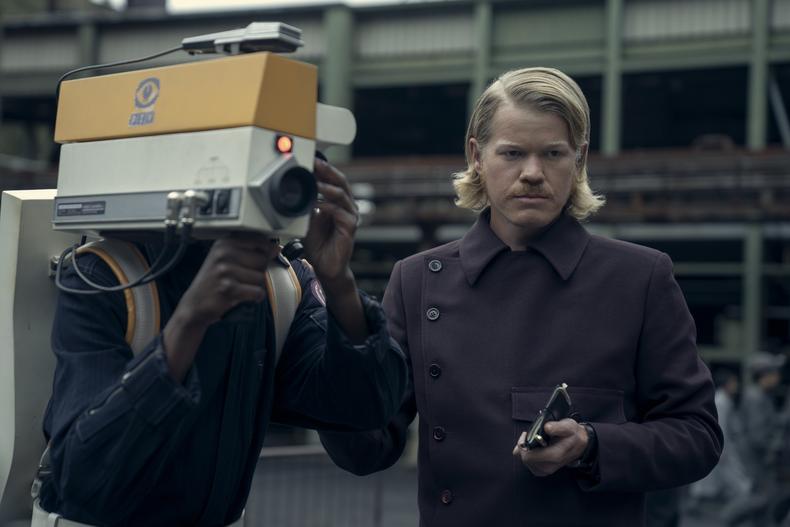
DZ: When we first realized what a significant role Plutarch was going to play in this story, I don’t even remember feeling like anybody but Jesse could play that part. He does have a resemblance to Philip; he does have that depth of talent. But you never want to put all of your eggs in one basket in casting, because you are setting yourself up for such disappointment. It is simply untrue that there’s only one person that can play a part. But, man, were we lighting candles that Jesse would want to come play. And he was busy, and he didn’t have a chance to read it because he was shooting…. We were so hopeful and patient.
DJ: It was undeniable that he would be the best Plutarch and undeniable that he would take the movie to another level of fabulousness.
DZ: His agent, Brandy Gold, is a huge fan of this franchise, and I don’t think Jesse had ever seen a single “Hunger Games” movie. So I have to say, that was an example of everyone doing their job at the top of their game, because we went at her with great passion. And we were so relieved when he was on board.
What’s something that you’ve learned through your work as casting directors that you wish every actor who struggles with self-doubt could hear?
DZ: When we are working, we only have the characters in mind. You should always do a good job. You should always be prepared. You should always find out as much as you can about the project, the casting directors, and the director. And then you must give it your best shot. But that is simply all you can do. You are either going to be the most right for that character, or you’re gonna fall just a couple of ticks short and somebody else is going to get it. Or you’re too something and it tips the scales. If we have a cast like [“Sunrise on the Reaping”], you want everything to be in balance. It never is a reflection on you personally. I think that’s the really hard part for actors to take in.
DJ: There are actors we love who we probably haven’t seen audition for something in years. I sometimes feel it’s sad if they think that’s because we’re not thinking of them; it’s just because we haven’t had the role. There are only so many roles. Most of them are budgeted to come from certain regions where you can only consider the actors who live in those regions, and it’s no reflection of how we feel about you. It’s just the perfect match isn’t in this project.
And the longer we get to know an actor, the more we know where they fit in a role. So we’re not just kind of trying them for everything anymore. Because we know, like: Oh, their this quality isn’t as strong in them as it is in 10 other people, so those 10 are going to come first.
What’s the most effective way for an actor to maintain a relationship with you?
DZ: People will occasionally email the office or send something in to our P.O. box. I guess it’s probably less easy to do that than it was back when people used to walk around and drop things off.
DJ: Actors have to instruct their agent and manager to know which roles we’re looking for, and their agent should remind us that this person is available and a good fit. If they’re just reaching out to us on a random Tuesday and we’re not casting something, there’s just not much we can do.
DZ: We are so project-specific and character-focused, it’s a pleasure when we get something and we’re like, “Oh my god, so-and-so would be so great,” and it’s been like five years or whatever.
DJ: We just cast an indie that’s shooting in L.A., for the first time in 10 years, and I was so excited going through all the bartenders and the cops because we’re thinking of people we just haven’t seen in a while who live here and giving them shots.
How do you keep track of actors who have impressed you but weren’t right for the role you were casting?
DZ: We take notes. Every casting session, we have our own notes about every audition. Many times, if we know there’s an upcoming movie, we’ll say, “Remember for…” And then we go back and look through our notes and say, “Let’s find all the people that we thought could be right for that.” I mean, that’s how I do it. That might be a little old-school.
DJ: If there’s a new role, I think back to what other roles might have had similar qualities, and I’ll go through all those lists. Then you start to see, “Oh, I loved her, I loved him. Let’s give them a shot here.” That, and we release a breakdown, and when we’re going through all the submissions, their faces are right there and we really remember.
DZ: So we’re both using our brains, our memory, our notes, our feelings, and then we see the agency submissions and we go through those. Because maybe we forgot someone, but the agent has submitted them, and it’s like, “Oh my god, yes.”
DJ: Every character is so uniquely different that to just make lists of, like, 20-year-olds… General lists aren’t really useful for us.
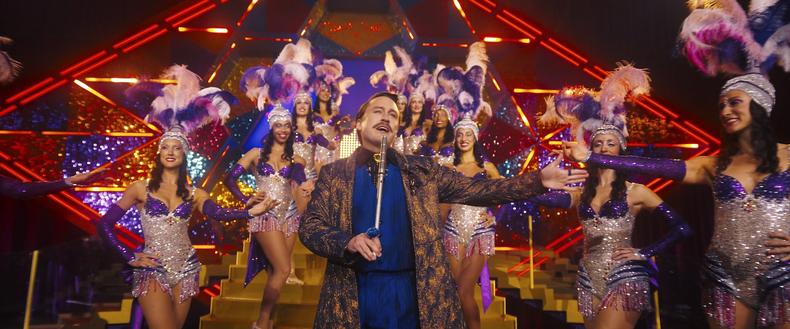
You both are also the CDs for the upcoming “Zelda” films. Is there anything you can share about that casting process?
DZ: We had a massive search for Link. Initially, there was a significant amount of rehearsal time that was desired for physical training. And then because we were having such a hard time finding Link, that rehearsal time shrank. So people who may not have been available because of that rehearsal time, they were available for the shoot. So Dylan dug into the list of people who were reported as not available based on our initial dates and pulled out, basically, Link—Benjamin Evan Ainsworth, who is the greatest.
DJ: His first tape, we were like, “Oh my god, we found him.”
DZ: Also, in the beginning, they wanted people over 18 because you get more hours on the set. But then, [Link] is a kid, and it should be a kid [that we cast].
DJ: There was an innocence missing from the older guys. It was a very exciting job for us and very fun, and I can’t wait to see what it looks like. It’s gonna look amazing.
This interview has been edited for clarity and length.