“Supergirl” flies into theaters June 26, marking a larger-than-life first for its writer, Ana Nogueira, who was brought on to pen the script for Craig Gillespie’s DC adaptation based on Tom King’s celebrated comic miniseries “Supergirl: Woman of Tomorrow.” The superhero epic following Kara Zor-El, her dog Krypto, and a young girl (Eve Ridley) on a galactic revenge quest is Nogueira’s first produced screenplay.
Before she was writing blockbusters, Nogueira was an actor, and that training didn’t leave her when she moved to the page. It became the foundation of her entire craft: character-first storytelling, dialogue rooted in lived motivation, and an approach that’s like, as she says, “an orchestra.” Here, she breaks down the lessons that shaped her—and why aspiring screenwriters might want to take an acting class before they write another word.

Courtesy Ana Nogueira
How did your performance background shape the way you write dialogue or structure a scene? Do you think that’s something more writers should seek out?
When I first started writing, I was pretty much winging it—no real process or understanding of how to approach something in a repeatable way. But then after doing it for a few years, I started to look back on how I worked and tried to figure out exactly what my process was so that I could make a road map for myself when a new project came along. What I found was that I was taking a character-first approach. Meaning, I start with the characters, where they’re at when we meet them, what they need to learn, and most importantly, what they want. And then the plot stems from there.
Then, of course, the other characters become the complication—intersecting or opposing wants help drive the story forward and take your character to a place they never would have gone on their own had they not met the people they do in the story. All of this is stuff you learn as an actor, and when you’ve been acting for a while, you start doing it instinctively. But when you’re an actor, you’re inside only one of those characters and clear on their motivations and desires. When you’re the writer, you’re basically all the characters at once. It’s like playing an entire orchestra. Honestly, it’s great.
I think it would be so helpful for every writer not to just take an acting class, but to actually perform in an entire play. I think it’s the best way to learn about structure, to learn it from the inside out, to live it every night over and over and feel the ebb and flow of motivation and plot. And the bonus is, if you’re lucky enough to act in a great play, you can start to pick up how the best writers bury things, like exposition in dialogue, and steal all their tricks.
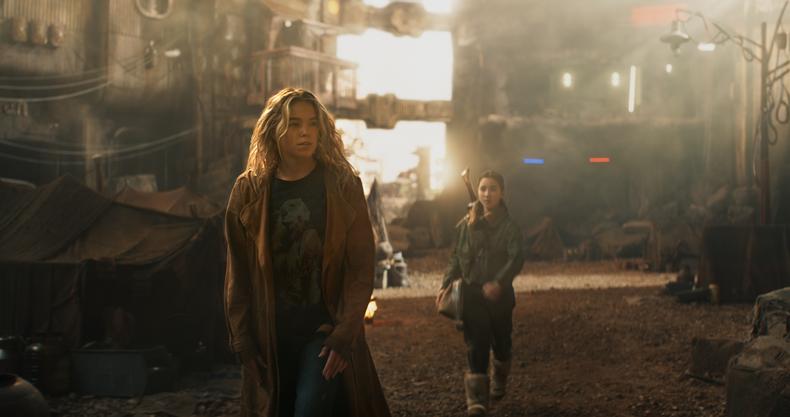
Courtesy of DC Studios and Warner Bros. Pictures
What was your process for adapting Tom King’s miniseries? For instance, were there scenes that were particularly difficult to let go of? How did you keep King’s intense emotional architecture while scaling the narrative into a blockbuster?
My process was that I read the comic run over and over again, dog-eared my favorite pages, underlined my favorite dialogue, got to know it very well—and then I put it aside and had to sort of let myself forget it. The structure of a comic is so different from the structure of a movie, and if you hold on too tightly to certain panels or sections, you won’t be able to tell the story for the screen. There are certain things that become non-negotiable, things you know you have to keep. And the biggest thing you’re trying to hold on to is the feeling that you had when you read it. You’re trying to transfer its essence into another medium, which doesn’t necessarily mean transferring its plot. It can be challenging, but adapting is also its own kind of creative process that I really enjoy.
What advice would you give to young or aspiring writers just getting their start in the industry?
Do whatever you can to get your work into the hands of actors and directors. Get it up on a stage or get it filmed. The best way to learn is on your feet. And the best way to figure out what isn’t working is to see it in front of you. You can be absolutely certain that your script works, and then suddenly you hear it out loud and all the flaws become glaring. It’s a truly, truly humbling experience and can be extremely uncomfortable. But it’s the only way to get better.
Choose actors and directors that you trust, and they will help you find the holes in your writing. And that will help you build a community of artists, which is the best way to get anything done in this business. Start with making the work as good as it can possibly be. Everything flows from that.
This interview has been edited for clarity and length.