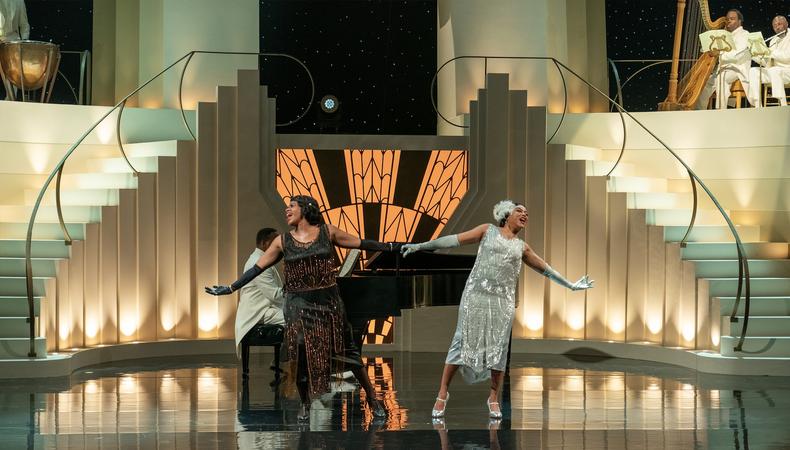
Carrie, Charlotte, and Miranda have yet to burst into song on HBO’s “Sex and the City” reboot, “And Just Like That…” but the show’s casting director, Tiffany Little Canfield, will be ready in an instant should the moment arise. Though Canfield has worked on everything from indie thrillers like “Margin Call” to TV comedies like “Only Murders in the Building,” she’s truly an expert on movie musicals. Her first credit was 2005’s big-screen adaptation of “Rent.” Since then, she’s cast films such as “The Last Five Years,” “Dear Evan Hansen,” and 2023’s “The Color Purple," where she worked alongside co-casting directors Bernard Telsey and Destiny Lilly to build the starry cast. Here, Canfield shares her tips on how to make a musical sing.
What was it like working with director Blitz Bazawule to bring such a beloved book and musical to life on the big screen?
It certainly doesn’t hurt to have Oprah [who played Sofia in the 1985 film] as your producer—and, frankly, having [the original film’s producers] Steven [Spielberg] and Quincy [Jones] as well. And we had…Scott Sanders who produced both the [Broadway] revival and the original. There was so much history. And when you get into the actual subject matter with the book and the original movie and the musical, this is a major piece of American art. We were so blessed to have Blitz…who deeply understood that. He is not American, but he maybe even has more of a specific view of looking at the history and not taking anything for granted than we might do. He really understood the rich history and cultural responsibility to the piece. Every decision made in this project was very thoughtful.
RELATED: Taraji P. Henson Breaks Down Her Bombshell Audition for ‘The Color Purple’
Fantasia Barrino and Danielle Brooks both appeared in Broadway productions of “The Color Purple,” playing their respective film characters, Celie and Sofia. Was there a balance between casting actors who had already embodied these characters onstage and those who hadn’t?
Film is such a different medium than the theater. There wasn’t necessarily a decision [of], who do we want to include, or do we want to include someone? It [was] much more about looking at each role individually—and let’s be honest, Fantasia and Danielle would [have been] on the list regardless, [even] if they didn’t have any history with “The Color Purple.” It certainly helped to know that they were fantastic; but we just approached it role by role, coming up with ideas, narrowing it down to who really fulfilled the essence of the role.
Taraji P. Henson is incredible as jazz singer Shug Avery. How did you cast her?
Taraji actually auditioned. And mainly because she doesn’t come from musical theater, I think the knowledge of her singing or dancing is pretty limited. Obviously, the acting chops are just not even a question, or that she’s perfect for the role in every other way. So we really just did a work session with her and Fatima [Robinson, the choreographer] and Blitz and music, and just played. That day was, for me, a highlight. As soon as I saw her in the lobby, I almost started crying. She just came in and took that part.
What is it like casting some of the huge musical numbers?
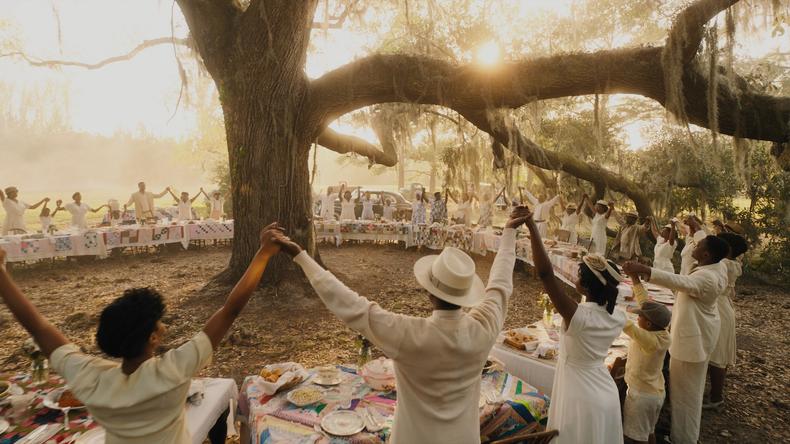
It really depends on what the look you’re going for is, because we don’t actually cast the background [actors]. It’s usually another casting director who does that. But we do cast every principal, which means any singer or dancer. It’s identifying who’s going to move, and so then that is really working with our choreographer. Some people may seem like an extra, but they’re not. One of the things that really challenged me on [the 2021 film] “In the Heights” is people were talking about the background people; and I’m like, “Those are not background people. Those are dancers, and they are killers, and they’re principals.” You’re like an Olympian if you’re a professional dancer. All of the people are absolute geniuses—[they] were handpicked and a hugely important part of the storytelling. It’s tricky, and you have to almost go number by number in terms of when people are actually singing; because on camera…if you’re ensemble singing, there is a contract of a lip-syncer, where you’re not a singer but you look like you’re singing in the movie. And then they have session singers who record the music.
What advice would you give actors who want to be in musical projects?
One of the biggest things for [actors] who don’t come from musical theater is acting through song. It depends on the role, but I would say if you’re really interested specifically in that—I would probably say get into singing class and dance class, because you’re going to have to move at some point, even if it’s just having rhythm [or] walking through a scene with musical underscoring. That’s the biggest challenge, I think, is when someone is so self-conscious about how they sound [that] they can’t connect to the lyric. My coach told me, “You want to get past that point. Accept where your voice is. This is [your] instrument now. And now it’s about acting through song.”
This story originally appeared in the Feb. 2 issue of Backstage Magazine.