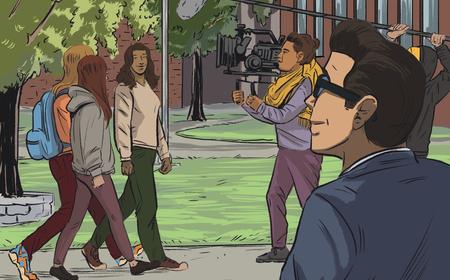
The beginning of a new year always finds me looking back on the start of my career, when I was working as an assistant at one of those big agencies that you’d know by its initials alone. Those days were stressful, but they were also exciting.
Back then, the idea of a “safe” workplace didn’t exist. Agents threw staplers at assistants who made mistakes; the use of inappropriate language would shock you; and the word “triggered” wasn’t even in our lexicon. Once, a male assistant at my agency snapped and tried to strangle his female colleague. Believe it or not, no one called the police, and the guy wasn’t fired.
The clients didn’t make our lives easy, either. I once drove all the way across town to deliver a hard copy of a screenplay to an A-lister who didn’t own a printer and refused to read scripts on his computer. Then there was the time I spent the better part of a Monday measuring the dimensions of a client’s trailer because he thought that his costar’s was bigger. (It wasn’t.)
 How to Get an Acting Agent
 Still, the positives were legion. I learned how to represent talent and negotiate contracts; and most importantly, I made high-level contacts that would serve me in the future.
I’m taking this walk down memory lane because actors rarely give much thought to assistants, often viewing them as mere peons guarding the gates of the agency. But making this assumption would be a major mistake.
Let’s say you’re seeking representation. Because agents rarely respond to submissions, it can be a frustrating process. So here’s an idea: Target their assistant. Find out who they are, then submit to them instead. You never know what might happen. When I was in that position, I kept track of promising actors who approached me so I could sign them once I’d moved up.
This approach works especially well if you’re trying to get a rep to attend a play, comedy show, or other live performance. As an agent, I rarely have the time, but my assistant loves going to those things—and she usually comes back with the name of a performer she liked whom she wants me to consider signing.
Assistants are vital to your career even if you already have representation, since they’re the link between you and your agent. If you get to know them, they can become your cheerleader at the company. Forging a relationship with them can make all the difference.
The opposite is also true. I don’t care if you had a rough day or an audition that went badly—never, ever be rude to an assistant. Mine tells me whenever this happens, and I then unleash hell on that actor.
By the way, don’t forget that casting directors also have assistants. I always approach these people with courtesy and respect, and in return, they help me book auditions for my clients. So make them your champions, too.
The entertainment industry is a food chain. Almost everyone starts at the bottom, and only some of us climb higher; so you and your rep’s assistant have quite a bit in common. If you assist them, they just might be willing to assist you in return.
This story originally appeared in the Jan. 30 issue of Backstage Magazine.