Last fall, a lot of people online roasted Will Byers’ coming-out scene on the penultimate episode of “Stranger Things.” Critics and fans wanted to know: Why was it so long? Why did he tearfully spill his guts to characters he barely knew? And would a gay kid really have been so accepted in 1980s Indiana? (To be fair, no one ever questioned all the Demogorgons and psychic children running around Matt and Ross Duffer’s Netflix hit.)
I struggled with that scene for a personal reason. It made me jealous.
The culprit: Will’s mom. For five seasons, Winona Ryder played the neurotic Joyce Byers as the ultimate ride-or-die, proving ready to fight government agents or hellish monsters on behalf of her kids. In this coming-out moment, she fully embraces her son without trying to change him. She takes away fear’s power over Will (played by Noah Schnapp); it leads directly to victory over the show’s big bad.
When I came out to my parents, they responded with cold glares and belligerent ravings about eternal immolation. Fifteen years have passed. Time has healed nothing. Their commitment to revulsion eventually drove me to go no-contact.
This past November, the morning after I watched Will begin his coming-out journey in the first half of “Stranger Things” Season 5, one of my parents showed up unannounced and unbidden on my doorstep. They tried to force my door open, ranted about a demon dwelling inside me, and refused to leave. I spent the first hours of Thanksgiving crying in front of a police officer.
“Stranger Things” Courtesy Netflix
The experience reminded me how wide the gap between fantasy and reality can be.
According to a 2025 GLAAD report, a third of non-LGBTQ Americans say that seeing inclusive stories on TV changed their perceptions of the queer community. Those stories—and those changes—don’t just happen out of nowhere. They require honest performances that make them seem possible.
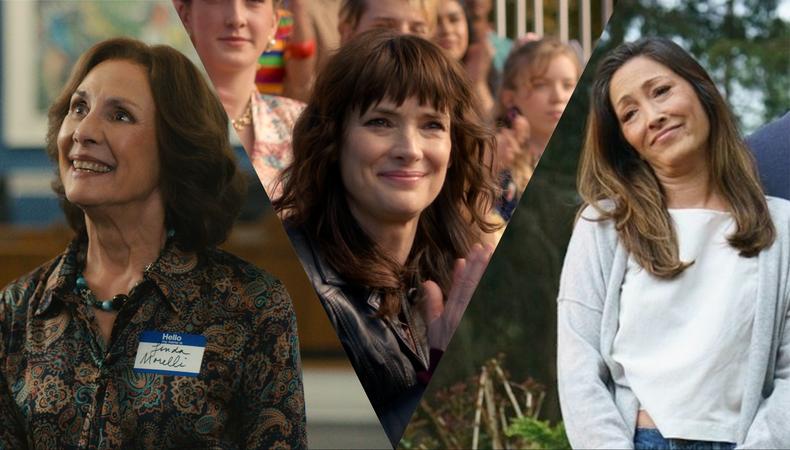
And Ryder’s not the only TV actor giving mom lessons. While Joyce was having her PFLAG moment in the Reagan-era Midwest, Christina Chang’s Yuna Hollander modeled similar maternal instincts on “Heated Rivalry,” the world-conquering HBO Max/Crave drama from Jacob Tierney set in the 2010s amid the Canadian pro hockey world. More recently, Laurie Metcalf’s modern mom Linda Dardano joined their ranks on “Big Mistakes,” Dan Levy and Rachel Sennott’s new Netflix comedy.
Breaking down each performance reveals how three actors can take three different paths to a single truthful place.
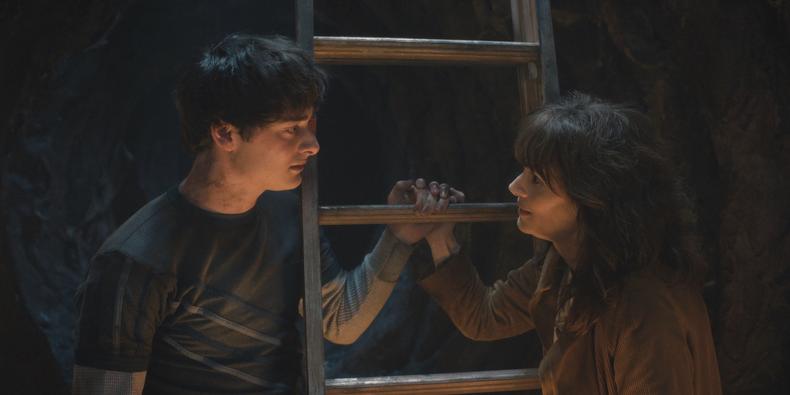
Joyce, a small-town single mom whose maternal instincts dragged her into an interdimensional war, starts Will’s coming-out scene ready for the truth. Ryder turns her body toward Schnapp, with her stance open and head cocked.
The Oscar-nominated actor, who’s gone viral for not having a poker face, deploys her signature expression of bewildered concern. It slowly softens in understanding. Ryder widens those moon-sized eyes, not in disgust, but out of sorrow for the pain Will’s endured by denying his feelings.
“You’ll never lose me,” Joyce tells her son. A squinting Ryder delivers the line full of disbelief that such a ridiculous notion could exist.
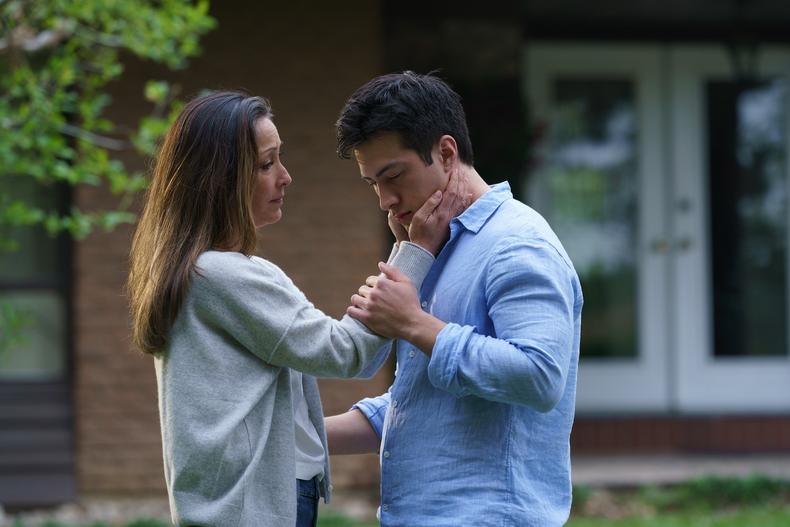
Now, Yuna. Ever heard of a stage mom? This is a rink mom, an enterprising lioness more invested in the hockey stardom of son Shane (Hudson Williams) than he is. Chang’s character starts from a more guarded place than Joyce, but she absolutely steps up when Shane nervously tells her, in the season finale, that he’s gay.
“Heated Rivalry” Credit: Sabrina Lantos/HBO Max
True to her business-minded tendencies, Yuna initially reacts with curiosity. Chang delivers a stream of questions with a probing but steady demeanor.
She keeps it cool until her next scene, when the camera catches Yuna standing alone outside the house, obviously concealing her tears from the family. She pulls it together when Shane comes outside. He apologizes for not telling her his secret sooner. Yuna is aghast; Chang’s face falls.
“Look at me,” she says. She repeats the line harder. “Look at me.” The lines on Chang’s face betray what’s about to happen, and she hits her next words with a ragged sob. “I’m sorry that I made you feel like you couldn’t tell me.”
Moments after the tears, Yuna’s back to business, turning her wheels about press releases and sponsorships. “There’s a world of opportunity here,” she says brightly, swishing white wine around in a glass. The mercenary streak complicates her more nurturing instincts, and that’s OK. She doesn’t have to get everything right—just that one really big thing.
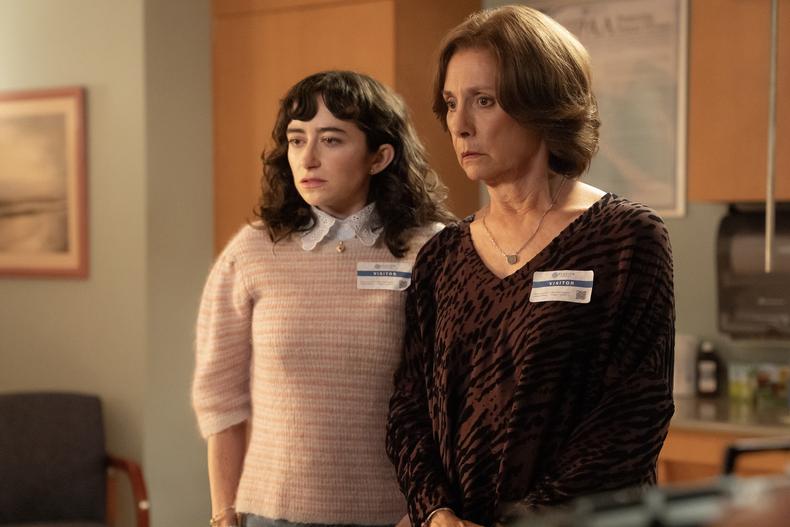
On “Big Mistakes,” Linda is the final boss of difficult mothers. Played to histrionic perfection by Metcalf, Linda consistently acts like a sainted martyr who canonized herself.
“Big Mistakes” Credit: Spencer Pazer/Netflix
Metcalf loudly, constantly, hilariously barks out Linda’s guilt trips. In the sixth episode, her supposed-to-be-celibate pastor son, Nicky (Levy), tells her he’s in love with a family friend, Tareq (Jacob Gutierrez). After a burst of glee that centers herself—”My Tareq?!” Linda exclaims—she immediately harangues Nicky for not telling her sooner.
But later, when her opponent in a mayoral race makes a homophobic dig at Nicky, she gets quiet. Metcalf’s expression turns grave. (In one of the show’s best visual gags, she’s also wearing poorly applied carnival face paint.) She approaches this man deliberately, then pops him right in the kisser.
“There are very few things that a mother won’t do to protect her son, especially when he’s found love,” she tells a gaggle of reporters later.
None of these TV moms pass some impossible perfection test. No parent, real or fictional, could. The actors sift through their characters’ messiness and zero in on a more compelling benchmark for a mother’s love. “Unconditional” doesn’t quite describe it. It’s elastic.
As complicated as these ladies can be, not one mom demands that her son tear off a part of his own soul so she’ll be more comfortable. Joyce and Yuna adjust the shape of their love without hesitation. Linda decks a guy.
In my best moments, I can watch these performances and holster the jealousy. I can look at the bigger picture. Joyce, Yuna, and Linda reached millions of homes. The actors playing them told the one story I want all queer kids to live out, even if I didn’t get to.
Just think of how many people watched Joyce love her gay son so much that it saved the world.