J.A. Bayona’s ultimate purpose is truth, and the pursuit of it. “For me there’s a pleasure in capturing the truth,” says the filmmaker. In each of his projects, including “The Orphanage” and “The Impossible,” Bayona has tried to set up for his actors “at least three or four moments that need to be shot in the exact moment.” In “A Monster Calls,” his newest fantasy-drama spectacle (to be released in the U.S. Dec. 23 by Focus Features), one such moment occurred in the magical final scene.
Conor O’Malley, played by the young Lewis MacDougall, walks into a room in the house of his grandmother (Sigourney Weaver), a room she has finally given him permission to enter. Bayona says the scene was the very last they filmed, and he had asked the actor not to look at the space beforehand. “Lewis didn’t know what was behind the door. Even the page for his script was ripped off. So what we captured was true.” Conor’s wondrous reaction to everything behind the door is also Lewis’ reaction—especially to a special book the character discovers.
“In that scene he’s opening a book full of important things for the character,” explains Bayona. “But on the set, the book that he was looking at—in the shots where you can’t see it—was a book especially designed for Lewis with important things from the film, from the whole journey during the shooting, a book full of pictures and memories of the cast and crew. It was a way of making the experience of shooting that scene closer to Lewis.”
WATCH: “When ‘A Monster Calls,’ You Answer It”
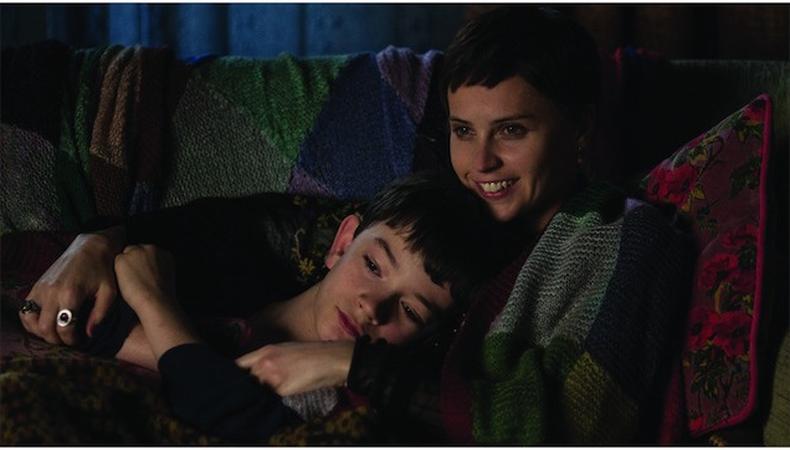
Bayona’s ability to interweave the personal and the fictional is evident in “A Monster Calls,” a movie about a boy who, while struggling with the terminal illness of his mother and best friend (Felicity Jones), begins speaking to the giant yew tree in the churchyard, a monstrous teller of fairy tales (voiced by Liam Neeson). Between his mother’s deterioration and bullies at school, Conor is desperate for relief in the form of this mysterious monster’s stories and his own drawings—an autobiographical detail Bayona added while adapting the story for the big screen.
“The way to make the story my own, more personal,” says Bayona, “was making Conor an artist, a kid obsessed with drawing. My father was a painter. He used to paint the giant posters in cinemas in Spain in the ’80s.” The director drew visual inspiration from Patrick Ness’ 2011 graphic novel of the same name and its illustrations by Jim Kay (Ness also provides the film’s screenplay). But Conor and his mother sharing a fondness for drawing allowed Bayona to “visualize the stories on the screen and [find] a way to connect all the characters with the idea of art and legacy and how art can help to heal.” That approach also informed the film’s dazzling animation sequences, which take place during the monster’s morally ambiguous fairy tales.
READ: “6 of This Year’s Hard-Working Actors”
When more than one friend suggested Bayona read Ness’ novel, he understood why. “I read the book and it had so many things in common with my other films,” he remembers. “At the same time I was reading a lot about storytelling, people like Joseph Campbell, Bruno Bettelheim, about the psychologies of fairy tales. I was curious about how stories work.... What is it that makes people attracted to a story?”
Although “A Monster Calls” encompasses coming of age, bullying, cancer, and loss—themes that, as Bayona points out, could each easily constitute their own movies—his goal was to make those subjects work “in a story that’s ultimately about something different, which for me is telling the truth...how difficult it is to tell the truth sometimes.”
Incidentally, his advice for auditioning actors of all ages echoes that idea. “I’m not looking for the best actor, I’m looking for the best actor to play the role,” says Bayona, who has worked with London-based casting director Shaheen Baig on his last two films. What he wants is an authentic glimmer of the character in the auditioner. “It’s good to see the character in the actor—which is why it’s so important for you to be yourself.”
Want to star in a fantasy flick? Check out our film audition listings!