The following interview for Backstage’s on-camera series The Slate was compiled in part by Backstage readers just like you! Follow us on Twitter (@Backstage) and Instagram (@backstagecast) to stay in the loop on upcoming interviews and to submit your questions.
As the first wheelchair user cast in a lead role in a thriller in more than 70 years, Kiera Allen is a revolutionary. She’s starring opposite Sarah Paulson in “Run,” a psychological thriller from filmmaker Aneesh Chaganty now streaming on Hulu. Allen took over our Instagram to answer all your questions in the lead-up to her highly anticipated feature film debut. She covered it all, from what it was like to work with Paulson to navigating the industry and pushing representational boundaries as a newcomer.
 30 Years After the Americans with Disabilities Act, Actors Still Demand Change
 What’s something you learned while working on “Run”?
The importance of embarrassing yourself. I think if you feel embarrassed and you feel too vulnerable and you feel like you wanna crawl in a hole, you’re probably moving in the right direction.
How did playing a character who is going through trauma affect you?
“My character does go through a lot of trauma in this film, which was really quite difficult at times. But it was actually a powerful and moving experience to go through with such a supportive and amazing team around me.”
What’s your advice to aspiring actors?
“Focus on the craft. Just focus, focus, focus on becoming the best actor you can be. And then the opportunities will come as a result of that.”
What technique did you study?
I was actually studying Meisner right before I had this audition. I was doing a summer intensive at the Maggie Flanigan Studio in New York, which I highly recommend.
What’s your dream role?
I think right now, my dream role would be one that I write [for] myself. But I’ve actually been lucky enough to play a couple of my dream roles in local theater, like Miss Adelaide in “Guys and Dolls” and Olive Ostrovsky in the “The 25th Annual Putnam County Spelling Bee,” so I’ve been really lucky.
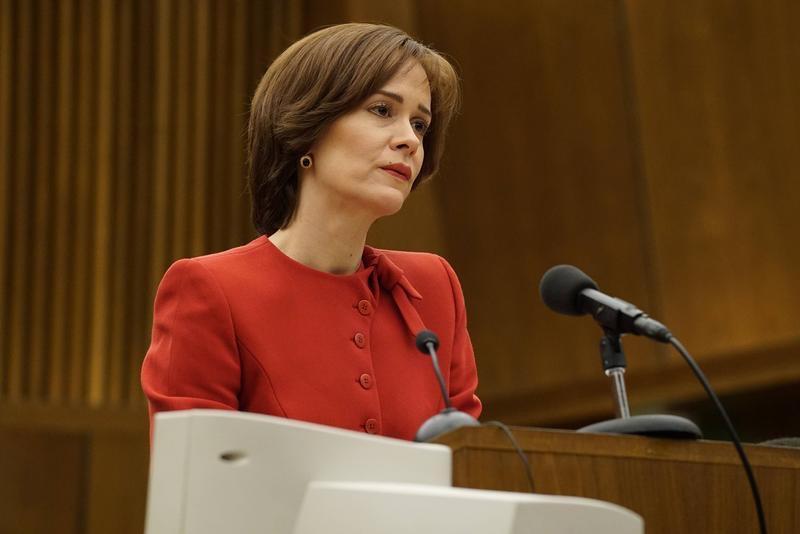 Sarah Paulson on How to Memorize Lines
 What do you do to prepare for the next role you’re playing?
It really depends on the role itself and the demands of that role. But for Chloe in “Run,” I spent a lot of time writing—writing bios, character backstories, breaking down the script. Pretty much every day I had off, I was writing about the character.
Do you have tips for dealing with the disappointment of not getting a role?
That’s a good question, because it happens to all actors. I think what’s been helpful for me is to just think of the audition process as an opportunity to act and an opportunity to do what I love. If I get the part, that’s the icing on the cake; if I don’t, I still get to do what I love.
Do you have a special way of memorizing lines?
I like to record my cue lines on my phone, and then I play them back to myself and speak my lines completely monotone, just to have the words.
What was it like to work with Sarah Paulson?
It really is a dream come true to work with Sarah.
Where do you see improvement for onscreen representation today?
It’s a big question; it’s too big, I think, for a single Instagram Story. But I will say I think “Run” is a huge, huge leap forward for authentic representation, and I’m very proud to be a part of that.
This story originally appeared in the Dec. 3 issue of Backstage Magazine. Subscribe here.
Looking for remote work? Backstage has got you covered! Click here for auditions you can do from home!