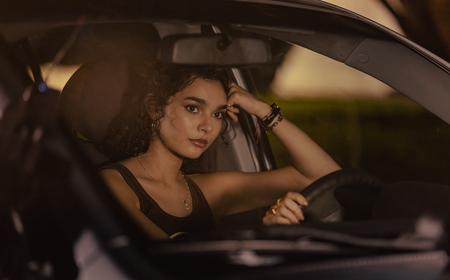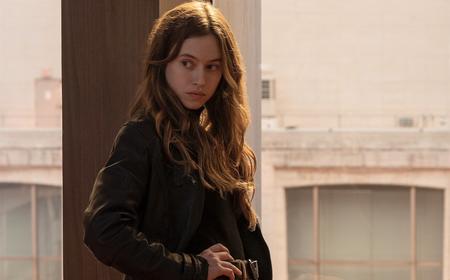
Nicole Beharie has grown accustomed to dealing with the peaks and valleys of life as an actor. A fan favorite on Fox’s “Sleepy Hollow,” she was undeterred early on when many of her Juilliard classmates landed representation upon graduating. Instead, she booked her first film role without an agent. Beharie is now an IFP Gotham Award nominee for her portrayal of beauty queen–turned-bartender Turquoise Jones in writer-director Channing Godfrey Peoples’ “Miss Juneteenth.”
What was the moment you decided you wanted to be an actor?
There’s a version of the story where I was a kid watching movies and putting on plays in the living room and bossing around my siblings and friends to put on shows. Everyone else around me knew that’s probably what I needed to do with my life, but it didn’t seem like a practical vocation. Everyone in my family is either blue-collar or a nurse, or they’re in the service. It didn’t seem like a possibility. Then there was a part of me that ended up going to an arts boarding school for theater just because it was a better school. I thought I was going to go to school for journalism, and then I fell in love with the thespians and the weirdos and the writers and the dancers.
“Do what feels good and what is challenging and what grows you. Don’t always go the route everyone thinks you should go.”
What was your first day on a professional set like?
My first job was “The Express.” I had never even been in front of a camera. And I remember they gave me my little T-mark and said, “You walk from here to here.” Everyone was still, all the extras were still, everyone’s in ’50s period pieces, they’re like, “Action!” and everything starts to move. And they’re like, “Action, Nicole!” I was like, “Oh, my God!” I’d never been a part of anything like that before. Movies changed after 2007 and all the budgets went down after the writers’ strike. I had that one experience of a mega-movie coming right out. It was pretty incredible to land into something like that. I’d never been a part of anything so big. And then I went on and did “American Violet” after that, which was an indie and super grassroots and very small.
 How to Get an Acting Agent With Backstage
 How did you land your first agent?
I got the role before I got the agent! Nobody wanted a short, quirky, Black girl. I think some casting directors went to our presentation showings at Juilliard, and they called me in and I went in for casting. In order to work, you had to find an agent. It’s a very unusual version of the story. I don’t feel like it happens that way a great deal. I will say: You can’t give up. Because there was a period, a few months, where all my classmates were reeling in: “I’m going in to so-and-so,” and “I’m doing this new show.” And I was like, “Man, maybe I made the wrong choice in my life.” You never know. This thing is hills and valleys—and sometimes very, very deep valleys. [Laughs]
What advice would you give your younger self?
To really focus on the work, but still have fun—still live. I was very serious, and I’ve always been a believer in honoring an opportunity that you get—[an] “I don’t want to mess this up” kind of thing. I wish I would’ve enjoyed it a little bit more and realized this doesn’t happen every day. Maybe not hold onto too much of the input, positive or negative, because that becomes your whole identity. Do what feels good and what is challenging and what grows you. Don’t always go the route everyone thinks you should go.
How did you first get your SAG-AFTRA card?
It was “The Express,” the Ernie Davis biopic with Rob Brown. When I was graduating [from Juilliard], we do these presentations at the end of the senior year, and everyone goes, “I’m getting a manager!” or, “So-and-so signed me!” I was getting a little bit of love, but not the love other people were getting. I went into the [“Express”] audition, and I actually got the job. Before I got an agent, I got the job, which was crazy.
What is your worst audition horror story?
There was one that was funny, because I read the sides—there was no script—and my understanding of the sides was [that] the character was really uptight, almost like a librarian: glasses, cardigan, very stern. I showed up and I had a pencil skirt on, and all these girls are in jeans and cutoffs [with] wavy, long hair [and] smoky eyes. I realized I’d read it completely differently—as opposed to being cool and snarky, I thought she was really uptight and stern and factual. It wasn’t extremely clear in the character description what she looked like. I could tell, when I walked in the room, they were intrigued: “What’s happening here? Doesn’t she get it?” I did not get that job.
 What Should Actors Wear to Auditions?
 How do you typically prepare for an audition?
It’s different every time. But the most important thing is the text. Whether you get the script or it’s just sides, spend time with the text, and imagine all the different angles and who you’re speaking to. Ask a lot of questions about where you are and what happened beforehand. I haven’t been doing it now, but in the last few years, I was putting a lot of my friends on tape as my hobby, coaching people through their tapes. One of the biggest things is people walk in thinking the casting people are antagonistic or that they’re judging you. They are judging you—that’s part of it—but they ultimately want someone to win. And when you walk in, they’re hoping you might win; you might show them something new. And if nothing else, be in the moment and have an experience with these people with this character. If you get the job, you’ll get to do it more; if you don’t, that’s your only opportunity to live with it and play with this character in front of people.
What did playing Turquoise in “Miss Juneteenth” add to your acting skills?
Channing, our director, was a fan of quiet moments in a way I’ve never experienced. I’ve done some TV and other things where you have four seconds to shoot an action thing, and it’s all reaction and super high stakes. The stakes in this were high, but it was subtle. What was happening was a much more internal performance. The way she likes to capture people gave me room to be, in a way. When people give you the space to do that, you can read what’s happening without me having to say anything. I’d never been in anything quite as delicate and subtle. It allowed me to let myself alone a little bit. I know this; I did the work. Just be her; you don’t have to show anyone.
What’s the wildest thing you’ve ever done to get a role?
I’ve definitely gotten notes and sent tape back in making the adjustments. Even for “Juneteenth,” I did audition for that, and I got notes from Channing and changed the character. I think it’s worth it to make adjustments and send in new auditions. Be open to notes.
What’s one performance every actor should see and why?
I used to watch “Sophie’s Choice” with my friends in college. I just loved the quirkiness of all the characters, but obviously Meryl Streep’s performance in that is pretty crazy. All the layers and the history and the dialect. All of the characters are so distinct that she gets to be really grounded. I think it’s a movie [that], if you’re an actor [and] you haven’t seen it, [you should] take a look at. There’s also a French movie called “A Prophet” by Jacques Audiard. That’s an amazing movie.
This story originally appeared in the Jan. 7 issue of Backstage Magazine. Subscribe here.
Looking for remote work? Backstage has got you covered! Click here for auditions you can do from home!