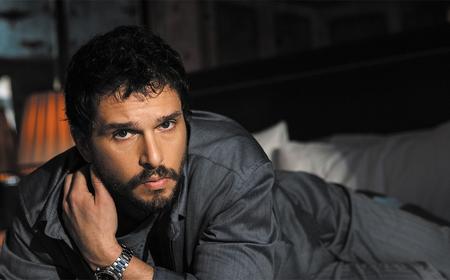
Tom Pelphrey’s roles rarely fit into neat categories. The Emmy-nominated actor gravitates toward morally complex characters and the liminal areas of human experience. He embodied the volatile desperation of antihero Ben Davis on Netflix’s “Ozark” and navigated the machinations of real-life fugitive Jason Derek Brown in Matthew Gentile’s “American Murderer.” His most recent role, as family man–turned–violent criminal Robbie Prendergrast, only adds to his roster of powerfully nuanced performances.
HBO’s limited series “Task,” premiering Sept. 7, follows Robbie as he and FBI agent Tom Brandis (Mark Ruffalo) become locked on a collision course that’s nothing short of explosive. Unfolding in the same Pennsylvania working-class landscape as creator Brad Ingelsby’s award-winning “Mare of Easttown,” “Task” tells a story in which law enforcement and criminals are bound by a common thread: the lengths they’ll go to secure their families’ futures.
Here, Pelphrey discusses the process of building his character and why actors should “just keep expanding.”
What kind of prep work did you do for “Task,” and, in particular, how’d you nail that Delco accent?
We had a fantastic accent coach, and she would give me sound clips and [advice on] changes. Eventually what I had to do was take all the rules I was learning, call [a Delaware County local], and hear where the rules apply. He knew I was listening for the sounds, but we both love football, so we could just have conversations where it wasn’t so conscious. What I found was that some of the rules applied some of the time.
I grew up in New Jersey, less than an hour from where we were filming, so the ethos and vibe of that world and those people is very much a world I grew up in.
How did you create such strong chemistry with Mark Ruffalo?
Well, he is just the loveliest human being. He is such a gentle, kind, fun, silly, and generous man. He’s obviously an incredible actor, but he was so disarming in the most wonderful way, just always so lovely, open, and available. I said, “Mark, have you always been that way?” He said, “No, no, I used to be more like you.” [Laughs]
I’ve seen this in other actors as well. I think with what we do, hopefully you’re learning and growing, and you’re getting better. And as you do those things, you feel more and more comfortable in yourself—and as you feel more comfortable in yourself, there’s an ease with which you can do things that maybe wasn’t available to you before. I certainly feel that way. Like, whatever I’m doing now to feel like I’m being present in the way I need to be present to do my work is different than it was 15 years ago. It’s easier now…through repetition and learning and watching other people.
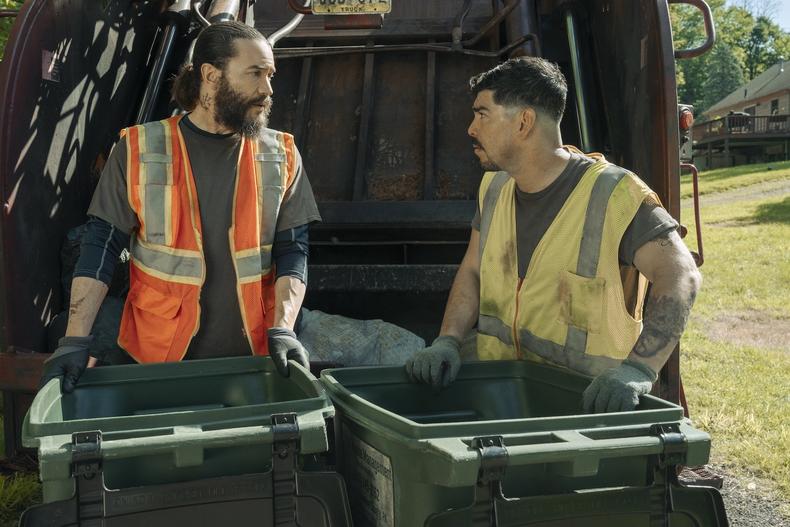
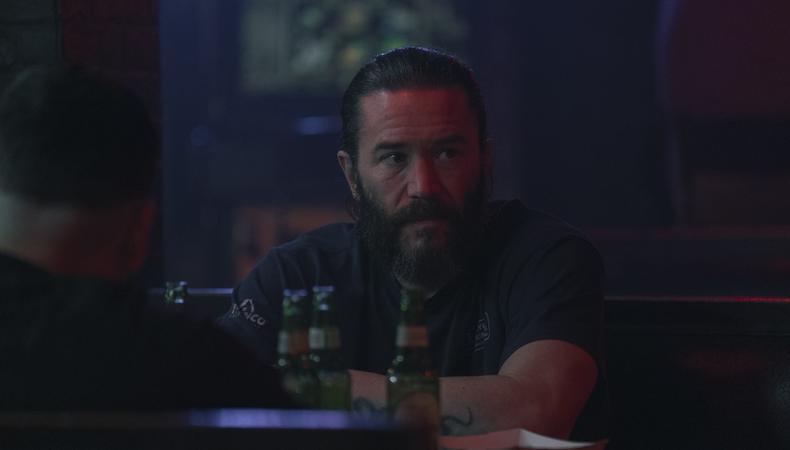
Tom Pelphrey and Raúl Castillo on “Task” Credit: Peter Kramer/HBO
You’ve described your creative approach as “being part of something bigger.” Can you speak on that?
As an understanding of work, 100% you’re part of something greater. When you saturate the canvas with good shit, it makes everything else look better, too, because it allows the audience to relax. We’ve created this world. We’ve been thorough. We got you. Come with us.
There are so many people it takes to do that well, and there are so many stages of the process that have to go right. And so for me to say that you’re part of something greater is the most obvious thing in the world. Everybody’s trying to make something together—and it’s just more fun that way.
Do you have an early example of that approach in action?
A few years after we graduated [from] Rutgers University, my friend Dennis Flanagan and I started the Apothecary Theatre Company. It was this amazing education in how to create something and also a real appreciation for how much work goes into trying to make something good, and how important everybody else’s job is. We did everything ourselves; we had some help, but we were there. It was a deeply satisfying experience, because we literally built that from the ground up.
Should all actors strive to create something themselves?
Oh, yes, yes, yes. I think that is what is wanted right now. In this time, where there’s all this technology, things are getting bigger and bigger and bigger, and the audience is getting more removed from the humanity of the experience. I feel that there is a hunger and a desire for more intimate, special evenings. Limitations or things you’re struggling with might be an invitation to evolve, rather than a problem.
Do you have any final insights or advice for performers?
Just don’t quit. Just keep going. If this is what you love, and this is what you want to do, and this is what you’re obsessed with—and [acting] does take a little bit of that obsession—the important thing is, don’t quit. Always try and be learning. If you can’t be in class, watch things that are good, and think about why they’re good. If you’re not getting auditions, pick some material for yourself, get your phone, film yourself doing it, then watch and learn. And so you’re letting your body and your mind live in the space of creation.
Open your heart and expand your mind! Feel more things; experience more things. Grow your heart and compassion and intellect so that when it comes time to play a complex role, you have things to understand. You can always shrink yourself down, but you can’t make yourself bigger. Part of our job is to just keep expanding. It’s a hard thing, but we’re chasing something that we love, and that’s a beautiful thing in and of itself.
This interview has been edited for clarity and length.
This story originally appeared in the Aug. 18 issue of Backstage Magazine.