
Aspiring actors with dyslexia might feel a little uneasy about auditions and performances—especially the dreaded cold read. But although acting with dyslexia presents a unique set of challenges, it doesn’t mean you can’t make it in the biz. Here’s some insight and advice from people with experience on becoming an actor with dyslexia.
JUMP TO
 Billion Photos/Shutterstock
- What is dyslexia? The dyslexia diagnosis refers to a cluster of symptoms that result in difficulties with specific language skills, particularly reading, spelling, writing, and pronouncing words.
- Dyslexia Symptoms. Dyslexia’s effects vary in severity from person to person. The main symptom is often difficulty with word recognition, reading fluency, spelling, and writing. Even though dyslexia is not correlated to intelligence, some people with dyslexia have low self-esteem as a result of their reading and language struggles.
- How common is dyslexia? Approximately 5-17% of the population have some of the symptoms of dyslexia, according to Dr. Eleanor Palser, a researcher at the University of California San Francisco Dyslexia Center. “These numbers suggest dyslexia is the most common form of learning difference,” she says.
- What causes dyslexia? The exact causes of dyslexia are not completely understood, but it appears that there are both genetic and environmental factors at play. “Dyslexia does appear to run in families, suggesting a genetic component, but the complete mapping between genes, environment, and learning differences has yet to be completely mapped,” Palser explains. Since people experience dyslexia differently, the condition may have different causes.
 fizkes/Shutterstock
Needing more prep time
Actors with dyslexia may require more prep time to have a strong grasp on a script. “One struggle with my dyslexia that I have had my entire life is people being patient with me,” says Max Burman, an actor with dyslexia and vice president of the Maryland State Thespian Organization. “Since I have a processing disorder, it is harder or takes longer for me to understand something.”
David Castellano, an actor with dyslexia who has produced and performed in shows including “Little Shop of Horrors” and “Twentieth Century” on Broadway, agrees that managing one’s time can be a challenge with dyslexia. “It usually takes me longer to get through the first few reads of a script,” he says. “I usually need to look up words that I have missed or are not familiar with reading on a regular basis.”
Mispronouncing words
It’s not uncommon for actors with dyslexia to mispronounce words, according to Jackson Drummond, an actor with dyslexia who has performed in “Peter Pan Jr.,” “The Phantom Tollbooth,” and “The Curious Incident of the Dog in the Nighttime.” Castellano says that he has “been ridiculed for using the wrong word or term.”
Difficulty remembering lines
Drummond has struggled with memorizing longer lines and remembering the lines exactly as written instead of paraphrasing. One of our systems of memory is called working memory, the ability to hold and manipulate information over short periods of time. Approximately 10% of the general population and 20-50% of people with specific learning disorders like dyslexia have poor working memory, according to the International Dyslexia Association.
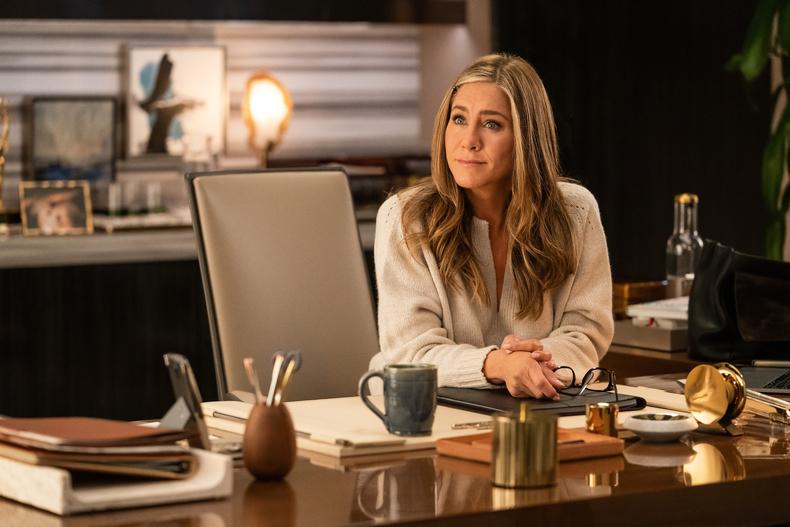 “The Morning Show” Courtesy Apple TV+
Talk it out
Burman points out that if you are working with a group of people who aren’t neurodivergent, they may not understand your workflow. “Just know that if you are having trouble understanding something, or need to complete a certain task, try to have an open and respectful conversation with whoever you are working with,” he says. Castellano adds that “getting comfortable with asking for help” has been a huge boon for his career.
Vocalize
According to Castellano, the more you read, the more you understand how your dyslexia works—and reading aloud carries extra weight. “Work through ‘Hamlet’ or any Shakespeare,” he suggests. “Practice makes perfect, and Shakespeare is my biggest challenge to get through. Pair it up with an audio book, so you can follow along and stop and go back.” “Recording your lines so you can listen to them rather than read them is very helpful,” Drummond says.
Do it your way
Ensure that your blocking is written in a way you can easily understand, says Drummond. “Don’t get discouraged if the process of learning more lines and blocking looks different than others.” “You need to do what is helpful and works for you.” Burman concurs. “I am able to see other people’s ways of doing things, but if it gets too difficult for me, I eventually just do what is comfortable for me,” he says.
Create helpful tools
Castellano isn’t afraid to create his own tools to stay ahead. “I need to create a production analysis, a document usually created by a stage manager, for each script I am working on to make sure I have everything I need to accomplish my assignment,” he says.
Recognize your strengths
“The advantage of my dyslexia is that I am able to better understand some characters and maybe even see them from a different perspective,” Drummond explains. “I can accept others’ processes with memorizing lines and blocking, because I understand that it can be difficult and look different for everyone.” Castellano agrees that his dyslexia allows him to see things differently. “I never get to the point where I have the script memorized, but I am usually more familiar with the text than my counterparts and can have more in-depth conversations with the director or performer about the context of the lines, character, or story,” he explains. Burman adds, “I am able to understand the raw and real emotions that a character has and I can also interpret why a character acts and behaves the way they do. With my dyslexia, it’s mainly more of an ability for deep analysis.”
Palser emphasizes the emotional strengths that may come with dyslexia. A study examining empathy and dyslexia “found that children and adolescents with dyslexia have greater responses to film clips showing others experiencing strong emotions like sadness and romantic love,” she explains. “This was driven by stronger communication between the heart and the brain in people with dyslexia. I am excited that we are beginning to uncover the biological bases to some of these anecdotal reports of strengths and talents in dyslexia.”
 Monkey Business Images/Shutterstock
- Understand the law: If you are working with a young actor with dyslexia in a school setting, they may be protected by law. The Individuals with Disabilities Education Act, Section 504 of the Rehabilitation Act of 1973, and the Americans with Disabilities Act define the rights of students with dyslexia and other specific learning disabilities. These individuals are legally entitled to special services to help them overcome and accommodate their learning problems. If you are employing professional actors, it is important that you understand the laws surrounding workplace discrimination, which include providing reasonable accommodations.
- Provide line recordings: Offering audio recordings of lines instead of just printed scripts may be very useful to actors with dyslexia and other forms of neurodivergence.
- Embrace the differences: “Theater should be inclusive—it is about telling stories,” says Drummond. “Having people from all walks of life will help better portray characters in a more realistic way.” Burman agrees that creating an inclusive space for those with dyslexia may improve the final product. “Those who have dyslexia should really be recognized for their creative and interesting art style,” he says.
 Fred Duval/magicinfoto/Kathy Hutchins/Shutterstock
Actors with dyslexia who have made an indelible mark on the industry include:
- Tom Cruise (“Top Gun,” “Mission Impossible”)
- Bella Thorne (“Shake It Up,” “The Babysitter”)
- Salma Hayek (“Frida,” “From Dusk Till Dawn”)
- Whoopi Goldberg (“The Color Purple,” “Sister Act”)
- Channing Tatum (“The Vow,” “21 Jump Street”)
- Jennifer Aniston (“Friends,” “The Morning Show”)
- Patrick Dempsey (“Grey’s Anatomy,” “Enchanted”)
- Cher (“Silkwood,” “Mask”)