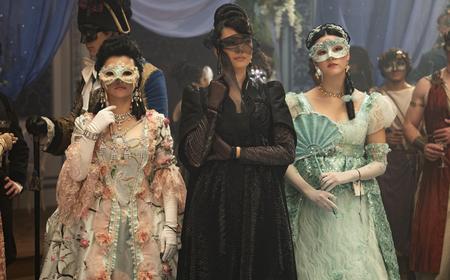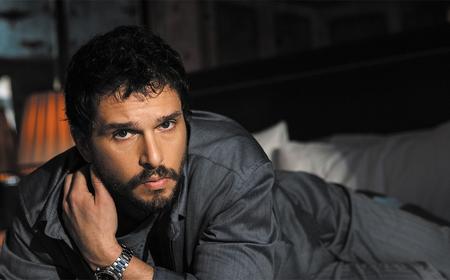
In the first two minutes of “Breaking the Ice,” the lead character discovers she’s pregnant, gets slapped and threatened by her boyfriend’s mother, and is handed a wad of cash to end both her pregnancy and her relationship. Vertical dramas are one of the fastest-growing formats in entertainment—and that opening scene shows why.
Shot in a 9:16 ratio for easy consumption on phone screens and edited into episodes that rarely exceed two minutes, this kind of blink-and-you’ll-miss-it drama delivers the addictive twists and emotional gut punches of classic soap operas at a pace that makes soaps look leisurely. For actors, the format is also a budding niche of work in a gig-to-gig industry. Here are the vertical drama series worth watching to understand what the format does best.
1. “Breaking the Ice,” ReelShort
If you’re new to the format, “Breaking the Ice” is a great place to start. The series stars Seth Edeen and Nicole Mattox and follows the story of a hidden, forbidden pregnancy coming full circle years later. Like most vertical series, it never lets either character or the audience catch a breath. If you’re looking to work in verticals, it’s a great example of the direct delivery that vertical performances demand. Talent is expected to sustain genuine emotional urgency across dozens of short, intense takes with almost no runway time.
2. “The Double Life of My Billionaire Husband,” ReelShort
This series is an entry point into one of the most popular subgenres of vertical dramas: the secret billionaire. Jarred Harper plays Sebastian Klein, a man simultaneously living two identities. The premise demands an actor’s ability to shift between performances within the confines of a two-minute episode—there’s no time for a slow reveal, and every transition has to be legible on a phone screen. Opposite Harper, Avery Lynch holds the emotional throughline as Natalie. The show’s success lies in the romantic tension built with each plot twist, as well as the doubling of character identities and the interactions that follow.
3. “Fated to My Forbidden Alpha,” ReelShort
Initially, this werewolf romance went viral on TikTok, where clips of CGI wolves and a little-too-earnest dialogue were mocked online. Eventually, the same earnestness it was criticized for became what drew audiences in, and the series racked up over 110 million views within its first six months on ReelShort. At the center of the drama is Kasey Esser (dubbed the genre’s breakout star by Rolling Stone), playing alpha Alexander Kane with total, straight-faced commitment. Esser has since starred in more than 45 series across multiple platforms, and he’s proof that vertical performers who actively seek ReelShort casting calls and take the work seriously can find a wealth of opportunities.
4. “We Are Never Ever Getting Back Together,” ReelShort
Most verticals operate at a single frequency that’s dark, urgent, and high stakes, leaving little room to breathe; “We Are Never Ever Getting Back Together” is the anomaly on this list. Where the format defaults to “Twilight,” this one goes “Legally Blonde.” It’s a deliberately light rom-com that ReelShort developed to prove the genre has more range. “They’re like, ‘We wanna make the rom-com, like, a genre,’ ” lead actress Molly Anderson said of the pitch. “Because before that, most of them were these pretty heavy dramas.” Anderson and co-star Harper bring an easy, sparring chemistry that earned recognition at the Vertical Drama Love Awards. Their performances show how vertical work can demand sharp comedic timing within the format’s rapid-fire cutting.
5. “True Luna,” ReelShort
“True Luna” has earned a 7.0 rating on IMDb and a devoted fan following that has kept it among the favorites in the werewolf romance subgenre. Leading the series is Grace Woods Swanson, a Northwestern University theater graduate who also trained at the British American Drama Academy in London. Swanson demonstrates that classical training translates well to this kind of work. The format requires every reaction to land in a single cut with just a few takes, which is useful advice for aspiring talent and a strong sign for those with technical training or stage experience.
6. “Sold to the Possessive Mafia Boss,” My Drama
If you want to understand what the mafia subgenre looks like at peak vertical popularity, give this one a watch. The show is a fan favorite built around another premise the genre runs constantly: A woman enters a menacing mafia boss’s world to save her father, and a complicated romance sprinkled with the allure of danger ensues. Ukrainian actor Artem Plonder plays the boss with enough specificity to elevate it as a genre entry. The series also put My Drama on the map as a serious vertical platform, and for filmmakers and actors breaking into the format, it’s a great example of a show that didn’t start on a dominant platform but became the reason for its boom.
7. “In Other Words, I Love You,” DramaBox
“In Other Words, I Love You” presents yet another common premise—campus enemies-to-lovers—but this British-produced DramaBox entry relies on the strength of sharper-than-average banter. Following a scholarship student versus a school provocateur at a London elite academy, the series is also a window into what DramaBox’s English-language U.K. productions look like. It proves that the format’s pace doesn’t have to come at the expense of wit and comedic texture—good news for comic actors waiting for vertical casting calls specific to their skillset.
8. “Game of Choice,” Tallflix
“Game of Choice” doesn’t have a romantic throughline, which makes it an outlier on this list. It trades will-they-won’t-they tropes for a story of survival games, numbered players, and a cash jackpot wrapped in a “Squid Game”–type structure that it doesn’t shy away from. Vertical director Dan Löwenstein told Deadline, “I’m hoping that the success of ‘Game of Choice’ opens up the eyes of the bigger platforms, because they can see that it doesn’t have to be a romance-related story.” The series proves that the vertical structure works just as well with a larger ensemble and external antagonistic forces. For actors and filmmakers tracking where the format goes next, this is a clear preview that it allows a bit more range than many critics of the form thought possible.