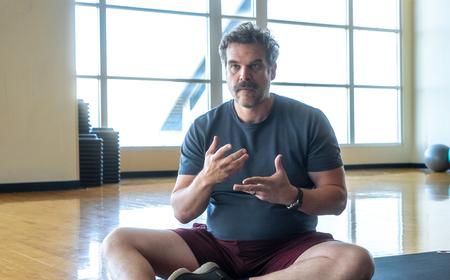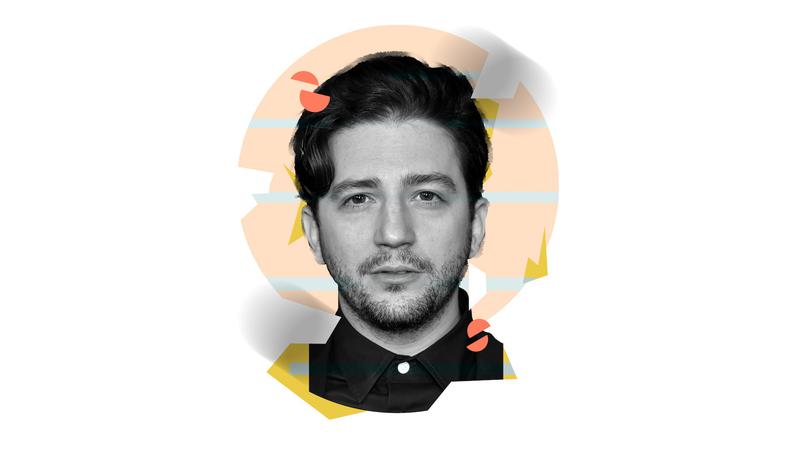
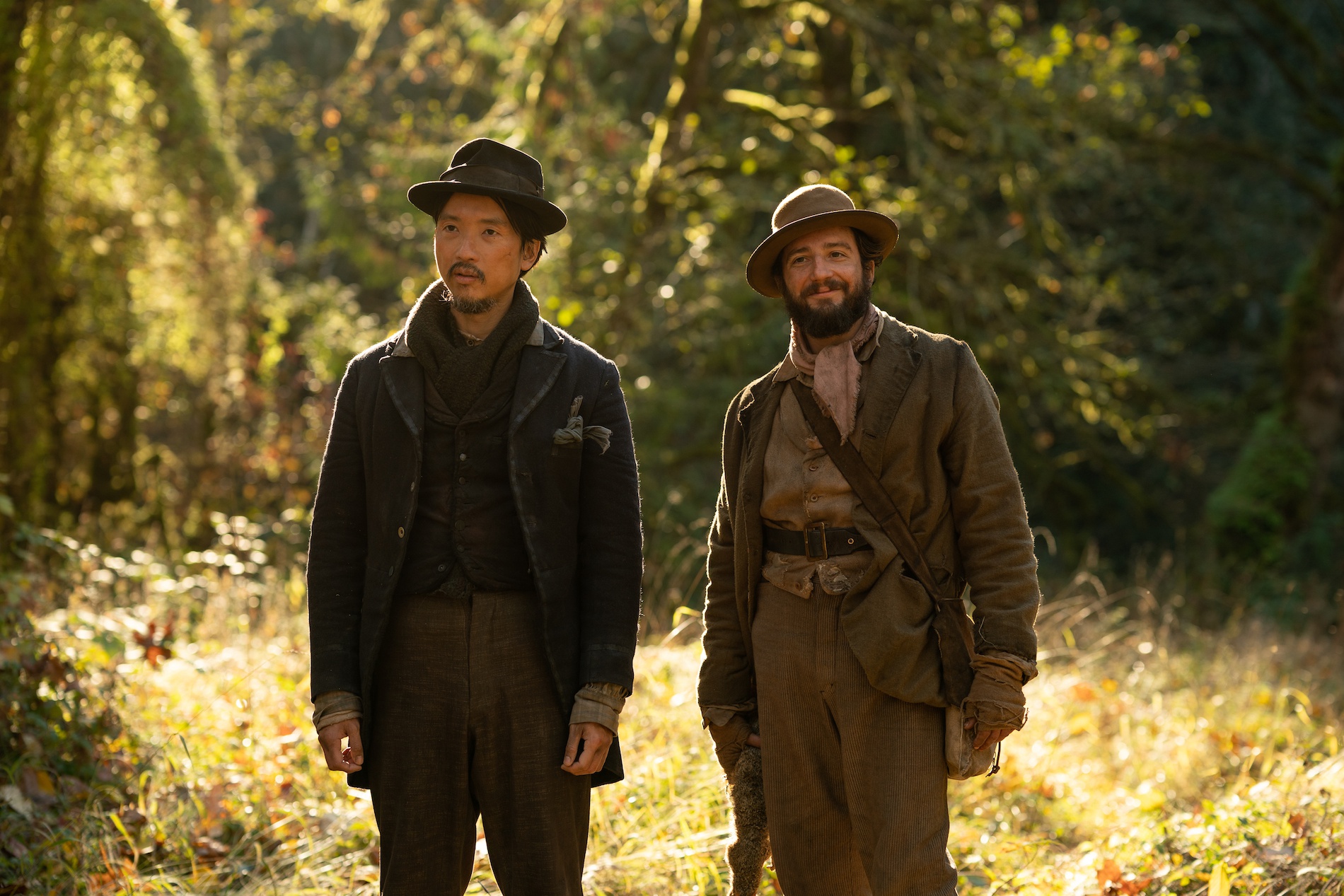
John Magaro has worked alongside some of the industry’s most notable directors in the course of his career, from Todd Haynes to Adam McKay. His most recent standout collaborator is Kelly Reichardt on her decorated indie “First Cow,” in which Magaro stars as a tender cook who concocts a plan to steal milk from a wealthy landowner’s cow in the early 19th-century Pacific Northwest. The film is up for best feature at this year’s Film Independent Spirit Awards.
“Relax. You’re not doing brain surgery here. You’re just saying some lines, so calm down.”
What’s one performance every actor should see and why?
I remember seeing Sam Rockwell in [the 2010 Martin McDonagh play] “A Behanding in Spokane,” and he does this speech that’s probably six pages long. He captivated that theater and kept it alive every moment. To do that onstage, live and present, is probably one of the most challenging things to do, and he did it. Also, this actor I really respect who doesn’t get to work enough, Ray Anthony Thomas. When I was in college, he did [Suzan-Lori Parks’] “Topdog/Underdog.” He came from New York to a regional theater out there; seeing him do that was life-changing for me—to see how honest and present an actor can be. And, again, not doing much, just living in the silence. That was really beautiful. Those are two performances I wish people could see again.
 Why Acting for Kelly Reichardt Can Be as Demanding as It Is Rewarding
 How did you get your SAG-AFTRA card?
When I first got to New York, [commercials were] how I was able to survive. After being fired from telemarketing, I was lucky to get a couple of commercials. I did a Verizon one and I did one for Cingular, which is a defunct cell phone company. That’s the job that got me my SAG card. I was Taft–Hartley-ed on the first one, and then I had to sign up. I don’t even remember what the initiation fee was on that one, but I think it’s gotten a lot higher now. That was also when SAG and AFTRA were separate. It wasn’t that long ago, but it feels like a long time ago.
What is your worst audition horror story?
There was this one thing I was going in for, and it was a director I had auditioned for [on] another film of his, and [I] didn’t get the part. New York casting offices, they’re really small, and you can often hear what’s going on in the room when you’re waiting. I already felt like this director didn’t really like me, and I didn’t feel like I was right for the part, either. I was the next person to go in, so I was sitting right outside the door. The casting director goes, “Next up is John Magaro.” And he goes, “Oh, him? He’s not right for this.” I went in, and all [I wanted] to do is be like, “Fuck you! I’m leaving!” I didn’t do that, obviously; I bit my tongue and I did the audition, all the while knowing I had no shot of getting it.
What’s the wildest thing you’ve ever done to get a role?
A really unique audition is when I auditioned for “Unbroken,” which was this Angelina Jolie–directed movie about prisoners of war. One of the things she wanted you to do was act like you were in confinement. It was up to you what you were going to do; the amount of time you wanted to do it for was up to you. She also wanted you to tell a story from your life that changed you or helped shape you into who you are. I ended up getting two friends of mine I’m really close to and really trust to tape it, as opposed to going in to a casting director. That way, we could set up a cage-type thing. They left the room, and I could really go there. Then I told a story about my father, who we’ve since lost, who had a lot of struggles in his life.
That was a really strange thing, and it worked out. I got the job. It also made me realize [that I like] taping with friends. Instead of going into a room, if you can get friends to make a tape with you, for me, it makes me more open; it makes me more willing to take a risk and go there, and, at the end of the day, have better auditions.
READ: The Best Leading Film Performances
of 2020
What has playing Cookie in “First Cow” added to your acting skills?
One of the things that we should all be so lucky to do as actors is get to live in the silence. This film [is] unlike many others [that are] very quick: There’s a lot of dialogue, and you don’t get to live in these patient moments. That [silence] was part of the story; that’s what Kelly had written. That’s what she wanted us to do. It’s a scary thing to not have that safety net of words or actions, but it’s also a really liberating feeling. It was challenging, but it was also really exciting to be able to play these quiet moments where almost nothing happens, but so much happens within [the characters’] minds and what they’re feeling. Being able to express that in the most basic look was a challenge, but it was a real learning experience. I’m really lucky to have had that opportunity.
When was the moment you decided that you wanted to be an actor?
It’s been a slow burn. It started when I was a kid. I was growing up near Cleveland, in Akron-area Ohio. It was a hobby then. It was a thing to do after school. It was fun; I didn’t really understand it. I didn’t have any expectations to do it as a living. Then it was about time to decide what you were going to do in college, and then I made the choice. It was the only thing I was really passionate about. So I went to a conservatory and got a BFA. My father, at the time, was reluctant; he wanted me to maybe get a law degree or political science degree. I, in my heart of hearts, knew I had to focus 100% on it if I was going to try to make a go of it.
What was your first day on a professional set like?
I had done a student film and maybe even some commercials, but what I would consider my first real job was I had one scene on this very short-lived Dick Wolf show. Everyone in New York, every actor, ends up doing a Dick Wolf show. This was one called “Conviction.” I was a strung-out junkie kind of character. I was so, so nervous. I open the door and there’s a cop or a DA there, and I was supposed to say a couple of lines, and I just froze. My nerves were so shot, and I just couldn’t speak. You don’t know what to do. You step into this alien world, and everyone knows what they’re doing, and everyone’s so professional, and you just feel like the pig at the ball. It was very intimidating. But, like anything, the more you do it, the more comfortable you get.
“At the end of the day, it’s just to get as secure and comfortable as you possibly can before you go into the [audition] room.”
What was your most memorable survival job?
When I was in college, I was the worst busboy ever. I worked at a restaurant for probably three weeks, and during the course of that, I spilled an entire pitcher of water down a lady’s back. I very quickly realized that the restaurant industry was not where I was going to be having a survival job. When I first came to New York, I had to get a job to make some money. I did a little bit of temp work that was just opening envelopes, basically. Then I got a telemarketing job for the Roundabout Theatre. We would do that where the Laura Pels Theatre is now, on the top floor. Again, I was terrible at it. I would get on the phone, and I would just talk to people. I wouldn’t even try to sell them, because I felt guilty. Fortunately, while I was doing that, I was auditioning at the same time, and I got a Verizon commercial. I had to make a decision to take the Verizon commercial [and] not go to work. I didn’t go to work and did the Verizon commercial. It was only a day of shooting. The next day, I went to the telemarketing thing, and they fired me. The ultimate reward of that was, about six years later, I ended up getting cast in a play at that theater. And it felt like a big moment of pride to go back into that building and be doing what I loved.
How do you typically prepare for an audition?
It varies. Each audition is different, especially theater auditions versus TV or even film auditions. A big component is the amount of material. If you have a ton of material, so much time is dedicated to learning all of the material. If it’s smaller, I like that better because you get to really focus on it. When I was in school, I used to say, “Don’t go in off-book.” About five years into this, I got to the point where I realized I could do a better job if I was off-book. It allows me to focus on the reader and be as present as possible. If it’s something that’s really difficult, I’ll sometimes work with a coach to mine things out a bit that I might’ve missed. At the end of the day, it’s just to get as secure and comfortable as you possibly can before you go into the room.
What advice would you give your younger self?
I would say: Relax. You’re not doing brain surgery here. You’re just saying some lines, so calm down. Don’t let that anxiety warp your mind into thinking that this is going to screw everything else up for you, because it won’t. Just stay calm and have fun; you’ll make it through. And enjoy the experience.
This story originally appeared in the March 25 issue of Backstage Magazine. Subscribe here.
Looking for remote work? Backstage has got you covered! Click here for auditions you can do from home!