With voting underway for the 2021 Screen Actors Guild Awards leading up to the 27th annual ceremony on April 4, the time has come for SAG-AFTRA members in good standing to cast their votes for the season’s best performances! Read on for Backstage’s official breakdown of the female SAG Award nominees in individual television and film categories.
 Everything You Need to Know About the SAG Awards
 OUTSTANDING PERFORMANCE BY A FEMALE ACTOR IN A COMEDY SERIES
Christina Applegate, “Dead to Me”
We don’t want to live in a world where Applegate isn’t on the small screen. Luckily, Liz Feldman’s “Dead to Me” is both infinitely watchable and rewatchable, thanks in large part to Applegate’s glorious turn as the widowed, wine-swilling Jen Harding. She’s as good at digging deep for emotional breakdowns as she is at muttering scathing insults under her breath.
Linda Cardellini, “Dead to Me”
Cardellini has her work cut out for her on Netflix’s “Dead to Me” as a character who is both sweetly naive and a walking cyclone; Judy Hale leaves chaos in her wake while smiling the most earnest smile. But in Cardellini’s hands, material that shouldn’t feel cohesive combines to form a portrait of a woman soldiering through her pain and seeking to better herself.
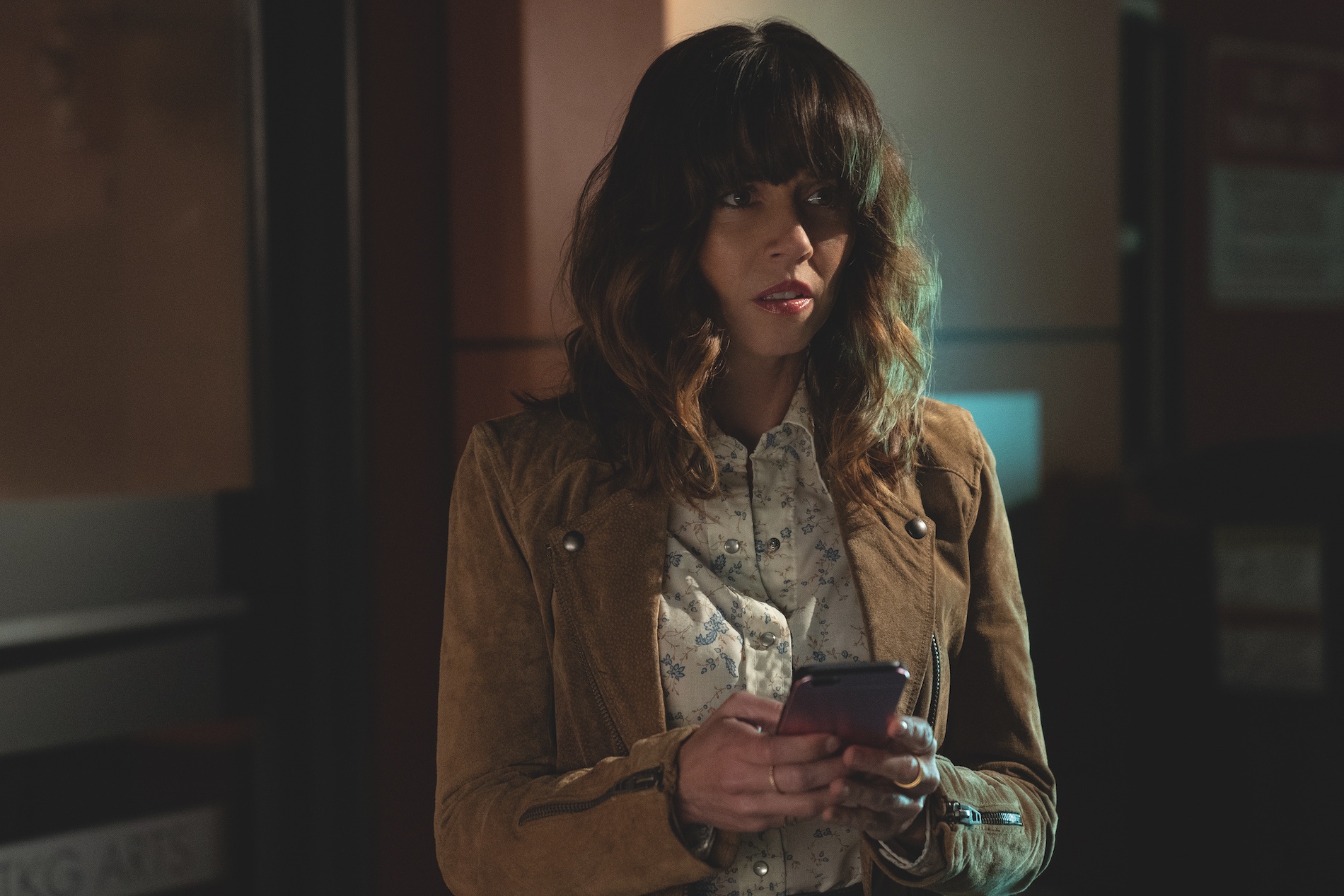
Kaley Cuoco, “The Flight Attendant”
Cuoco’s wildly funny yet emotionally shrewd performance as an alcoholic flight attendant entangled in a gruesome murder is what grounds even the most absurd twists on this HBO Max comedy-thriller–character study. Just when you think the series is too silly to feel substantial, the producer-star unveils another authentic, poignant layer to her Cassie, raising the emotional stakes amid all the mayhem. Plus, she’s clearly having so much fun.
Annie Murphy, “Schitt’s Creek”
“Ew, David!” For lessons on how to use line delivery to produce instantly memorable quips, look no further than Murphy’s ditzy Alexis Rose. Her distinct combination of bubbly, bratty, and sweet reached its peak on the last season of “Schitt’s Creek,” which featured the Emmy-winning Murphy warming our hearts as much as she cracked us up.
Catherine O’Hara, “Schitt’s Creek”
Much has been said about O’Hara’s iconic performance as Moira Rose—but we guarantee she’d have the oddest, most delightful way of saying it herself. She dominated the spotlight every time she was in frame with her line readings as the wacky, wig-wearing, past-her-prime actor and one percenter. Having rounded out her Emmy- and Golden Globe–winning final season as the lovable narcissist, O’Hara left us wanting more.
OUTSTANDING PERFORMANCE BY A FEMALE ACTOR IN A DRAMA SERIES
Gillian Anderson, “The Crown”
Anderson is virtually unrecognizable in her turn as Margaret Thatcher, which isn’t just remarkable for its contrast to any of her prior performances (including a steely sex therapist on “Sex Education”). As England’s first female prime minister and this season’s foil to Olivia Colman’s Queen Elizabeth II, she introduces the most captivating politician-sovereign dynamic on “The Crown” to date. In all its restrained fury, their face-off over the Commonwealth is a master class in quiet intensity.
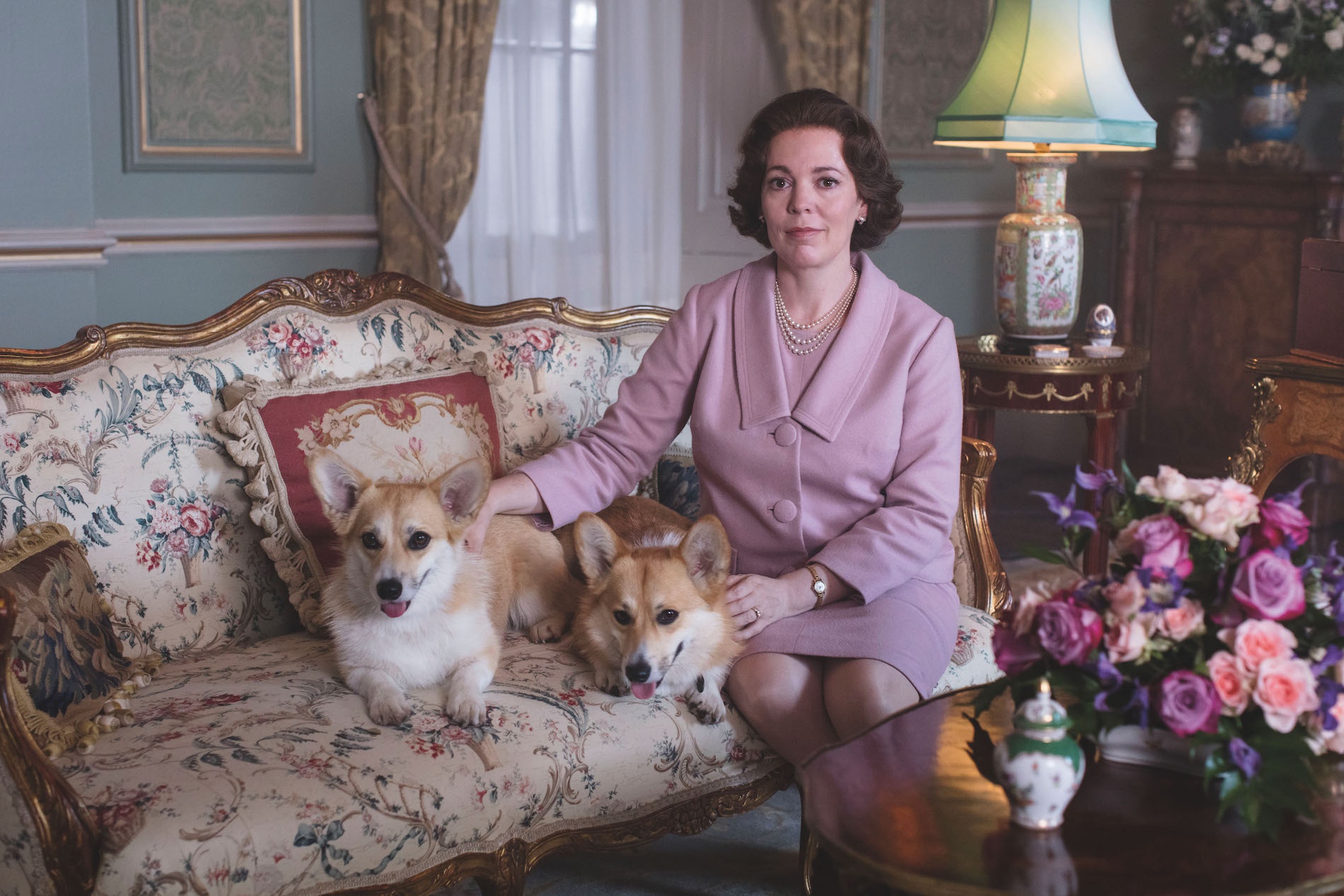
Olivia Colman, “The Crown”
Colman excels at capturing Queen Elizabeth II’s stillness and composure down to the smallest gesture on Season 4 of Peter Morgan’s royal drama, set in the Buckingham Palace of the 1980s. Case in point: her vividly rendered conversation with Tom Brooke’s Michael Fagan, the man who broke into the queen’s bedroom to list his grievances. Colman’s silences express as much as a monologue.
Emma Corrin, “The Crown”
Stepping into an onscreen character who received almost as much scrutiny as her real-life counterpart, Golden Globe winner Corrin successfully captures something essential about Diana Spencer, Princess of Wales: her ability to draw you in and demand you watch her. Between the spot-on makeup, hair, and wardrobe work, and those eyes that convey sorrow and shyness, Corrin pulls off the difficult task of stealing this show.
Julia Garner, “Ozark”
Season 3 of Netflix’s “Ozark” finds ample opportunity to explore its morally bankrupt core cast of characters, giving an actor of Garner’s wondrous skill level the juicy material she deserves. Her twice Emmy-winning Ruth Langmore is a survivor who is prone to making dangerously criminal decisions, but there are always rational reasons behind them—even if Garner makes us guess what they are.
Laura Linney, “Ozark”
Linney’s Wendy Byrde has gone from dissatisfied suburban housewife to money-laundering mastermind, and that sinister smile of hers proves she’s in her element at last. On Season 3 of this increasingly dark Netflix drama, the Emmy- and SAG Award–winning Linney excels at guiding us through everything on Wendy’s map: messiness, vulnerability, shrewdness, and, ultimately, devastating guilt.
OUTSTANDING PERFORMANCE BY A FEMALE ACTOR IN A TELEVISION MOVIE OR MINISERIES
Cate Blanchett, “Mrs. America”
One of this TV season’s greatest treats was watching Blanchett scheme. Actors should study her take on Phyllis Schlafly. Her multilayered work as the conservative queen of the 1970s, a woman seeking power and finding her voice as she advocates for policies that would prevent her fellow American housewives from doing the same, is elevated by her restraint.
Michaela Coel, “I May Destroy You”
The range that Coel taps into to deliver a story inspired by her own sexual assault on this follow-up to her series “Chewing Gum” is nothing short of heroic. Her Arabella is equal parts frightened and frightening in the complex aftermath of her assault. Watching Coel detangle her character’s pain from the power it has unearthed within her makes for some of the year’s best TV.
Nicole Kidman, “The Undoing”
Kidman deserves every acting award on record for her newest collaboration with “Big Little Lies” creator David E. Kelley, including (if there were such a thing) best performance by an eyeball in a leading role. The heavy lifting her pupils alone do in this story of paranoia and perception speaks to the laserlike focus this star has on her characters’ reactions.
Anya Taylor-Joy, “The Queen’s Gambit”
As much a character study in addiction as a chess prodigy’s coming-of-age tale (and a gorgeously wrought period drama to boot), this Netflix hit owes a heaping sum of its success to Golden Globe winner and rising star Taylor-Joy. Her skill at rendering Beth Harmon’s growth shows physicalized acting at its finest. Every moment she levels those enormous eyes at her chess adversaries or up at the ceiling becomes iconic.
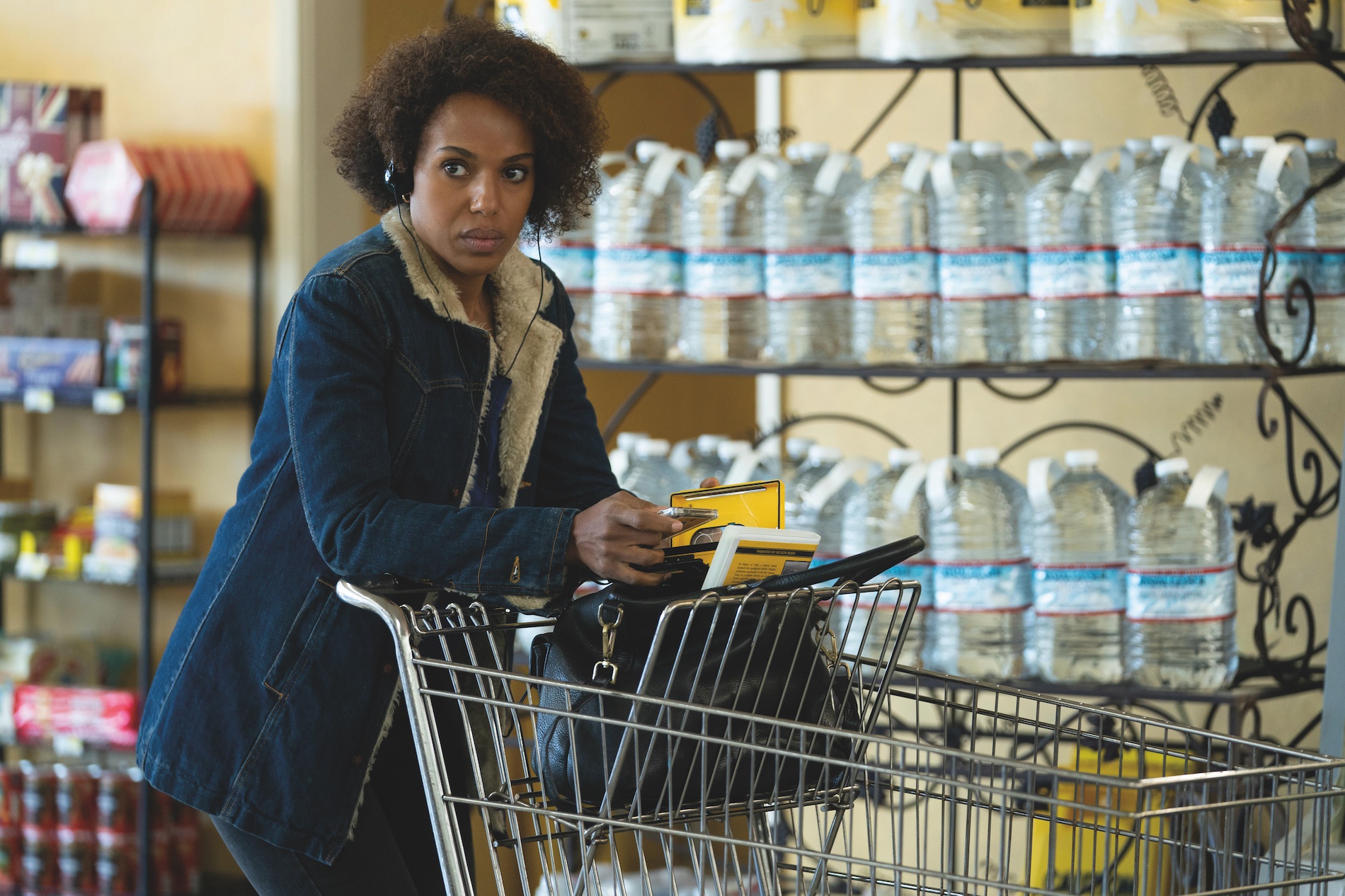
Kerry Washington, “Little Fires Everywhere”
What a spectacular return to TV drama this is for Washington, one of those Hollywood stars who can straddle the line between juicy melodrama and multilayered subtlety. Her work as Mia Warren, a newcomer to the story’s picture-perfect suburban neighborhood, makes Liz Tigelaar’s small-screen adaptation of the bestselling Celeste Ng novel all pleasure, no guilt.
OUTSTANDING PERFORMANCE BY A FEMALE ACTOR IN A LEADING ROLE
Amy Adams, “Hillbilly Elegy”
Playing heroin addict Bev, Adams swivels from raw vulnerability to shaking ferocity on a dime in this Netflix original film from director Ron Howard. She brings her character’s narcissism and keen desperation to the screen as only she can. It’s like the actor is digging into every nook and cranny of her own soul to produce this aching portrait of someone who has been robbed by circumstance.
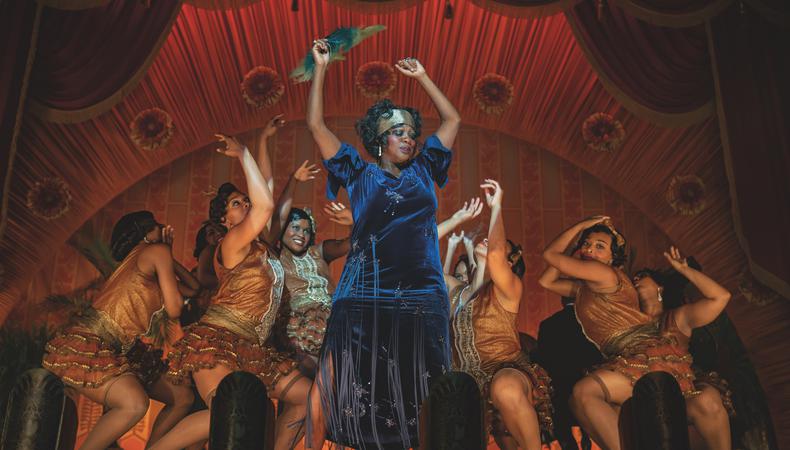
Viola Davis, “Ma Rainey’s Black Bottom”
What’s the best part of Davis’ performance as the titular crooner in her latest August Wilson adaptation? Is it her gruff, smoky voice, her swiveling hips, or the fire in her eyes? The five-time SAG Award winner uses her bone-deep physical performance to convey the rich interiority of the real-life Ma Rainey, Mother of the Blues and sufferer of no fools.
Vanessa Kirby, “Pieces of a Woman”
If you didn’t know Kirby’s name before, you will after this awards season thanks to her stunning, wrenching, beautiful work in Netflix’s “Pieces of a Woman,” which sees the “Crown” Emmy nominee working through the aftermath of losing a baby in agonizing emotional detail. It’s the kind of role that requires so much of an actor that it boggles the mind.
Frances McDormand, “Nomadland”
Calling McDormand’s “Nomadland” performance her most understated one yet feels redundant, given the documentary-like quality of Chloé Zhao’s study of van-dwelling nomads. It’s as if the actor lived for months as the determinedly grieving Fern, and Zhao’s camera simply captured her everyday movements. But make no mistake: The four-time SAG Award–winning McDormand is at the height of her powers, finessing every moment.
Carey Mulligan, “Promising Young Woman”
Mulligan’s turn as Cassandra Thomas in “Promising Young Woman” is like the film itself: Don’t let her character’s sunny styling and California surroundings fool you. Her measured portrayal of a woman on a mission—gradually revealed by writer-director Emerald Fennell—surprises until the very last moment. If the sinister way Cassandra toys with handsy men weren’t so delightfully thrilling, it would be downright terrifying.
OUTSTANDING PERFORMANCE BY A FEMALE ACTOR IN A SUPPORTING ROLE
Maria Bakalova, “Borat Subsequent Moviefilm”
A welcome addition to the bizarro world of “Borat,” Bakalova shines as Tutar, the Kazakh journalist’s teenage daughter and willing accomplice in his latest plot: to win over “McDonald” Trump. For every clandestine farce the mockumentary concocts, Bakalova is right in step with Sacha Baron Cohen, delivering side-splitting improvised dialogue with unwavering commitment.
Glenn Close, “Hillbilly Elegy”
This season, we can confidently crown Close as the queen of one-liners. Her larger-than-life Vance matriarch represents the hard-knock starting point of this story’s multigenerational narrative. While her grandson fights to overcome the poverty-stricken hand he’s been dealt in the Appalachian backwoods, Close’s Mamaw unapologetically steeps herself in all things “hill people.” She demands, and earns, our attention.
Olivia Colman, “The Father”
We’ve seen a nonstop succession of superb screen work from Colman ever since her Oscar win for “The Favourite.” Now, playing the daughter to an ailing Anthony Hopkins, she seems to remove even more barriers between herself and the camera lens. What is it about magnetic performers like Colman, who can turn crying into high art? Her tears are stars in their own right.
Youn Yuh-jung, “Minari”
Irreverent, foulmouthed, and, at least in little David’s (Alan S. Kim) eyes, as un-grandmotherly as can be, Soonja complicates the central Korean American family’s fragile dynamics in “Minari” from the moment she arrives. Youn’s delightful comedic timing gives way to poignancy as David and his grandmother evolve from cheekily adversarial to genuinely friendly. It’s a great example of a performance that gives a film its heart.
Helena Zengel, “News of the World”
It takes a lot to pull focus from Tom Hanks; to do it as a young actor with few lines (mostly in the language of the Kiowa people) is even more extraordinary. Zengel matches Hanks on every step of this perilous journey across America’s antebellum South. Her Johanna Leonberger is lost in more ways than one, as evidenced by the actor’s every profound gesture and facial expression.
This story originally appeared in the March 11 issue of Backstage Magazine. Subscribe here.
Looking for remote work? Backstage has got you covered! Click here for auditions you can do from home!